Explore ideas
Find practical ideas by the challenge you're trying to solve.
Filter by what you're trying to achieve, who you're trying to reach, where it happened and how much evidence is available. Every article separates activity from evidence and ends with what you could test and measure.
Get new cinema ideas, practical case studies and evidence updates in your inbox.
58 results · showing everything
Sorted by most recent

Schools are capacity management, not just audience development
Event Cinemas sells school screenings as a defined product: weekdays before 4pm, a published minimum group size, a fixed confirmation window, prepayment and an optional per-student food and drink package. The rules are the product, and they turn empty daytime capacity into a predictable booking.

A national cinema price event can still protect premium value
Brazil's Semana do Cinema runs from 10 to 16 September 2026 with a single headline price. Cinépolis and Cinemark both take part, and both publish their own fences around formats, seats and dayparts. The campaign is national; the margin decisions are local.

A festival should not disappear for eleven months
Watch Africa pairs an annual African film festival in Wales with monthly screenings and a free members' club. The point is not the extra screenings. It is that the audience, the partners and the mailing list stay warm, so each edition starts from a community rather than from zero.

Fundraising works better when supporters can see what changes
A Houston restoration project and a London art-house refurbishment are running the same architecture from different ends: a phased target, a ladder of giving levels, seat adoption, benefit events and a physical outcome a donor can point at. The design is transferable. The operating case that follows it is not proven by either.

Cinema membership is becoming a monthly behaviour product
From 22 September 2026 Picturehouse moves from an annual card to a monthly subscription with one included ticket, rollover, weekday fencing, guest and food discounts and points. The design tells you what the scheme is now for: a rhythm of visits, not a discount on visits you were going to make anyway.

Build the second transaction into a refurbishment relaunch
CinemaxX reopened its refurbished Stuttgart site with five euro tickets — and sold an eighteen euro three-visit package alongside them, redeemable until March. The reopening discount is the acquisition step; the package is the point.

Kinepolis turns coming-soon trailers into an interactive cinema event
Since 2019 Kinepolis has sold tickets to a trailer show. Audiences rate each forthcoming film on their phones, the ticket money goes to charity, and the circuit ends the evening with a declared preference attached to an identified customer.

A festival does not have to end when the festival ends
Cinema Rediscovered spends months securing prints, rights and context for a five-day festival in Bristol, then sends the result out as a touring package other cinemas can book. The 2025 festival drew 5,331 ticketed admissions and its touring programme added over 8,000 more across 50-plus partner venues.

Use a national cinema weekend for your own commercial objective
National Cinema Weekend delivers an audience your marketing budget did not have to buy. The operators getting the most from it have decided in advance which single thing that audience is for.

A capped family offer is a test design worth copying
A summer children's price at a single Japanese cinema was set at 500 yen and capped at 10,000 redemptions. The value here is the structure of the test — defined audience, one simple price, a public cap, a short window and measurable redemption — not any proven commercial result.
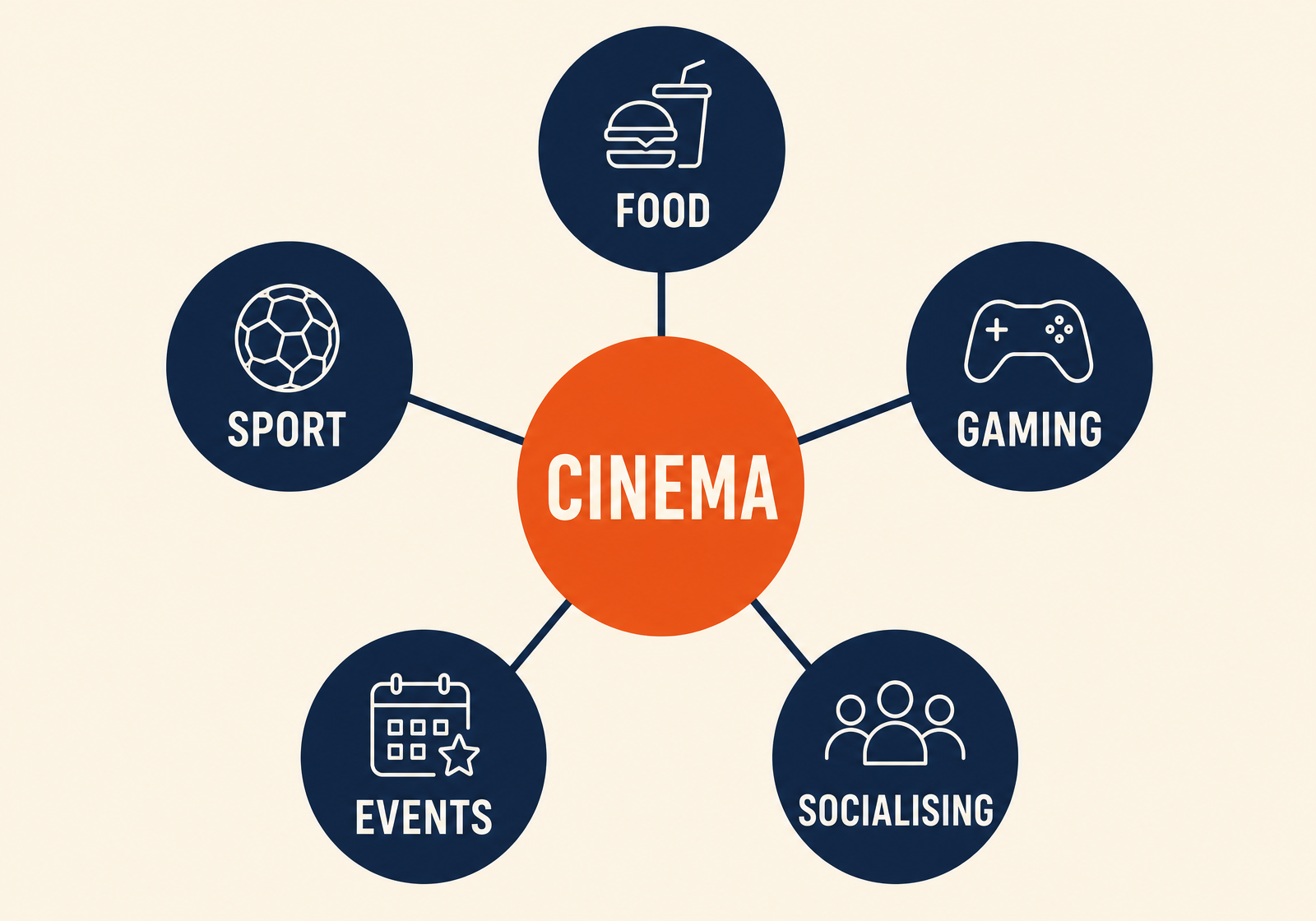
Treat the cinema site as leisure real estate
Kinepolis plans to operate a 2,500 square metre O'Learys venue beside its Enschede cinema. The venue has not opened, so the useful question is not whether it works but what occasions a cinema site can support.
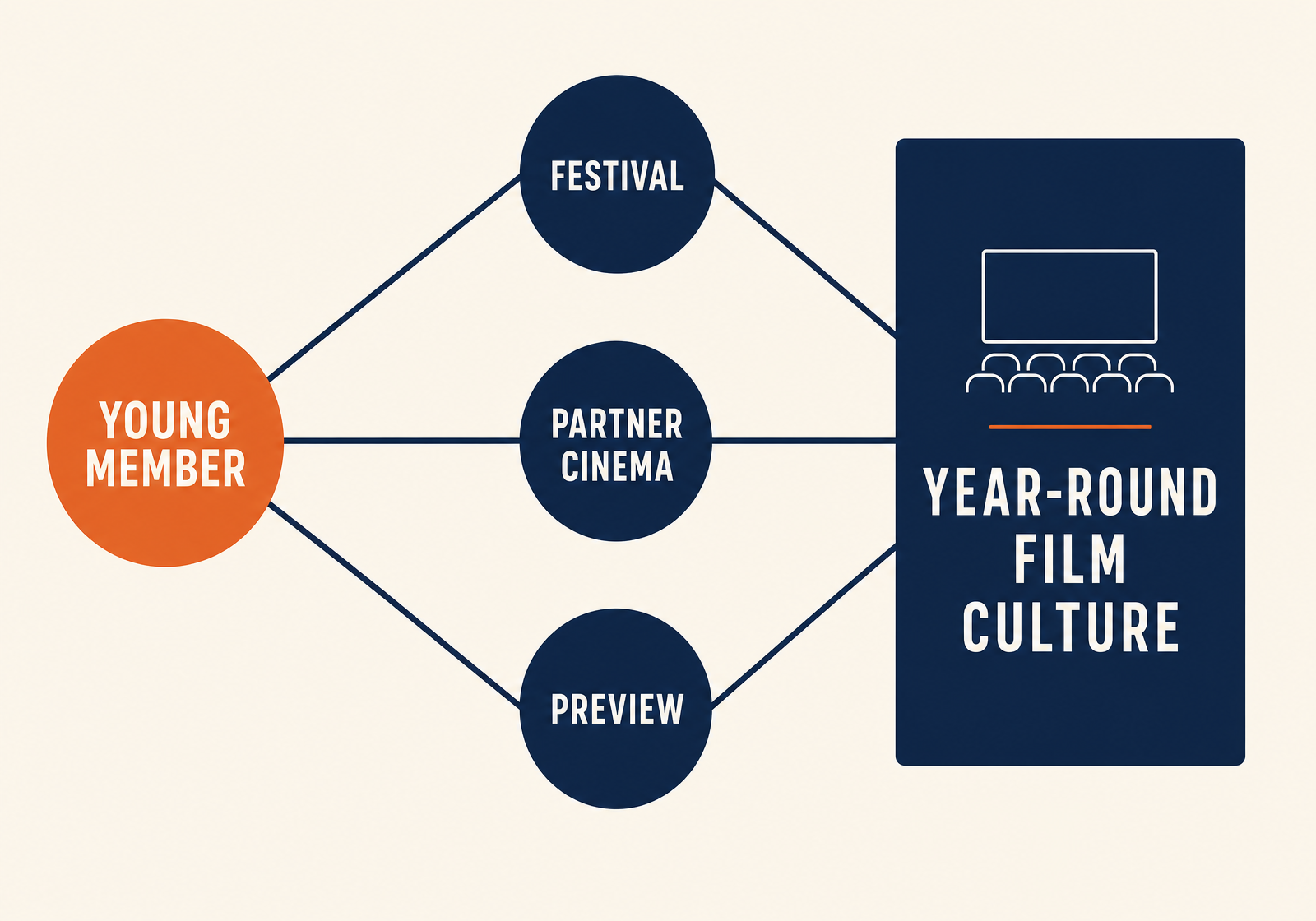
Build a young-audience membership that works beyond one festival
MIFF sells a A$26 annual membership to 18 to 25 year olds that pays off year-round through partner cinemas and preview screenings. A festival does not need to own venues to hold a young audience.
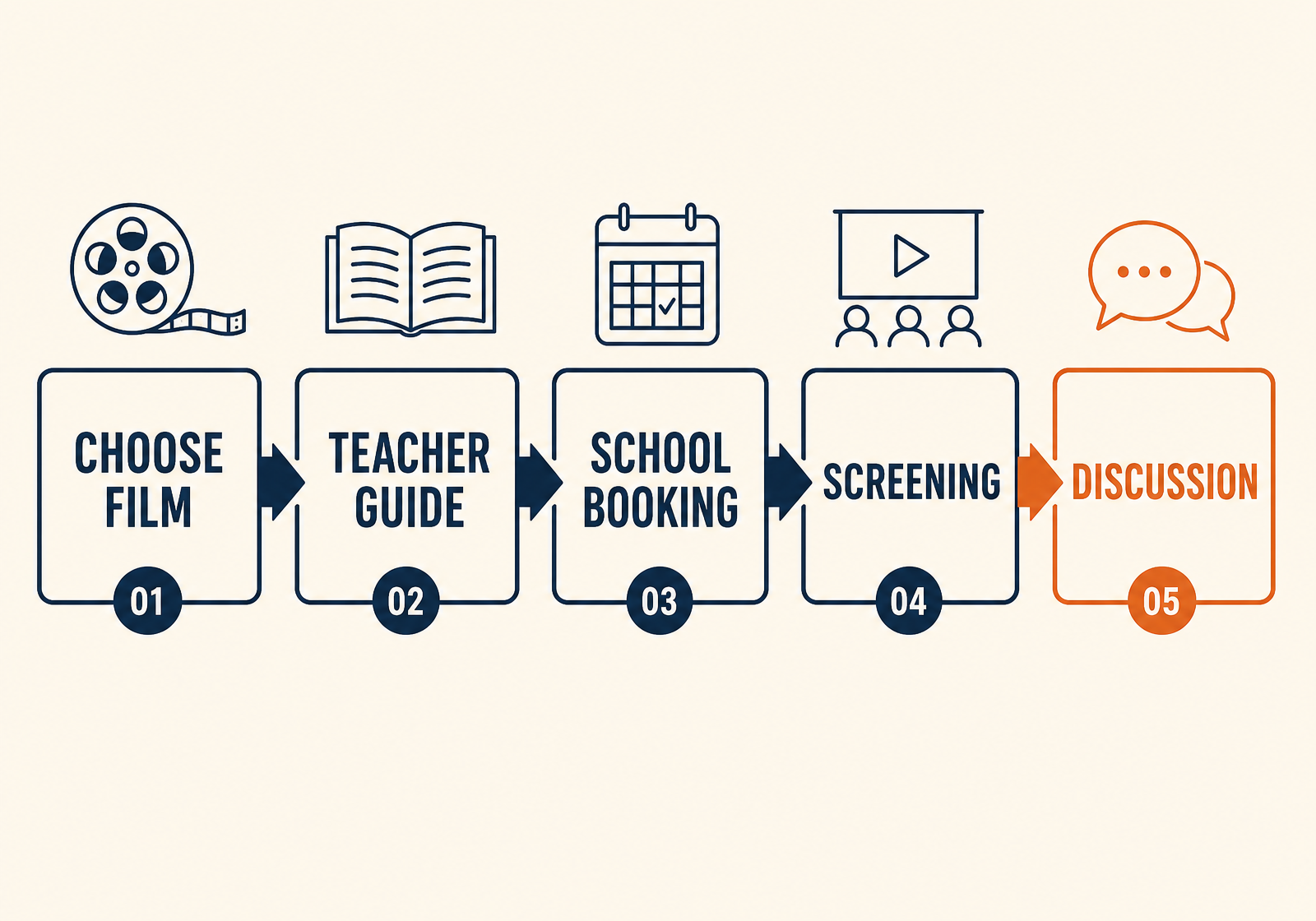
School screenings are a product, not just a group discount
Village Cine School packages film selection, teacher guides, booking administration, price and post-film discussion time. The discount is the least interesting part of the offer.
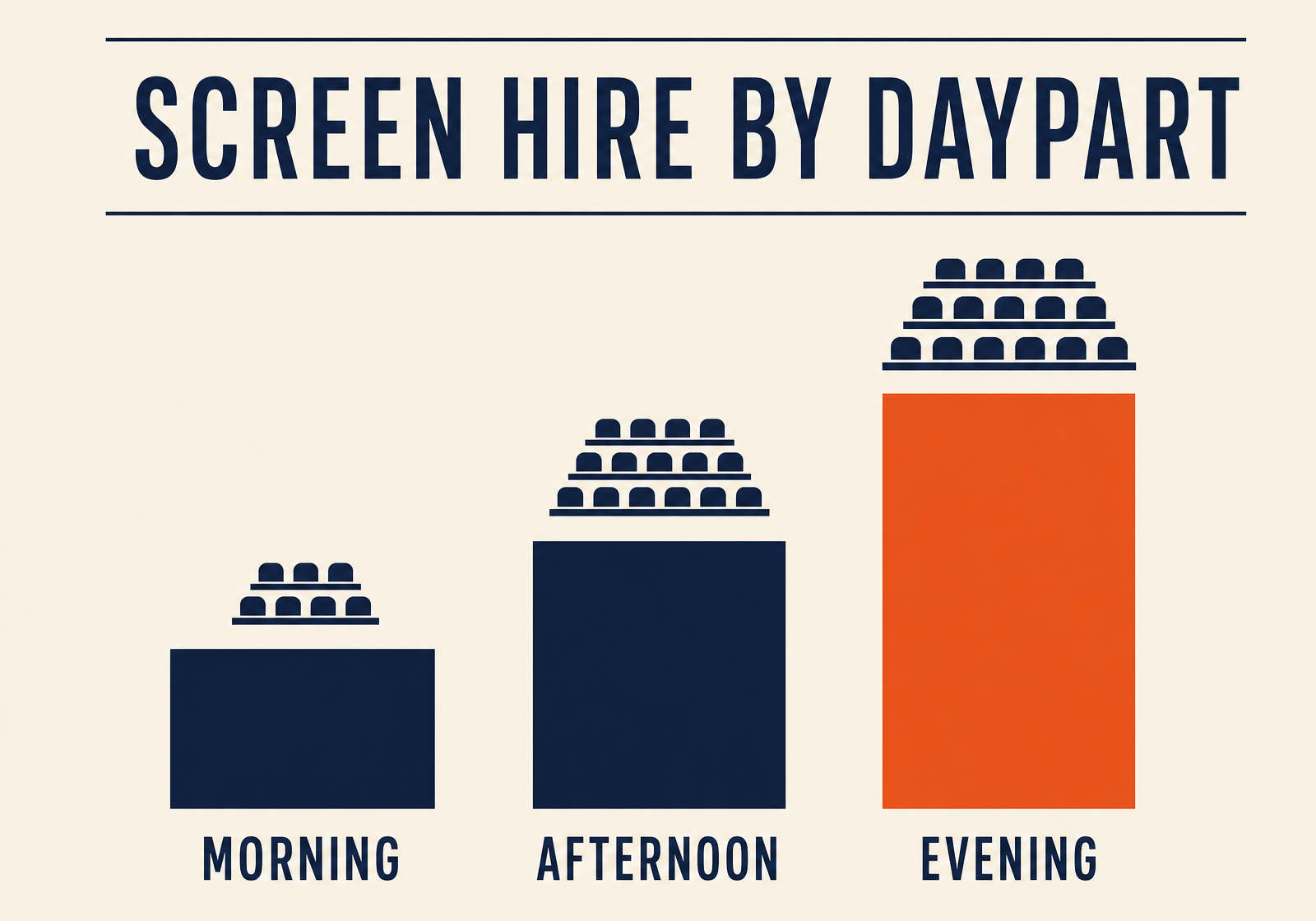
Private hire is perishable inventory too
Rich Mix published a plain three-hour screen-hire tariff by screen size and daypart. The interesting part is not the summer offer — it is treating auditorium hours as perishable inventory with a public price.
Cinema sustainability without the vague claims
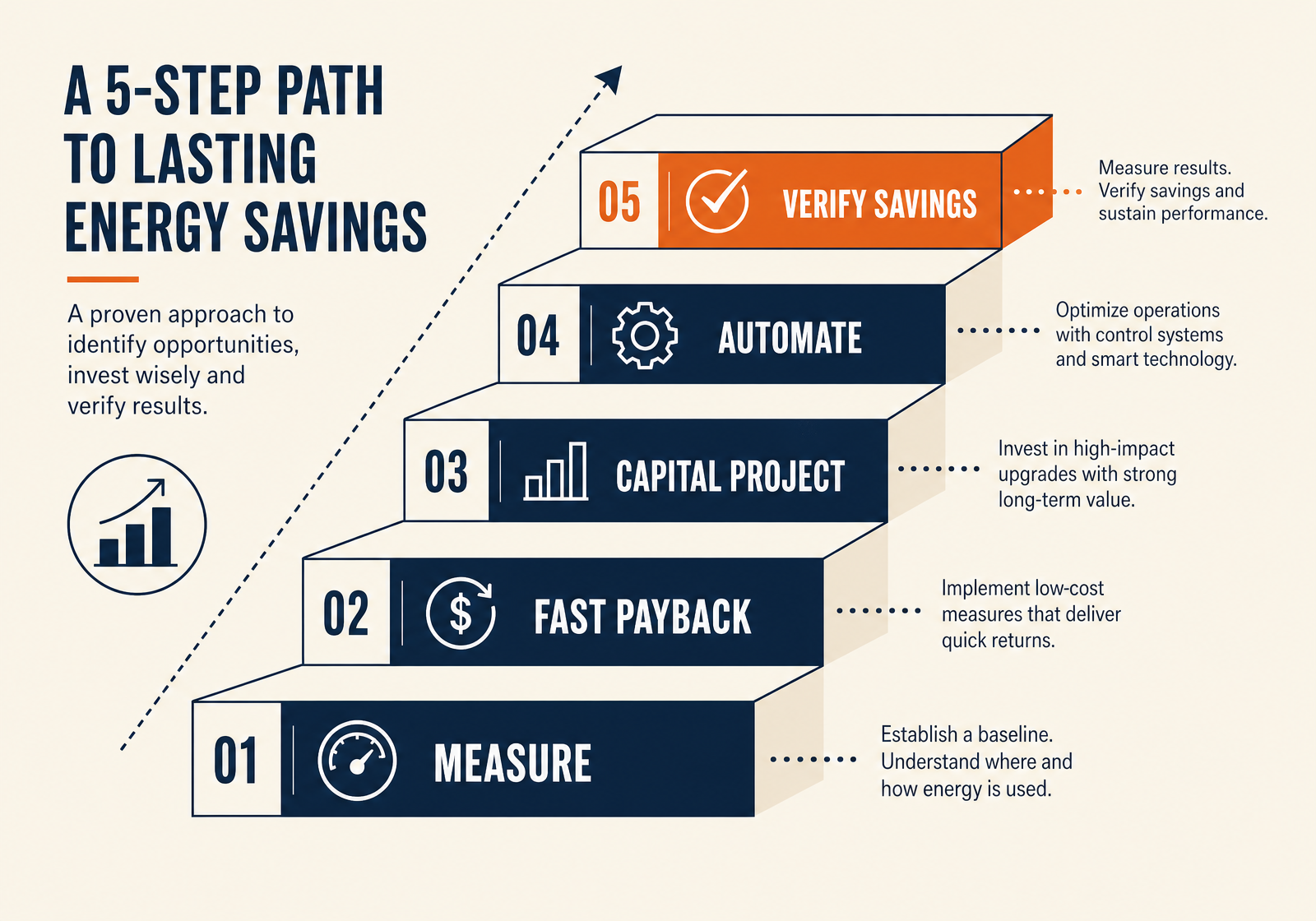
Savoy Cinemas treats sustainability as an operating-investment problem: measure first, take the fast-payback work, then model the capital projects. The reported numbers are specific enough to argue with.
Members visit more often. But did membership cause it?
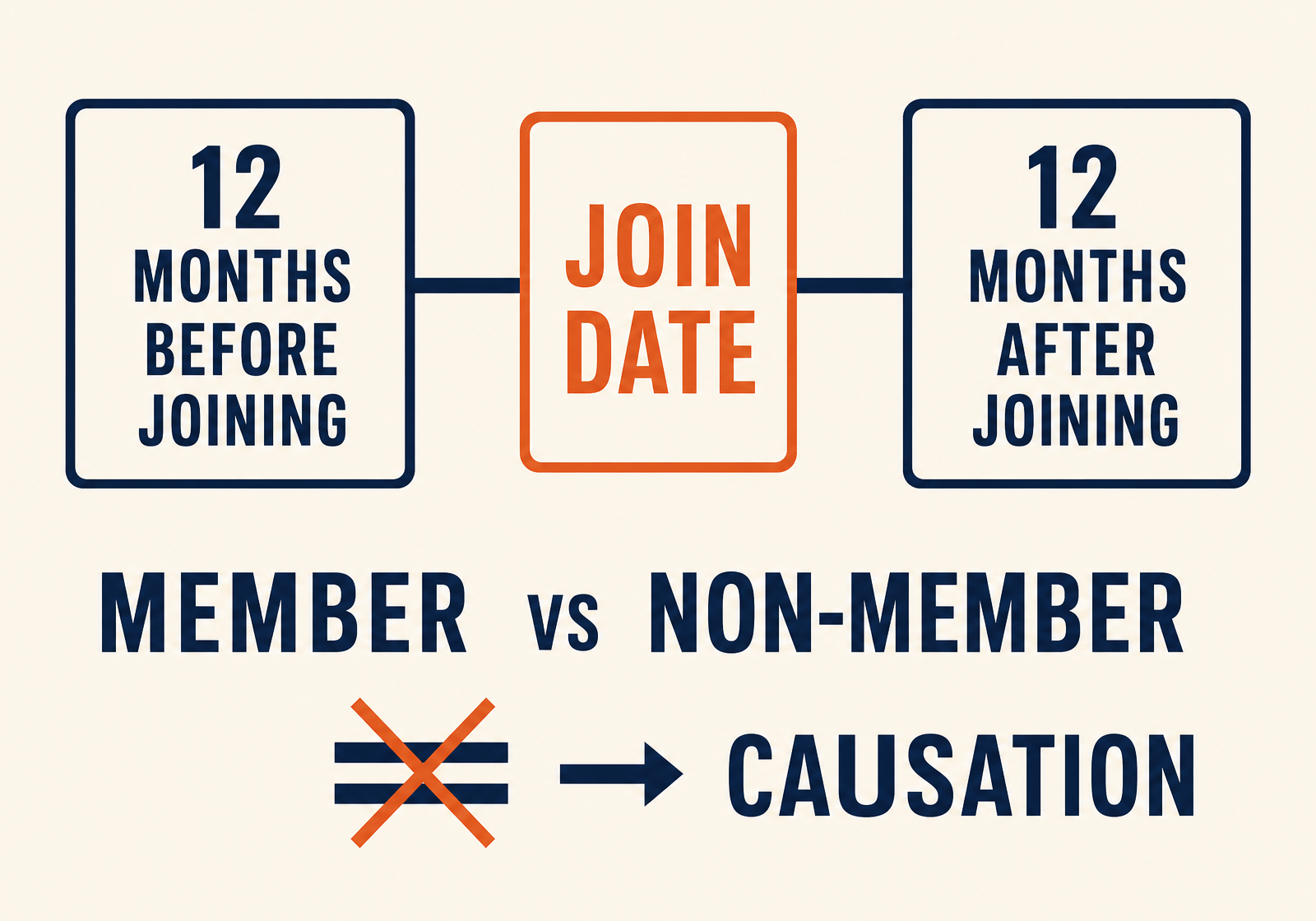
Cineplex reports that CineClub members visit four times more often than non-members. That comparison is the wrong shape for a decision about whether membership changes behaviour — here is a better one.
Free tickets are not the metric: measure what audiences do next
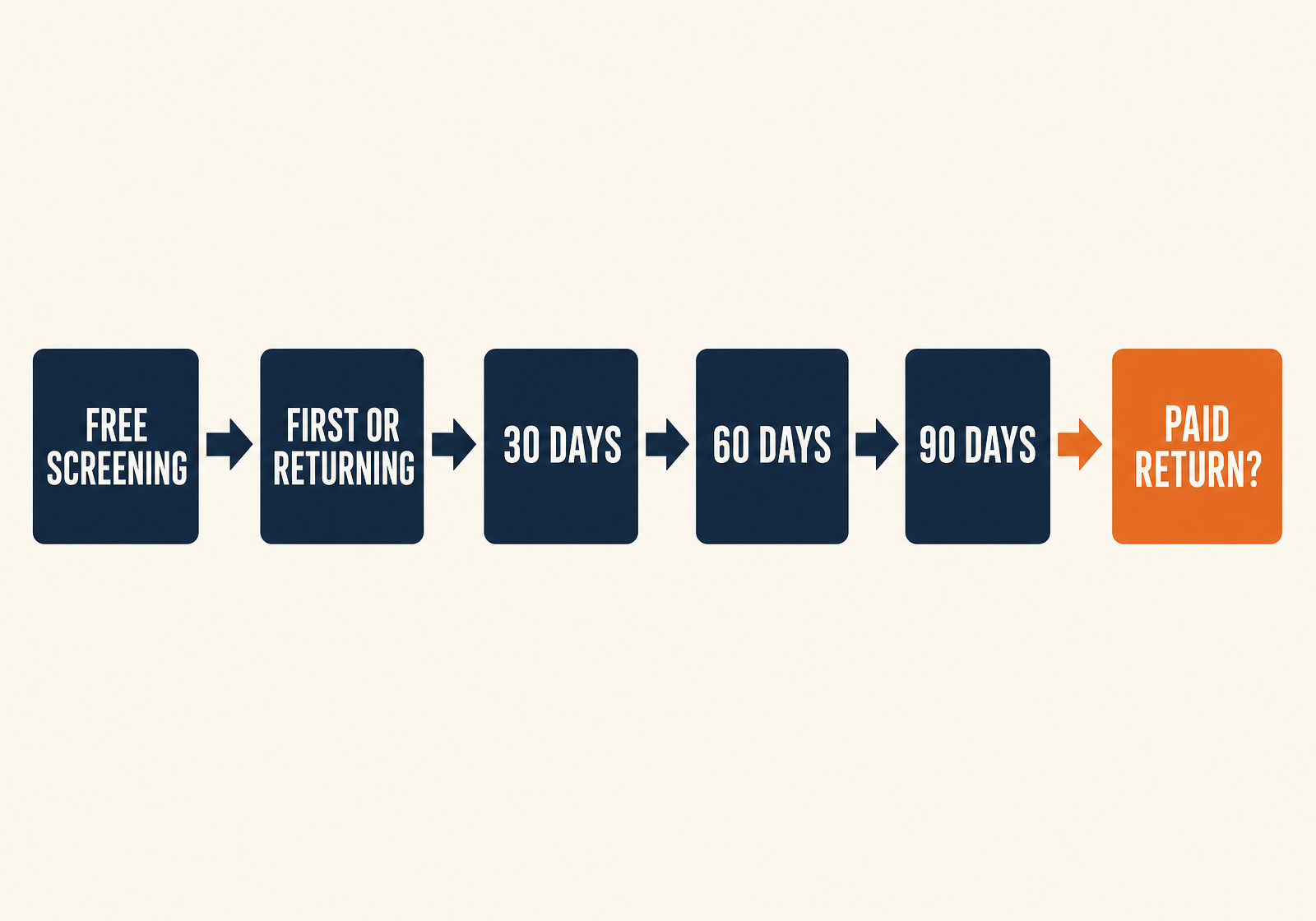
ESCAPES has distributed more than 250,000 free accessible tickets across hundreds of UK cinemas. The reported figures show reach, satisfaction and intention — not yet what those audiences did on their next visit.
Measure a cinema cloud migration by what changes operationally
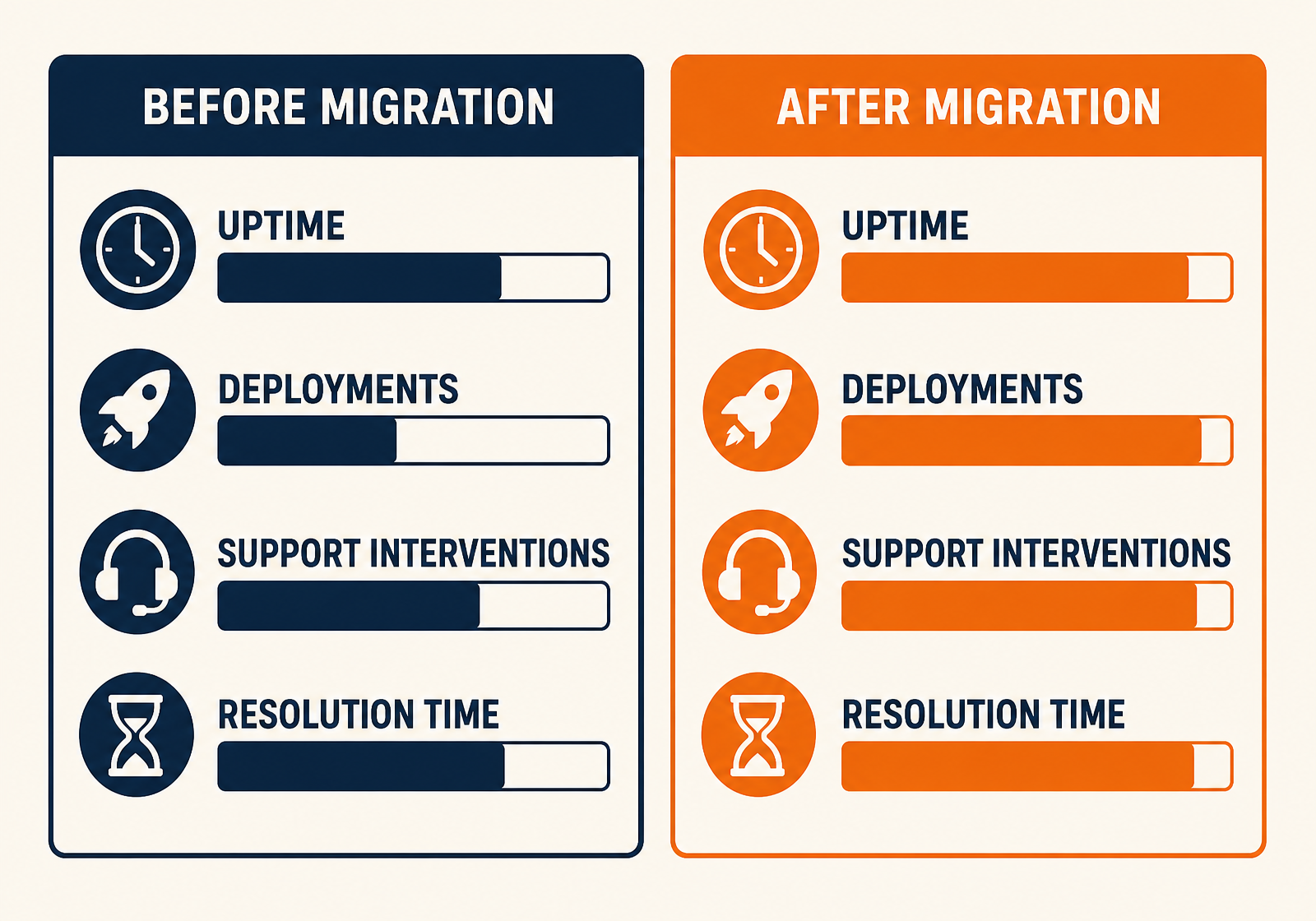
HOYTS has entered a six-year agreement to move core operations across more than 60 cinemas and 500-plus screens onto Vista's cloud operating platform. A supplier announcement is a starting point for measurement, not evidence of benefit.
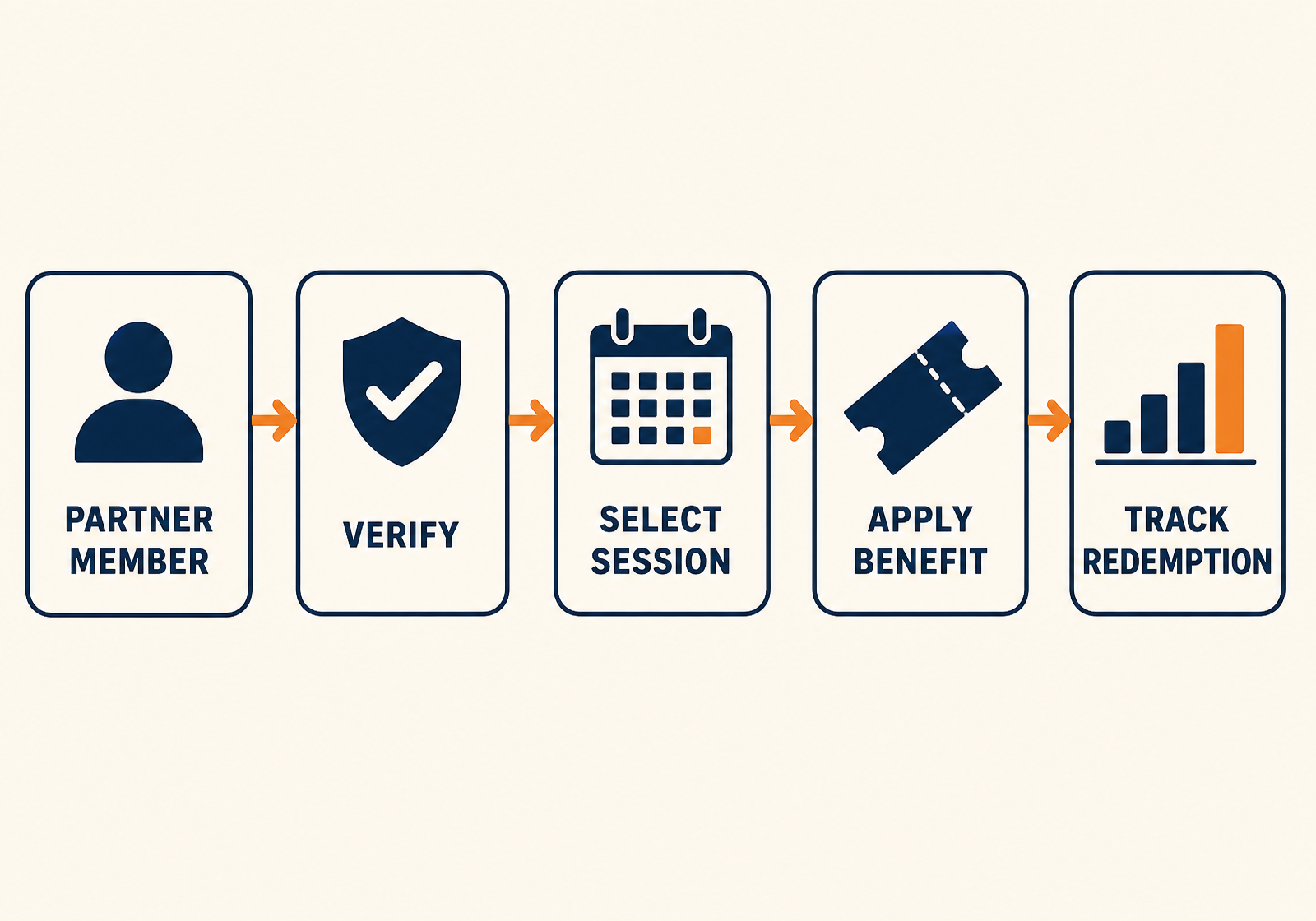
Use a partner-funded cinema offer with tight eligibility controls
The HOYTS and ahm Date Night offer provides eligible insurer members with a two-for-one Friday cinema benefit using a defined validation path and explicit limits. The controls are the lesson, not the discount.
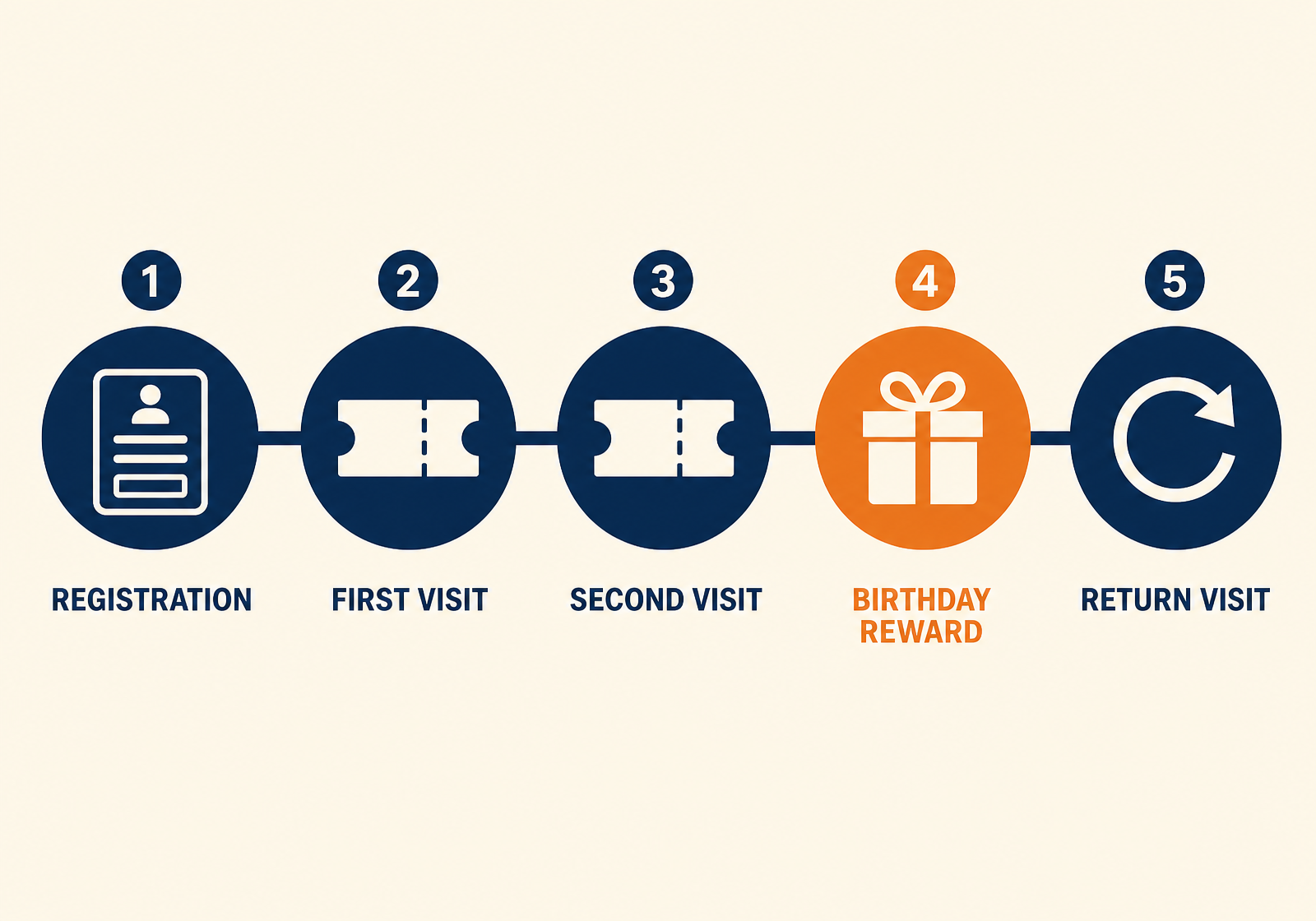
Make the cinema birthday reward depend on real behaviour
Cinemacity's loyalty proposition does not automatically give every registered member a birthday ticket: the reward unlocks only after two tracked cinema visits.
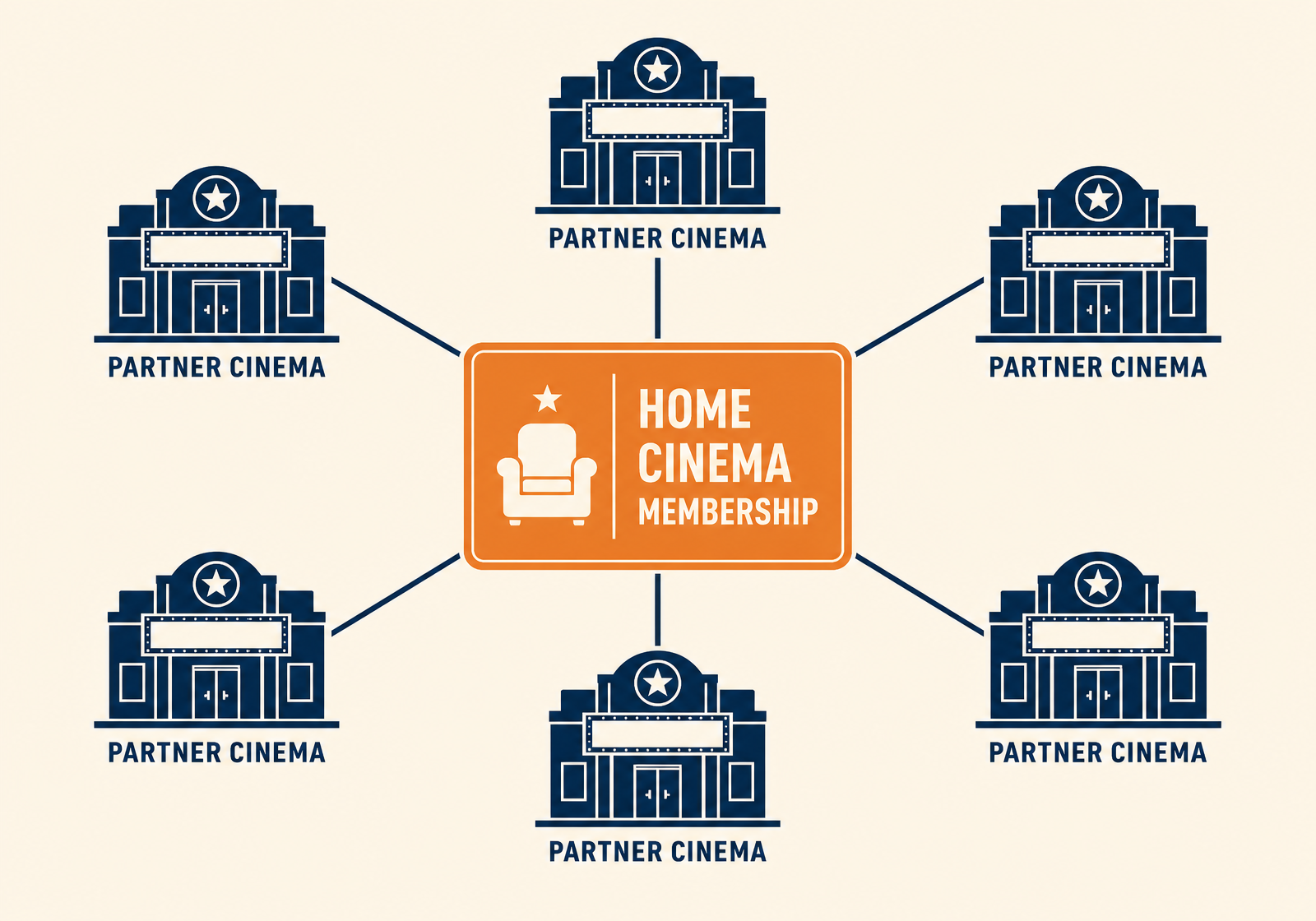
Make a cinema membership useful outside your own circuit
Pathé says CinéPass is accepted across its own cinema estate and more than 59 partner cinemas — membership value increased through geographic breadth rather than deeper discounting at home.
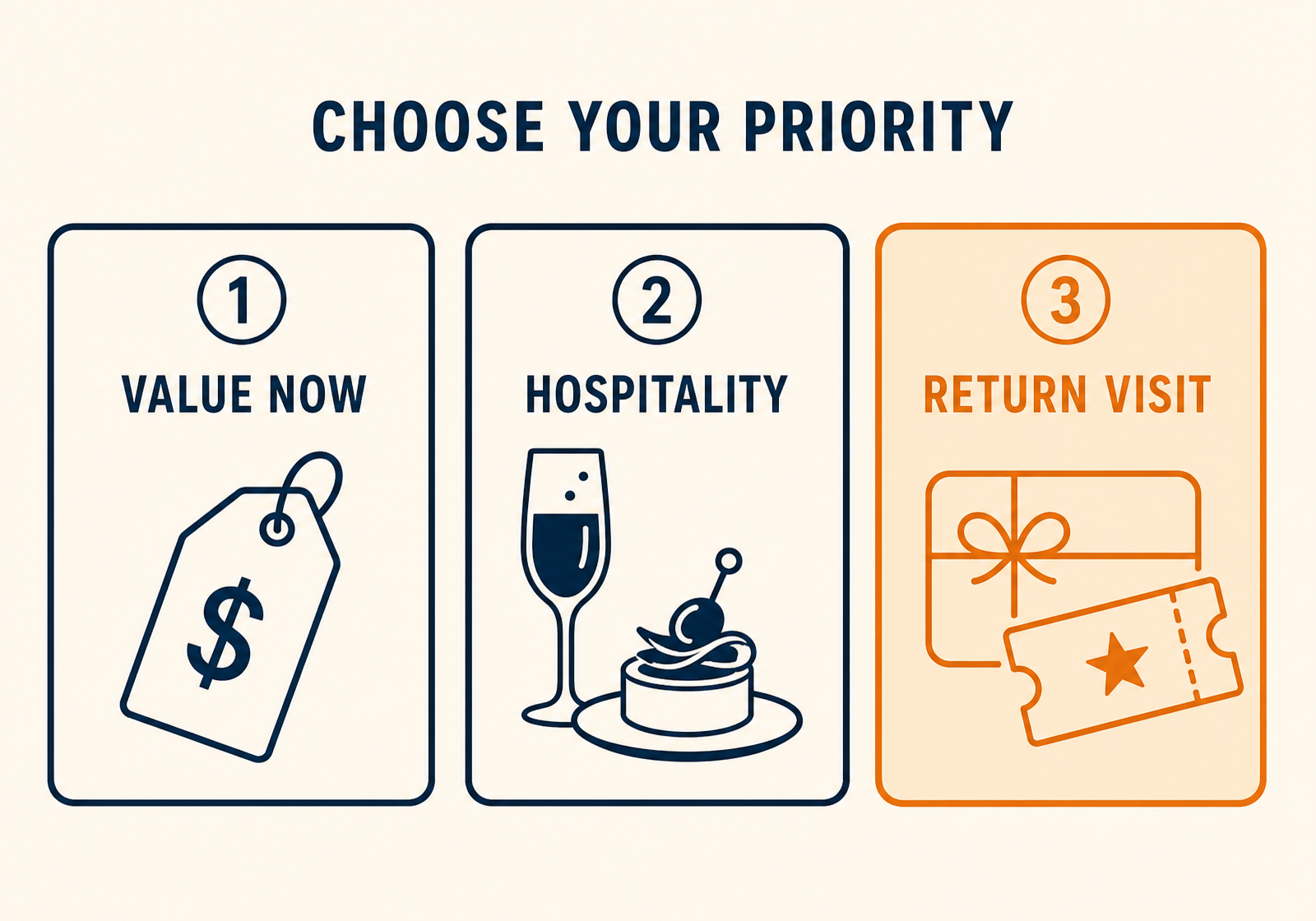
Make a private-hire incentive create a later cinema visit
Event Cinemas' private-event offer allows clients to choose between immediate hospitality or value and a gift card worth five per cent of event spend — turning B2B spend into a later personal visit.
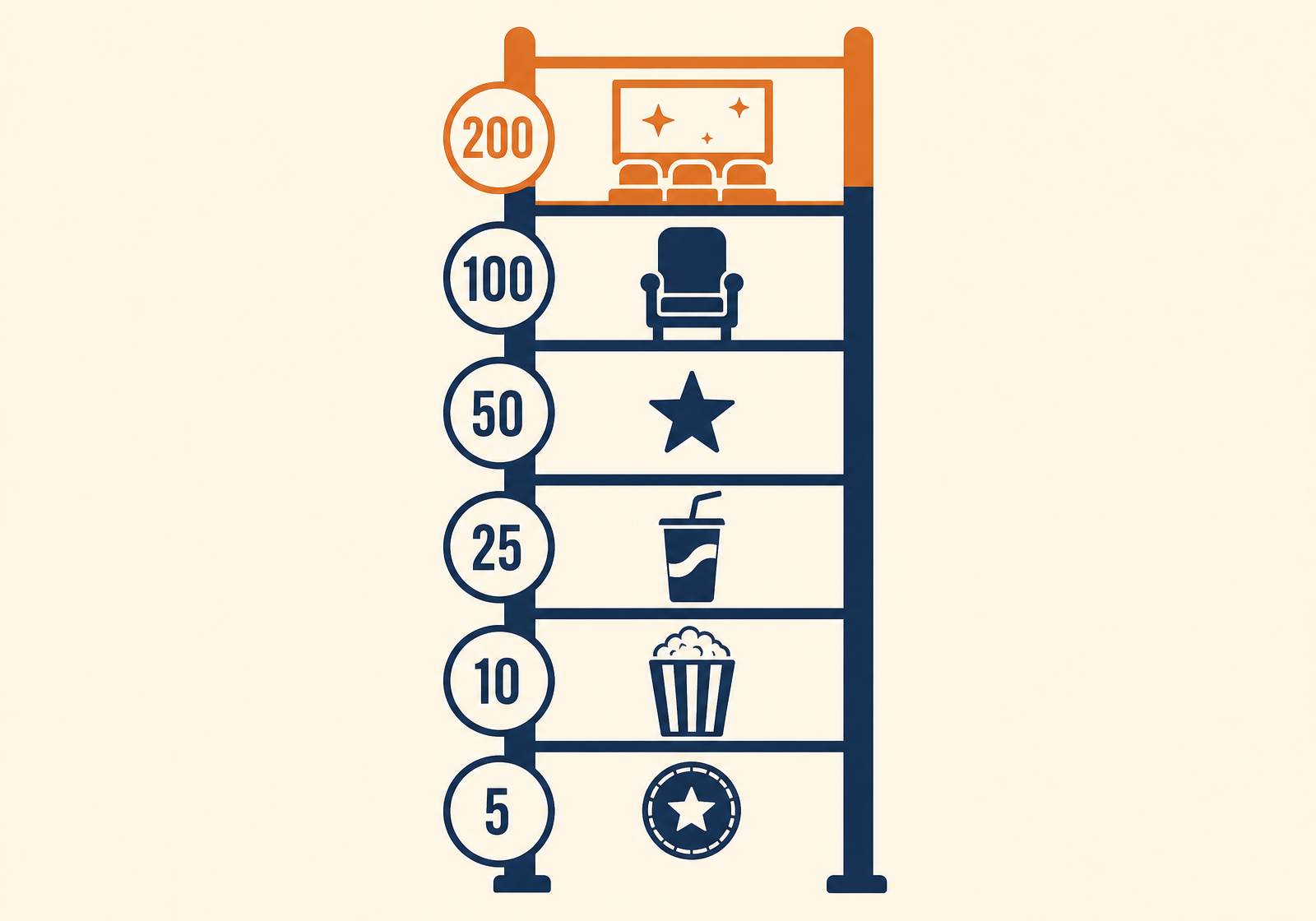
Give cinema subscribers milestones after they have already subscribed
Regal's Unlimited Milestones programme adds an annual progression ladder to an existing unlimited subscription, running from five films to 200 with rewards at each step.
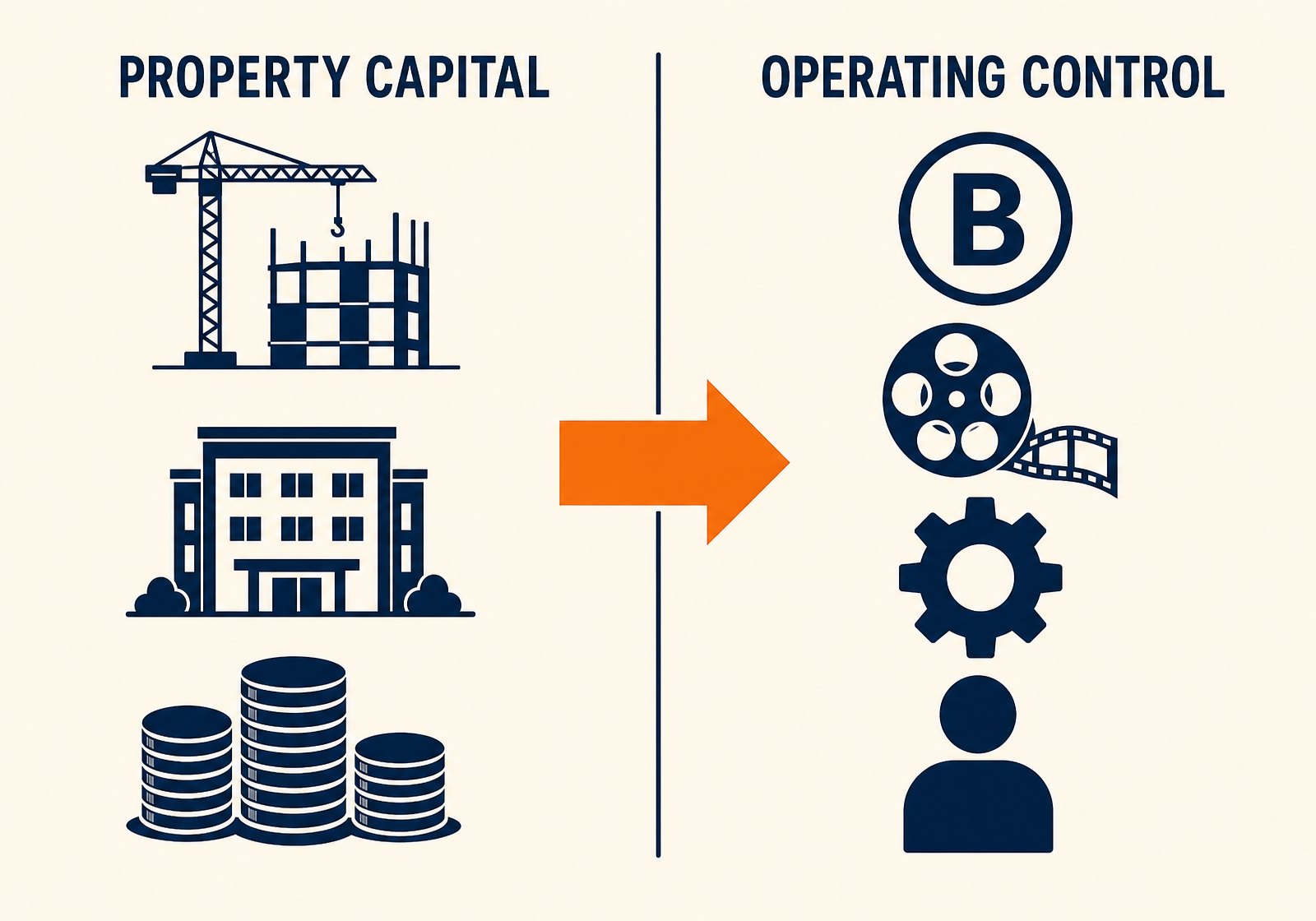
Separate property capital from cinema operating control
PVR INOX's SMART Cinema model for smaller Indian cities uses a franchise-owned, company-operated structure: local partners fund or own the property while the operator keeps brand, programming and operating control.
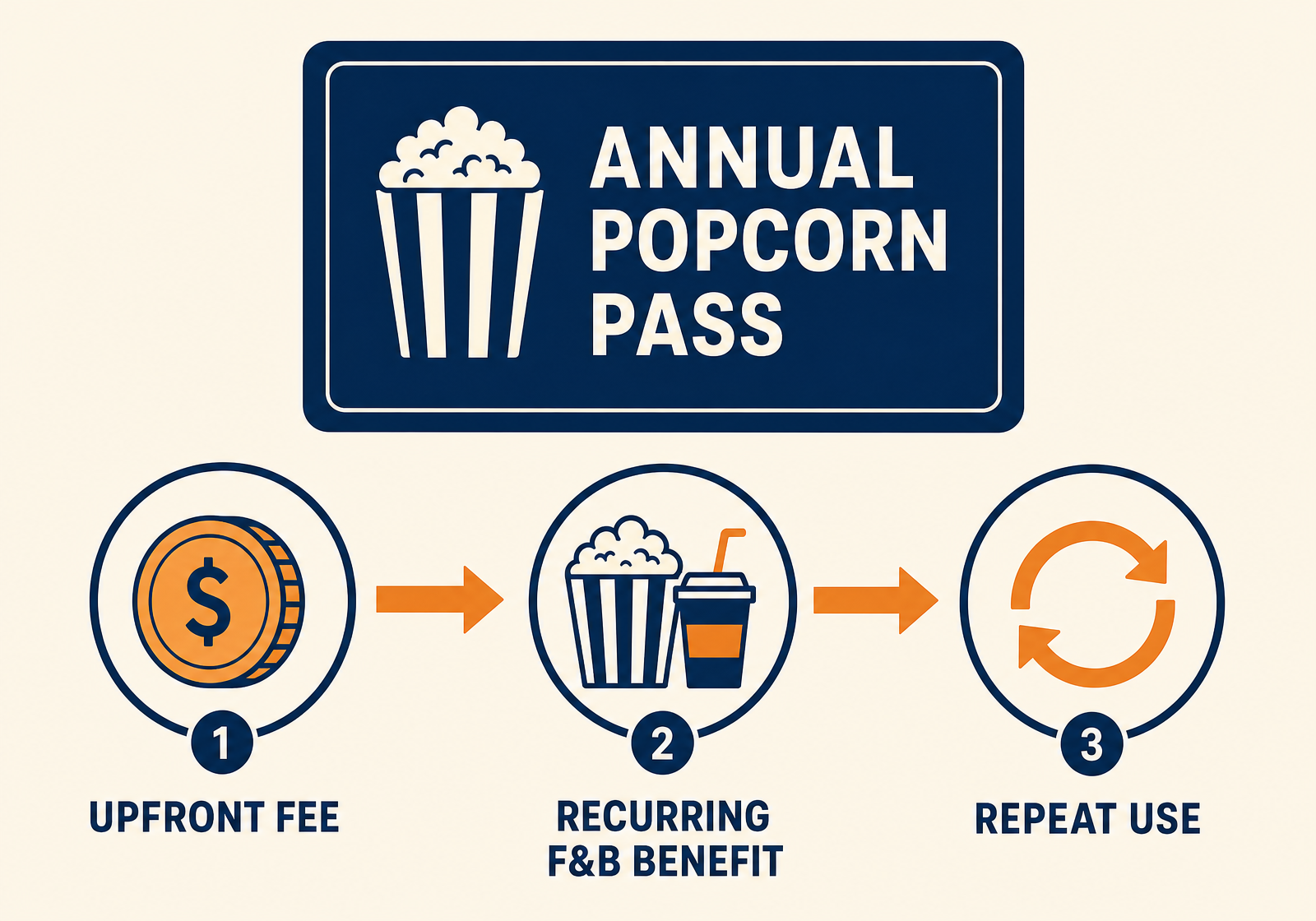
Sell a subscription to the concession, not only the movie
AMC's annual Popcorn Pass gives eligible Stubs members 50 per cent off one large popcorn per day through 2026 — subscription thinking applied to concessions rather than admissions.
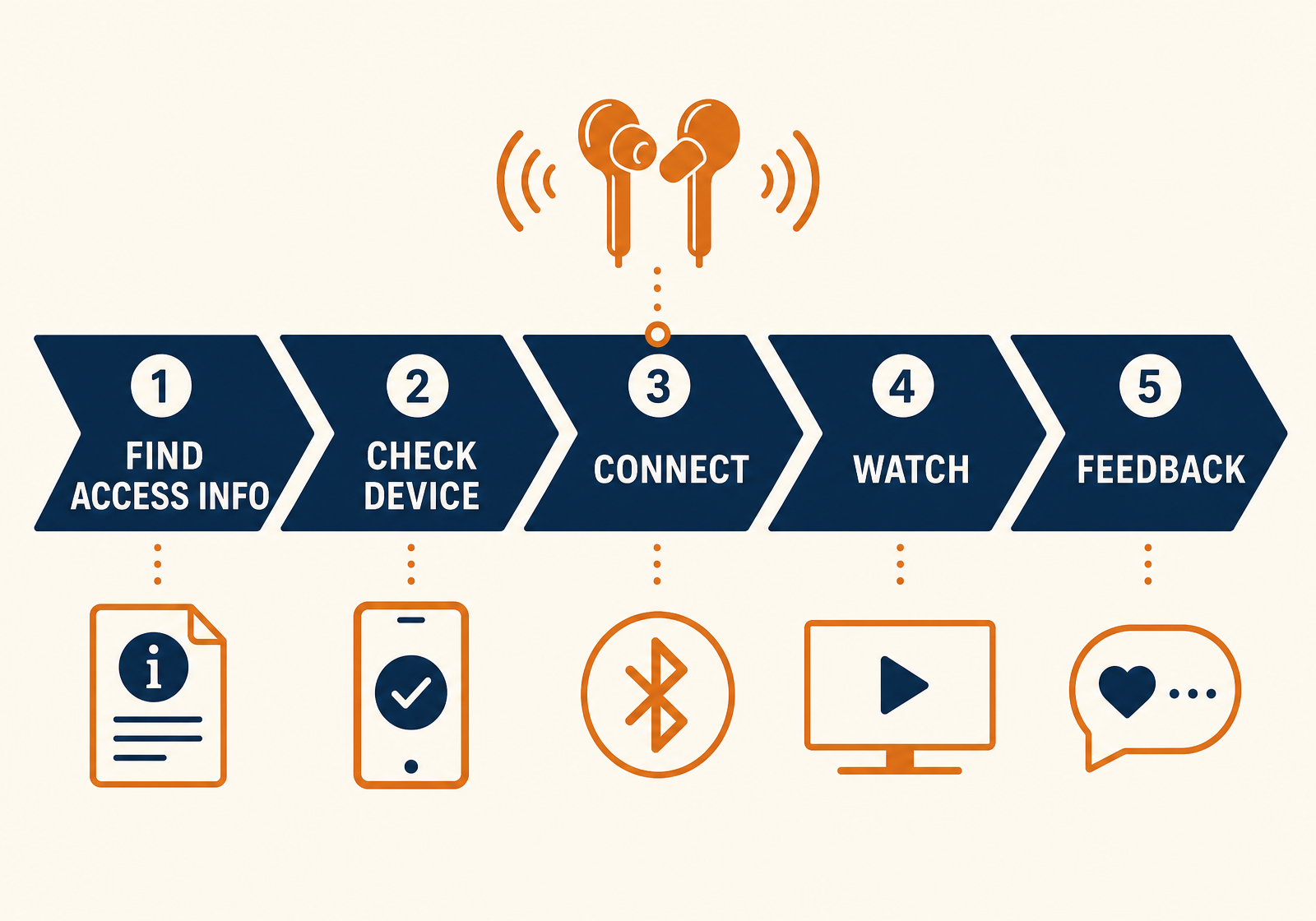
Make assisted listening easier to use, not just available
Vue currently lists 18 cinemas with Auracast, allowing compatible personal hearing devices, earbuds or headphones to receive cinema audio directly rather than through loaned equipment.
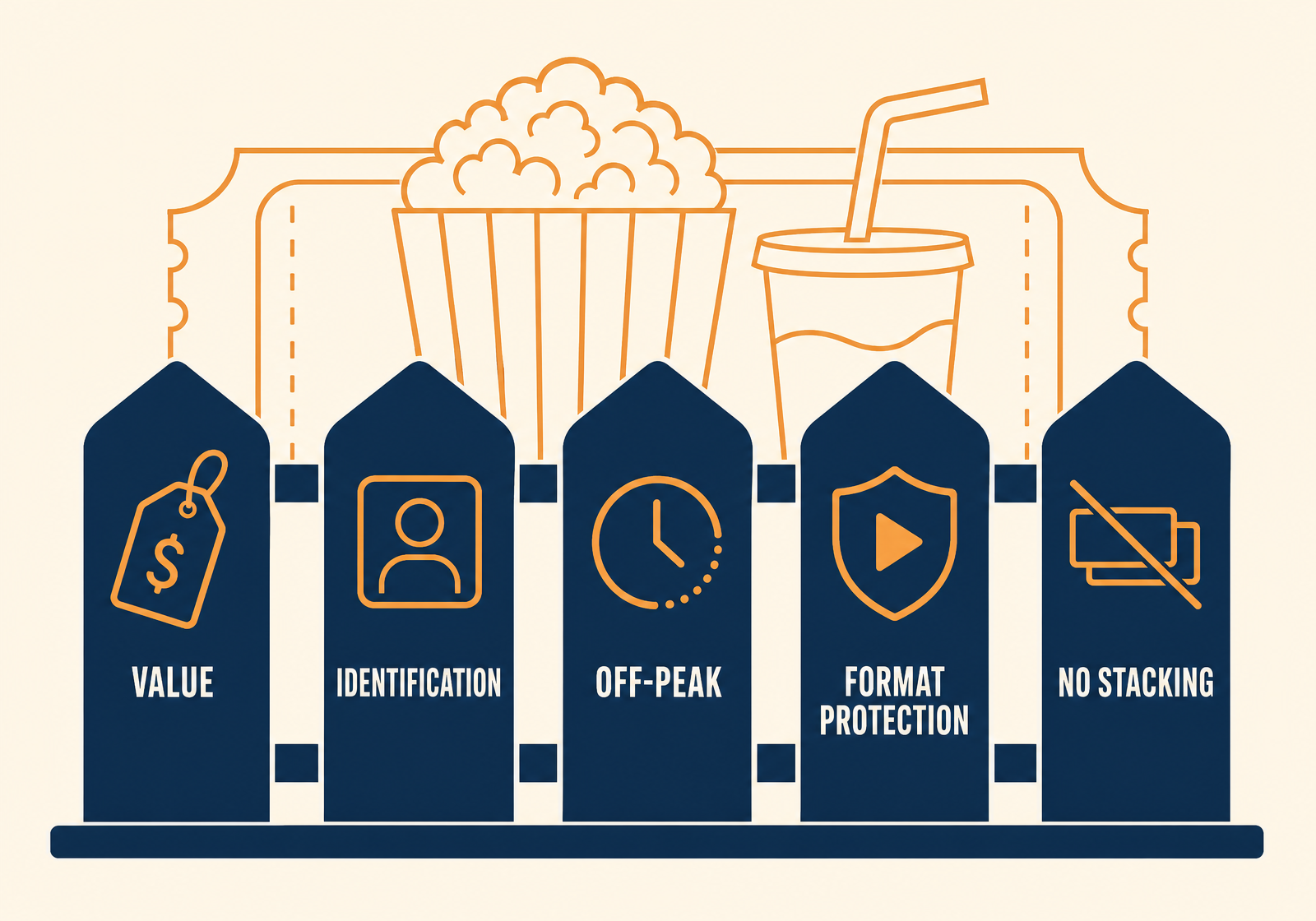
A cinema bundle works better when the commercial fences are clear
Ster-Kinekor's Epic Deal combines a ticket and concessions while controlling day, format, membership and discount stacking — the architecture matters more than the price.
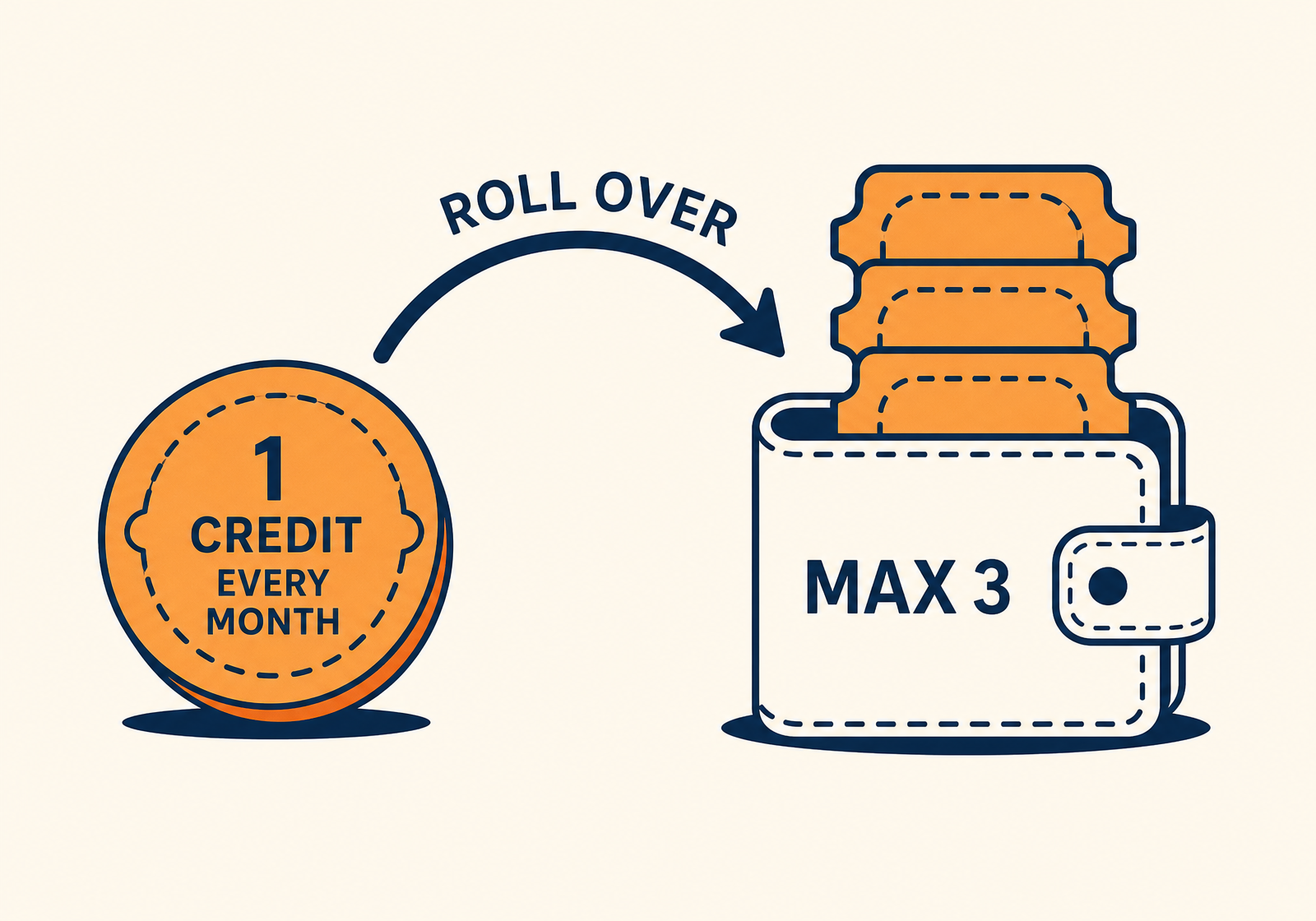
Unlimited is not the only cinema subscription
Alamo's Season Pass Limited gives subscribers one ticket credit per month, with unused credits able to roll over for up to three months — a subscription designed for people who do not visit weekly.
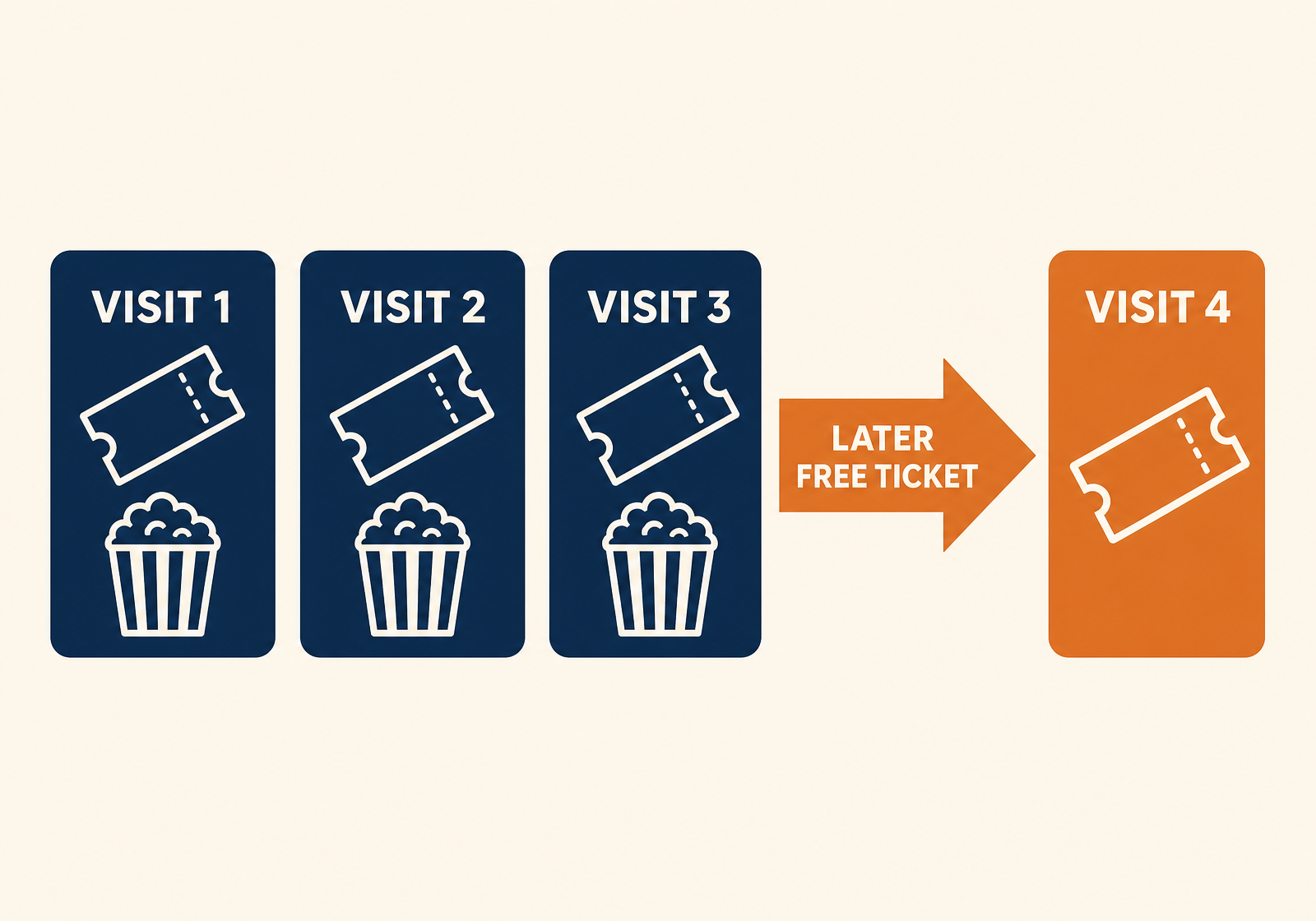
Reward the fourth visit, not the third purchase
Showcase's See 3 and Go Free promotion asks loyalty members to combine a paid ticket and a food and beverage purchase on three separate visits before earning a free ticket for a later redemption period.
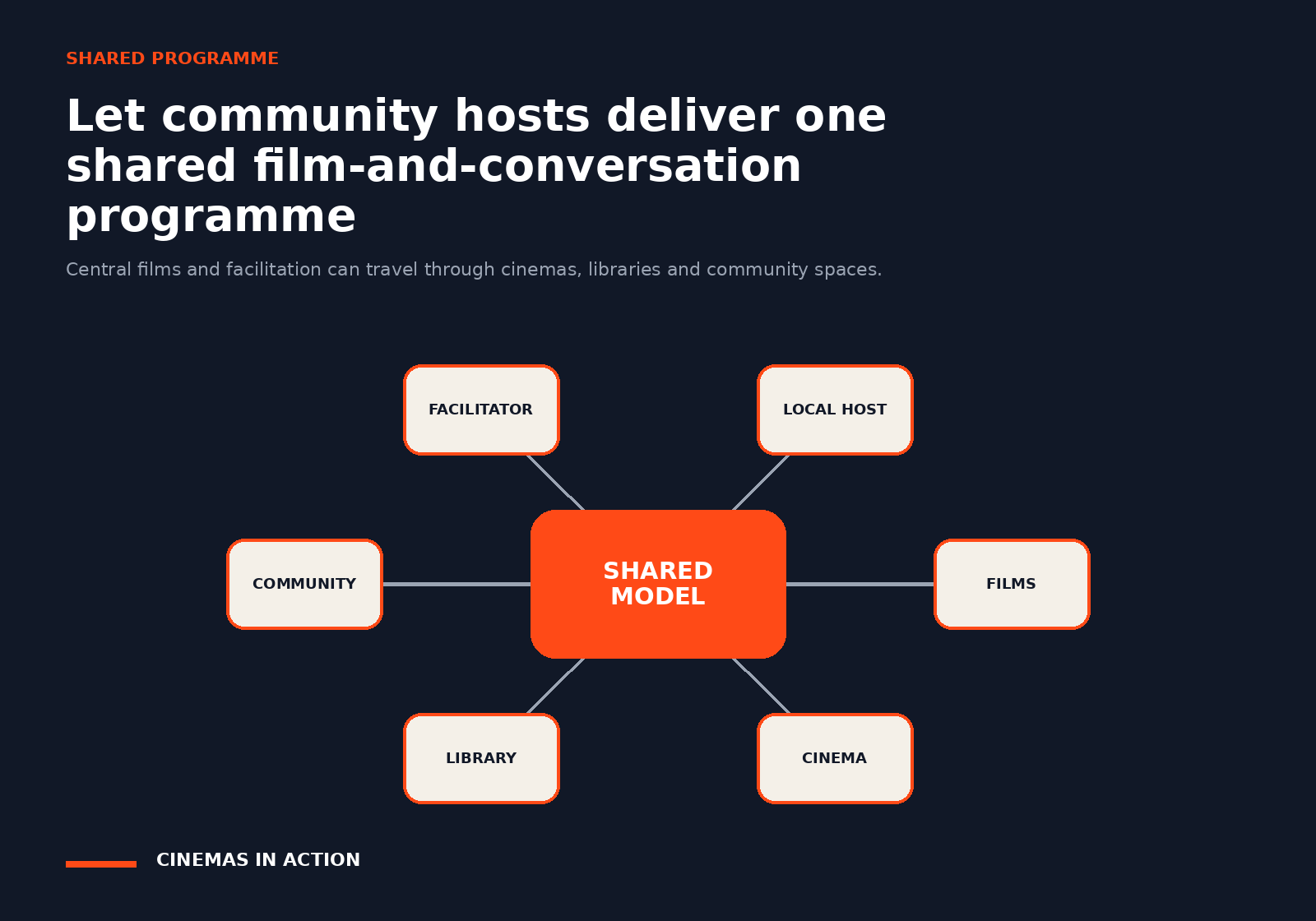
Let community hosts deliver one shared film-and-conversation programme
The Better Together Film Festival supplies eight films and a shared purpose to local hosts including cinemas, libraries, faith groups, breweries and community spaces.
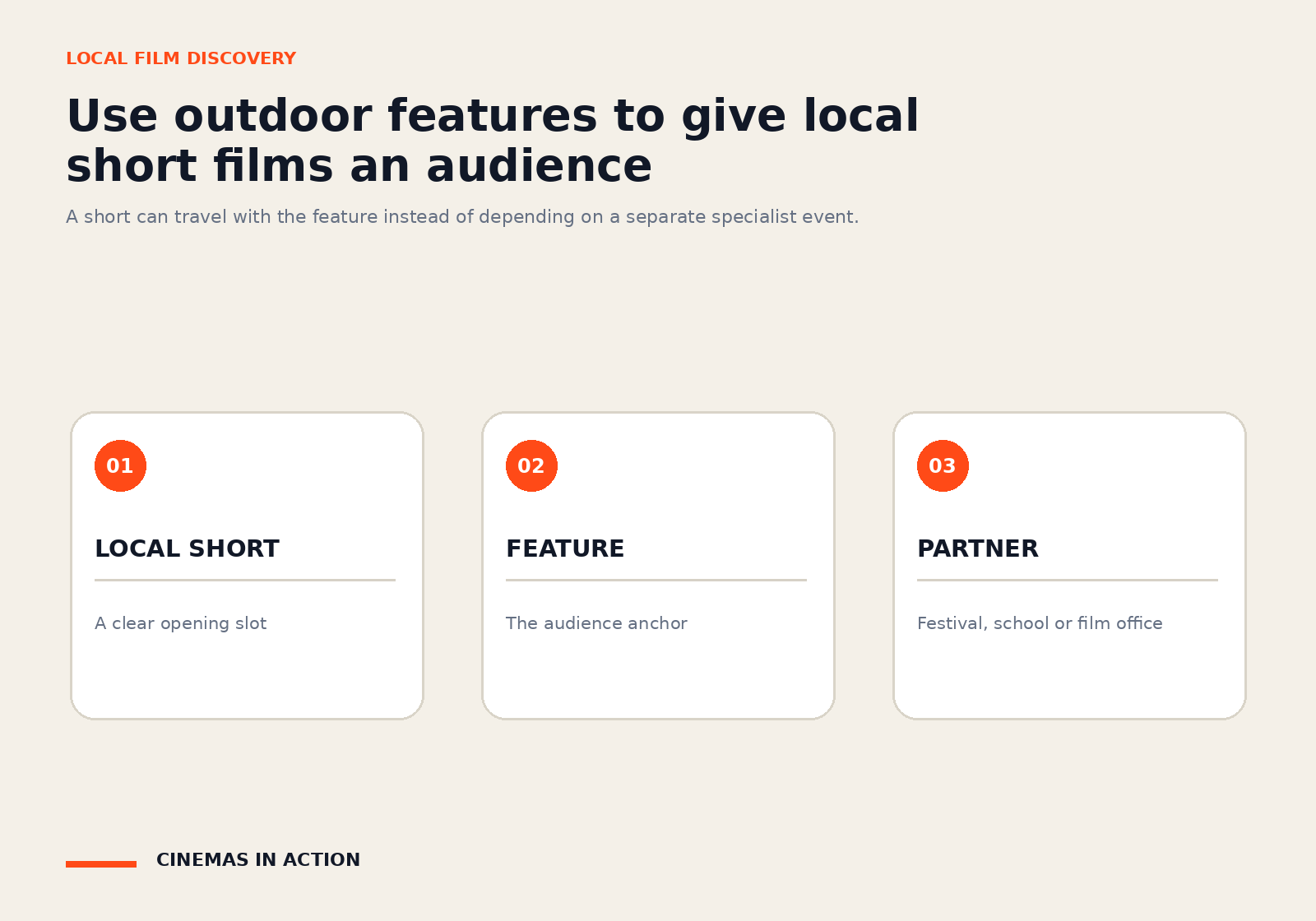
Use outdoor features to give local short films an audience
Palma’s free outdoor season pairs several feature films with shorts by emerging Balearic filmmakers, placing local work in front of a larger general audience.
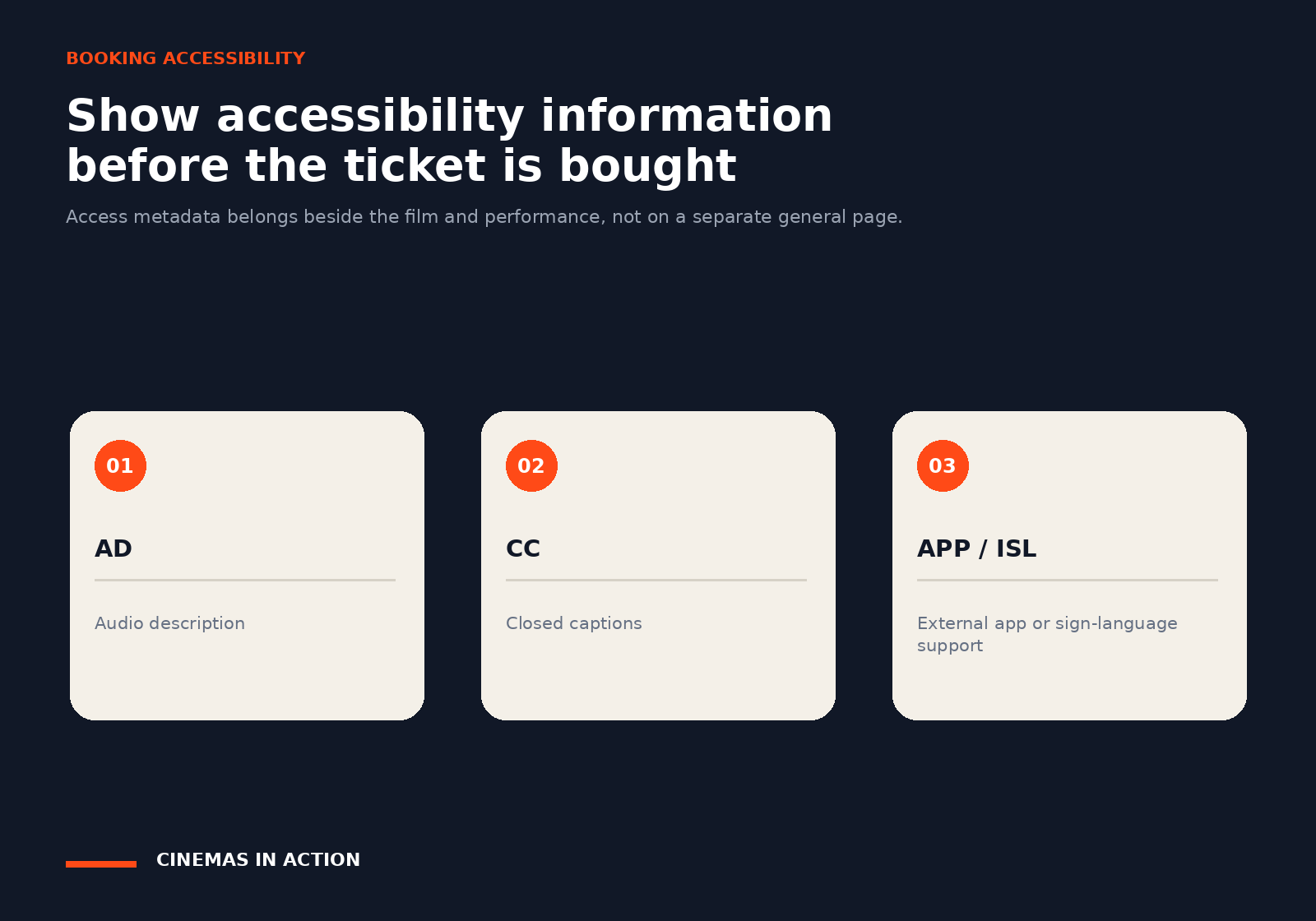
Show accessibility information before the ticket is bought
A 2026 directive requires major ticketing platforms to make film and performance accessibility information clear before purchase, including external-app delivery where relevant.
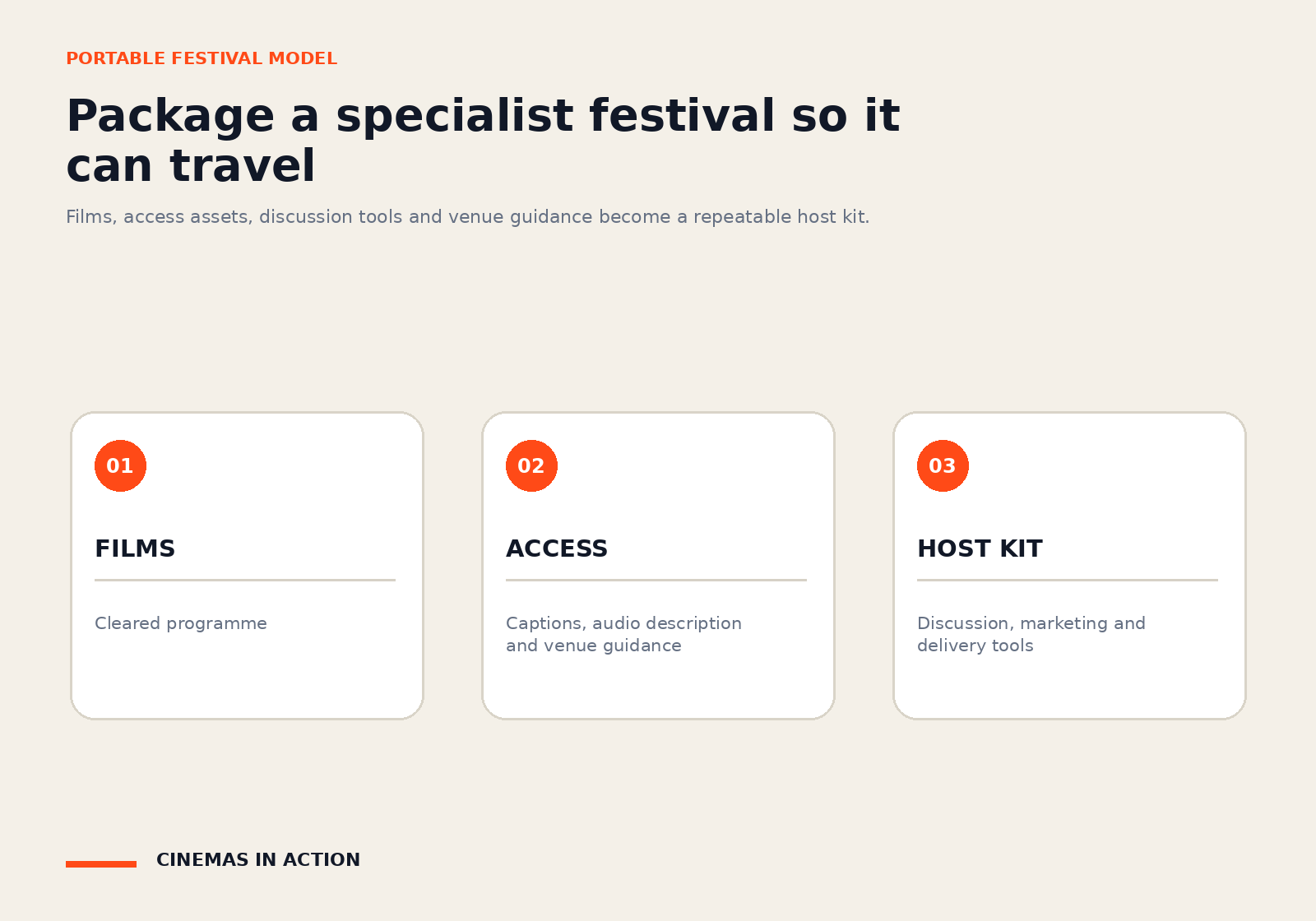
Package a specialist festival so it can travel
Cinema Touching Disability reused a proven short-film programme for its first Houston edition and offers past line-ups for collaborative screenings throughout the year.
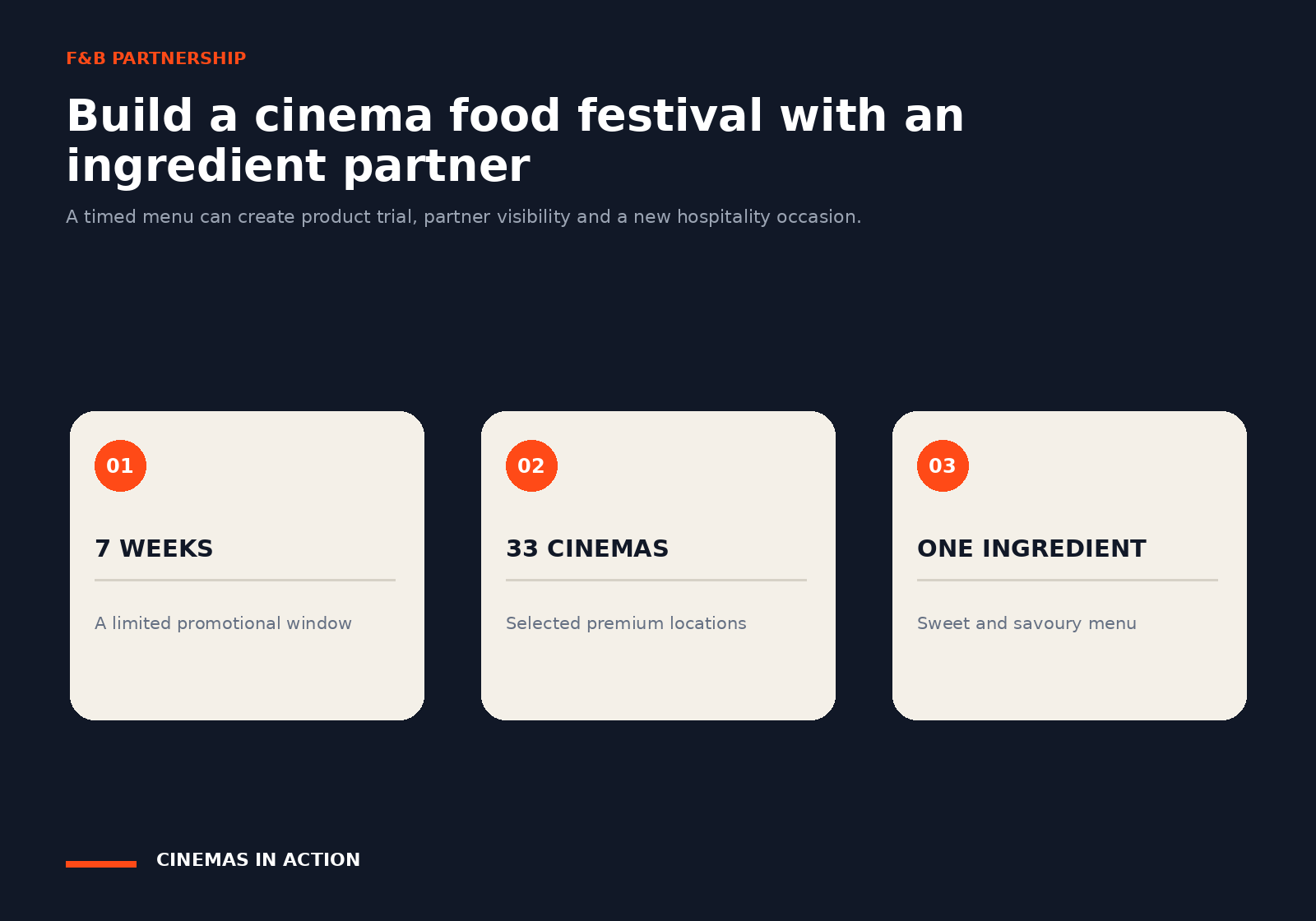
Build a cinema food festival with an ingredient partner
PVR INOX has turned an ingredient partnership into a seven-week limited menu across 33 premium cinemas, extending beyond one sponsored concession item into a timed hospitality event.
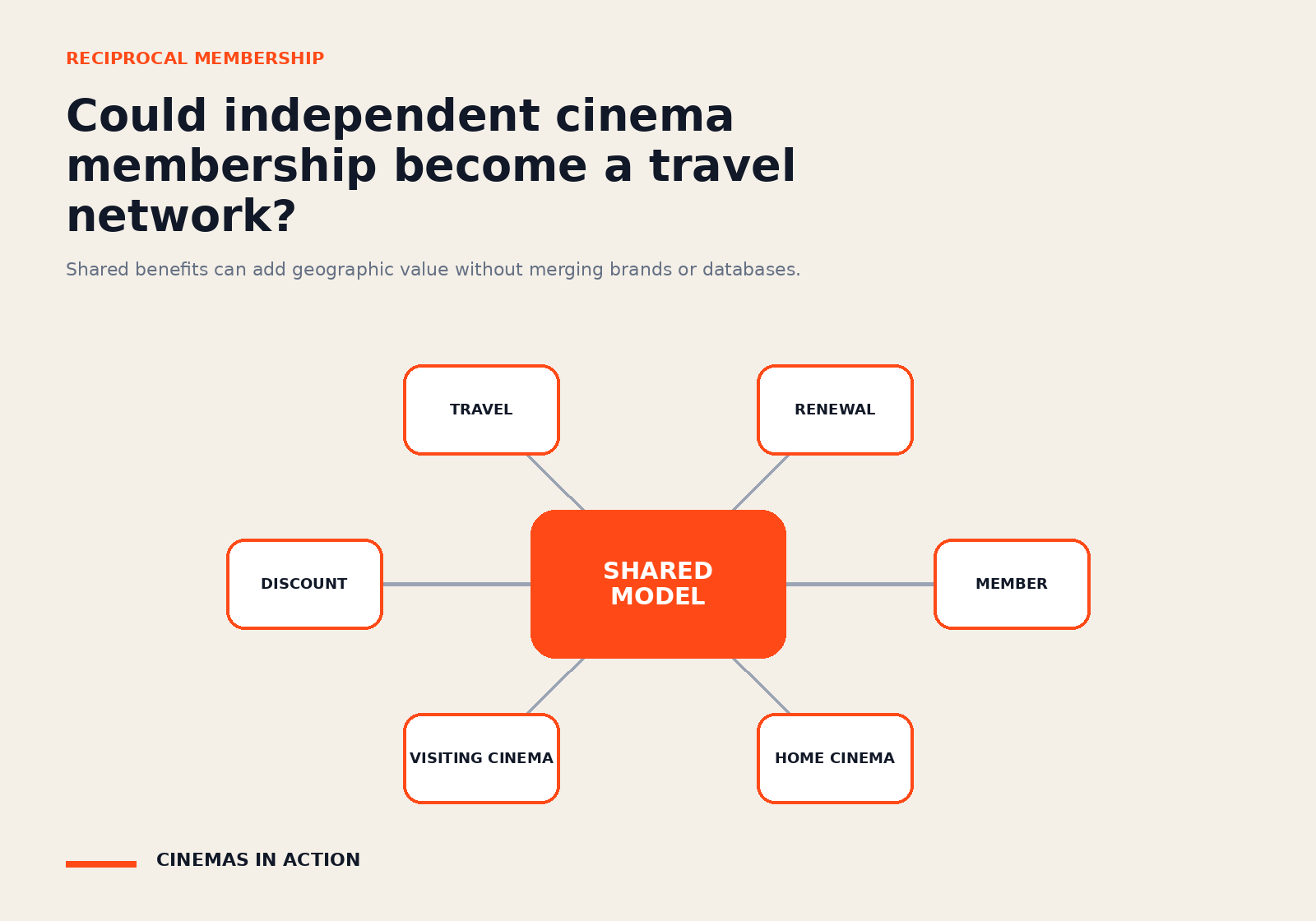
Could independent cinema membership become a travel network?
The 2026 Visiting Members Program links 90 independent exhibitors across 33 states, allowing members of one participating cinema to receive member pricing and selected benefits at others.
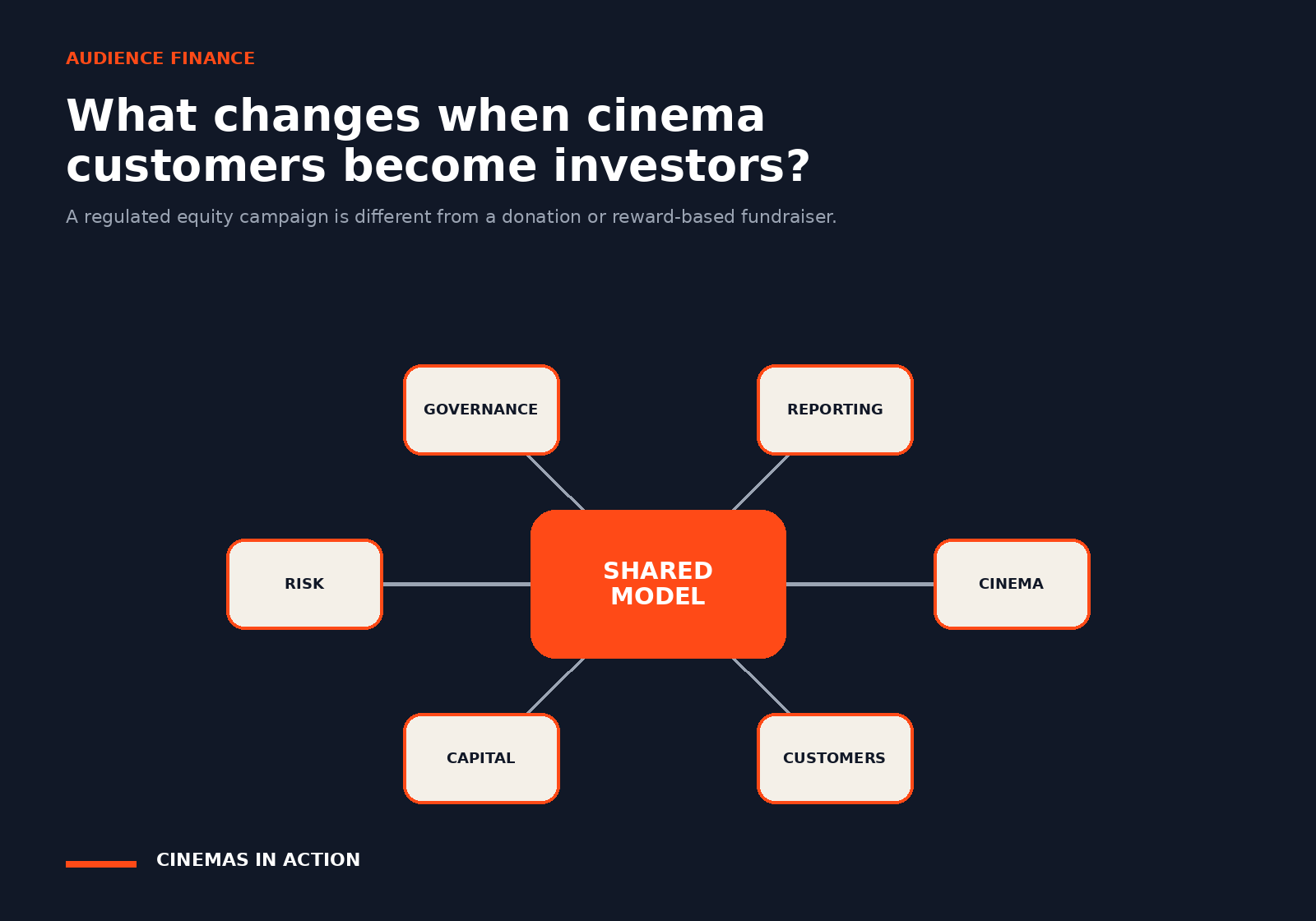
What changes when cinema customers become investors?
mk2 is using regulated equity crowdfunding for expansion and the redevelopment of mk2 Bibliothèque, asking supporters to consider becoming investors rather than donors.
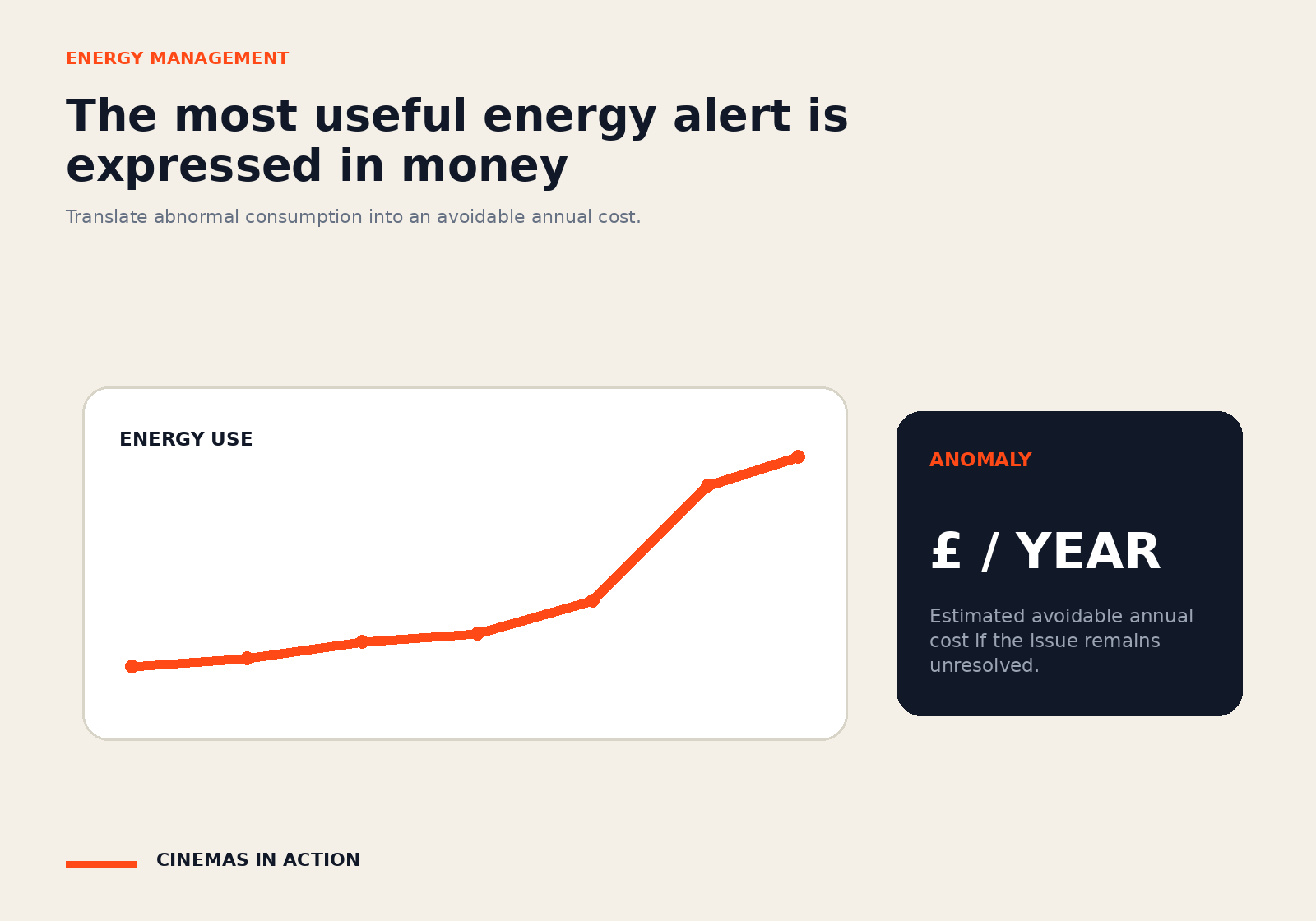
The most useful energy alert is expressed in money
Cinesa alerts cinema managers to abnormal electricity use and estimates the annual cost if the problem is left unresolved, translating technical data into a local operating decision.
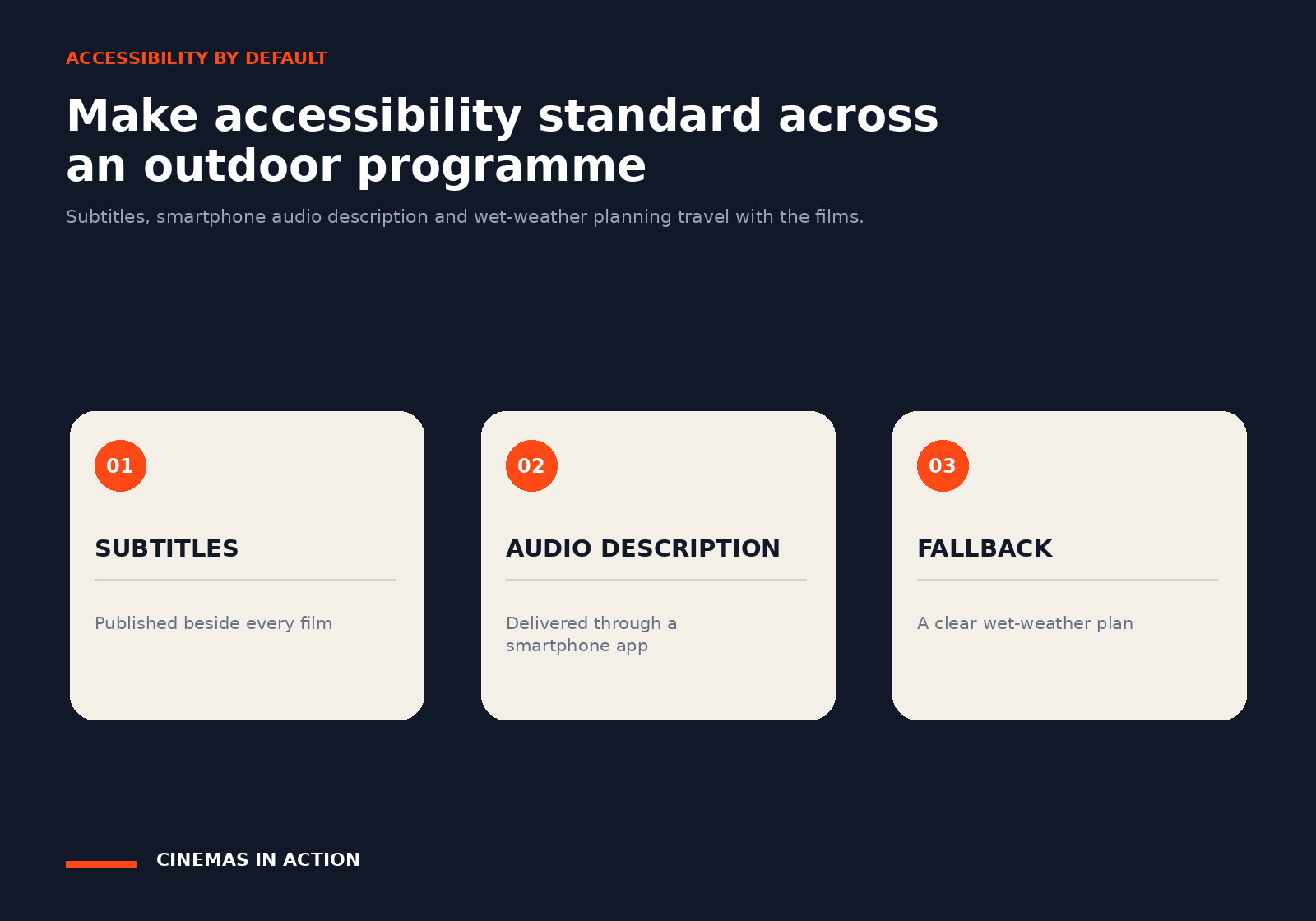
Make accessibility standard across an outdoor programme
INCinema OUTSIDE embeds subtitles and smartphone audio description across a distributed summer programme instead of treating access as a specialist event in one venue.
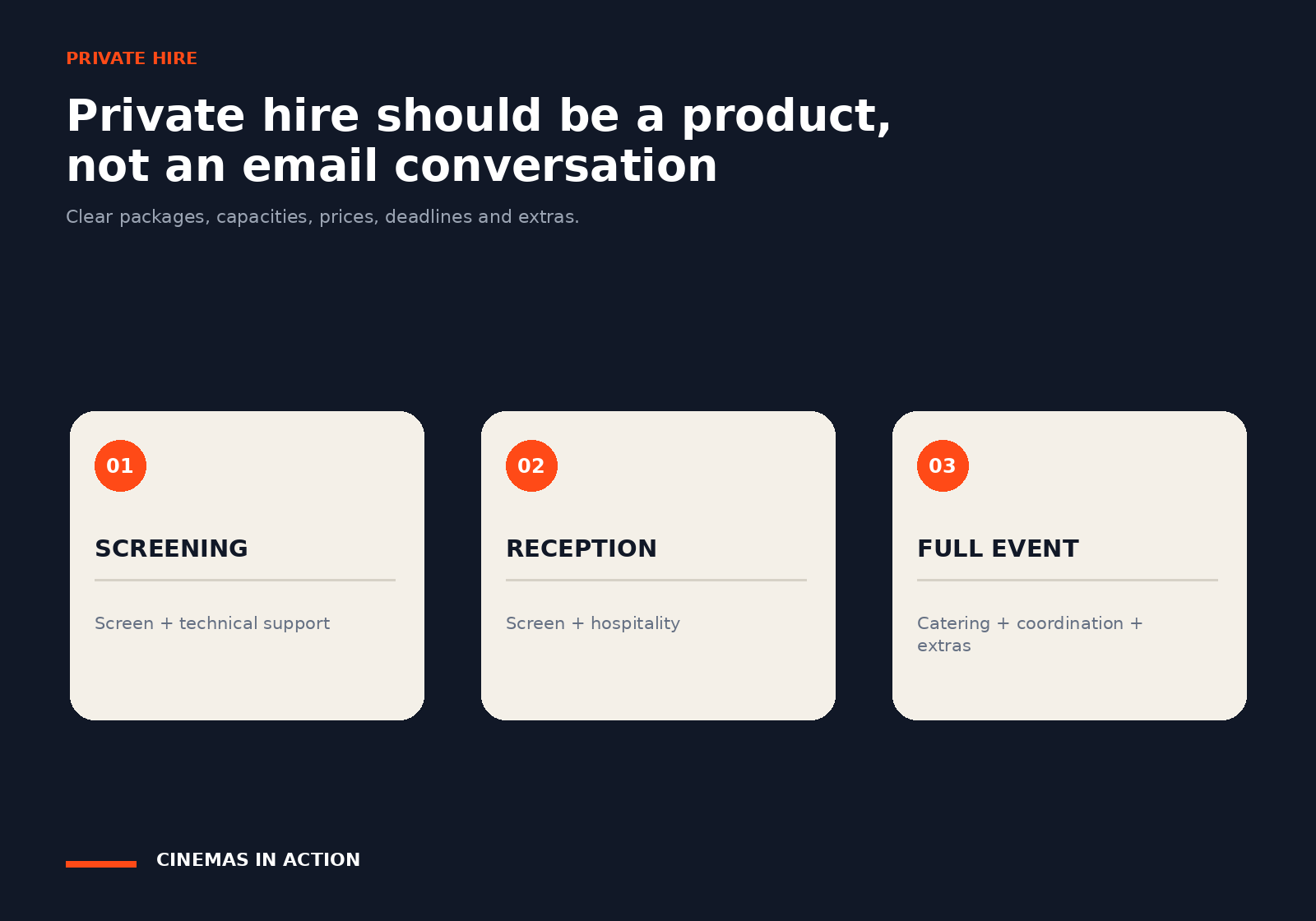
Private hire should be a product, not an email conversation
Genesis Cinema’s public venue-hire guide turns screens, bars, outdoor space, catering and technical support into defined products with visible capacities, indicative prices and operating rules.
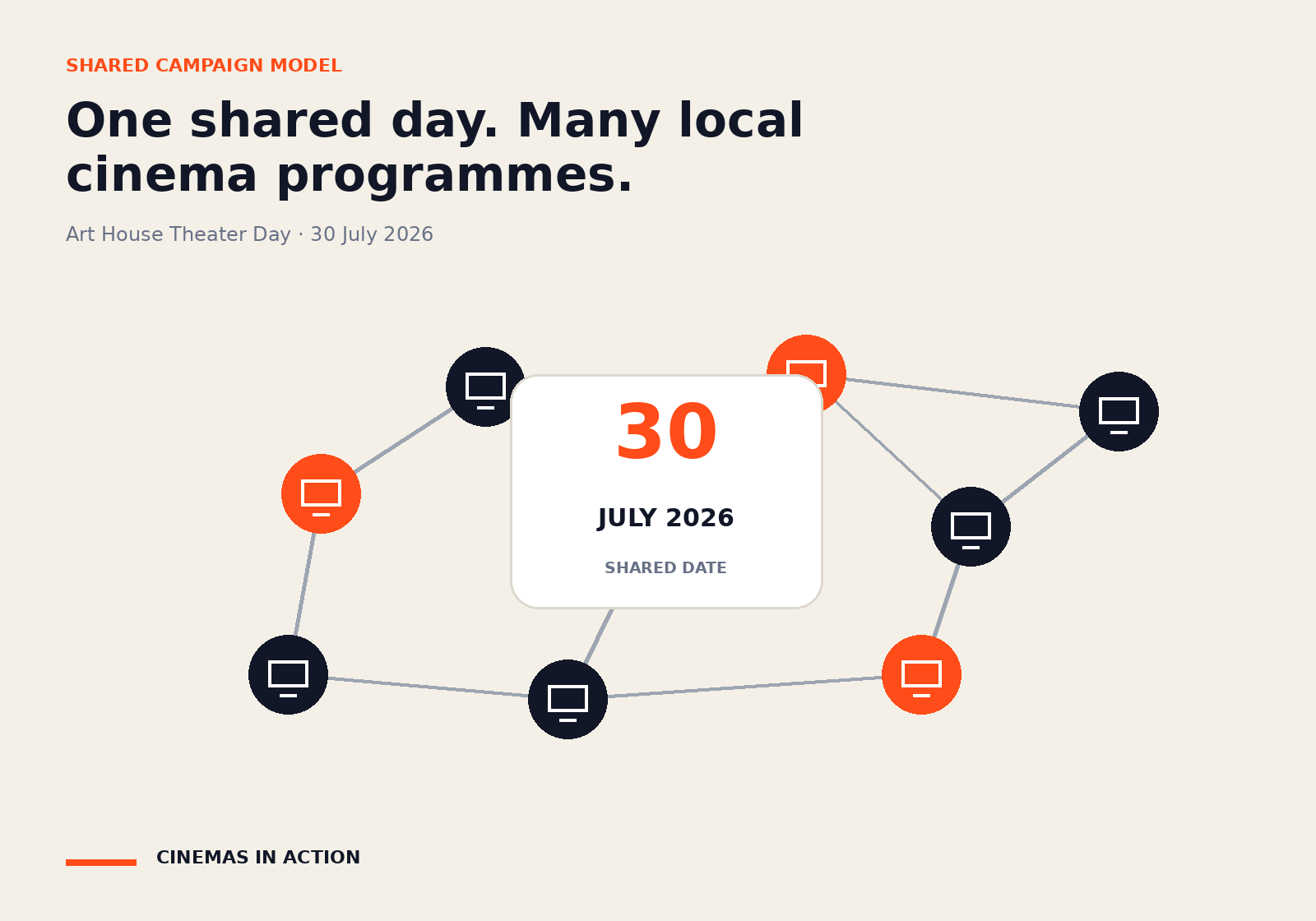
Create a shared cinema day without losing local identity
Art House Theater Day gives participating cinemas a common date, film slate, campaign identity, map, ambassador and additional materials while leaving local delivery with each venue. The 2026 event is scheduled for 30 July, so current results are not yet available.
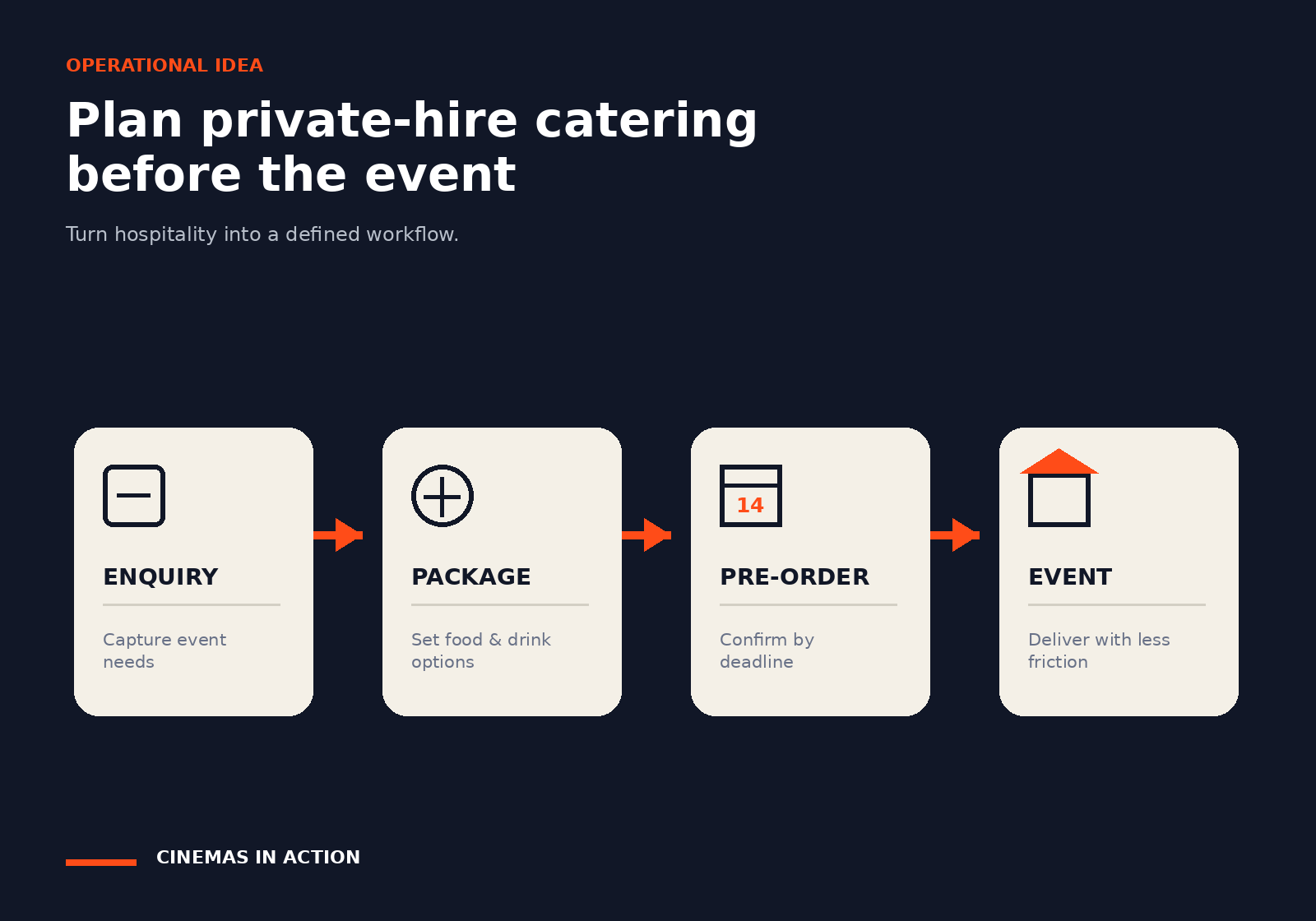
Plan private-hire catering before the event
Everyman requires private-hire food and drink orders through an online link no later than two weeks before the event. The visible mechanism is simple: turn catering into a defined workflow rather than an informal add-on.
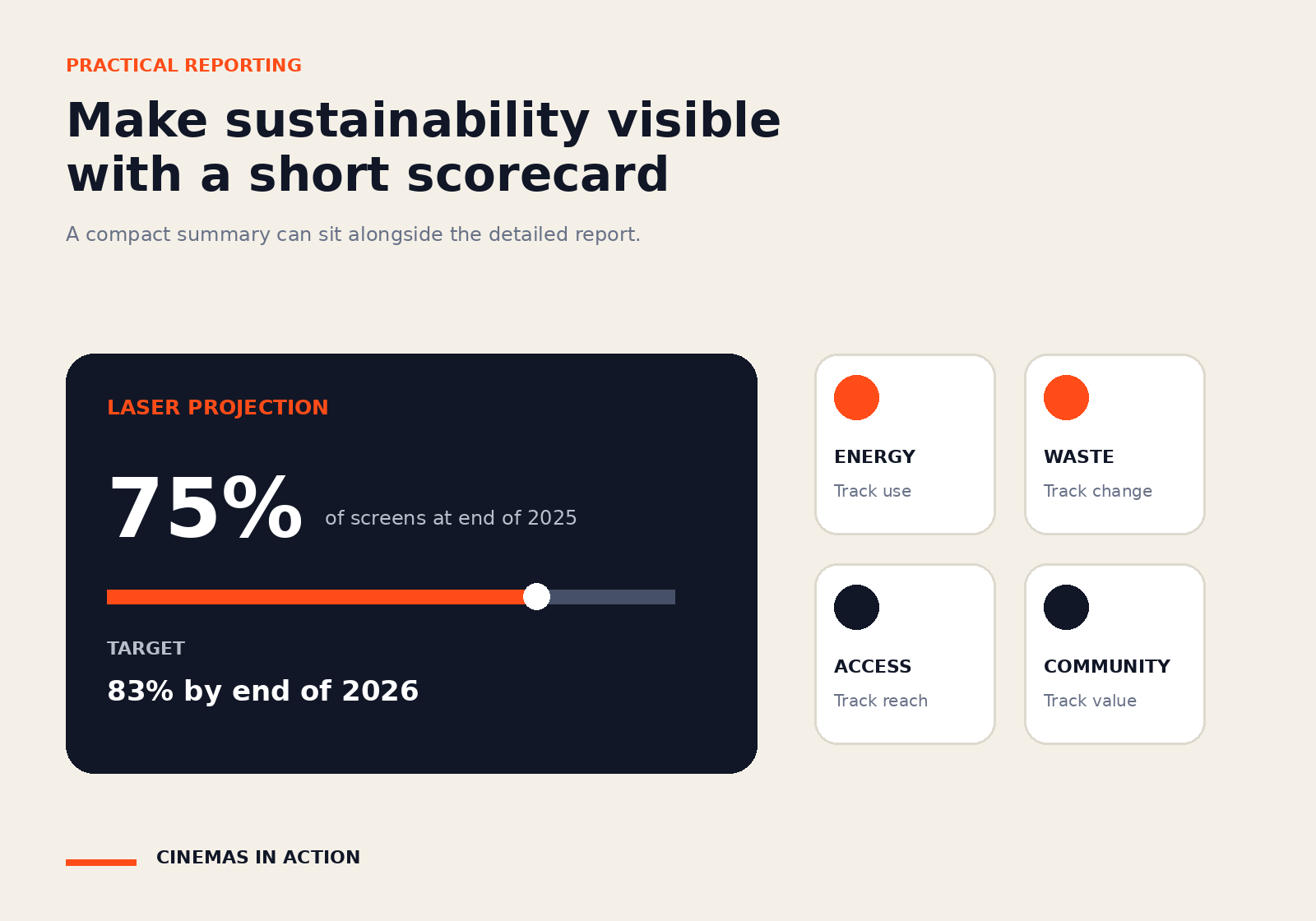
Make sustainability reporting useful with a short scorecard
Kinepolis combines detailed reporting with a compact set of operational figures, including laser-projection progress and a time-bound 2026 target. Smaller cinemas can adapt the communication structure without copying the scale or claiming outcomes they have not measured.

Build a recurring outdoor cinema, not only a one-off screening
Yamanaka Cinema has launched as a seasonal outdoor venue with weekend screenings planned from July to October 2026, 100% renewable electricity and a permanent cinema-venue permit. Results on attendance, cost and carbon impact have not yet been published.
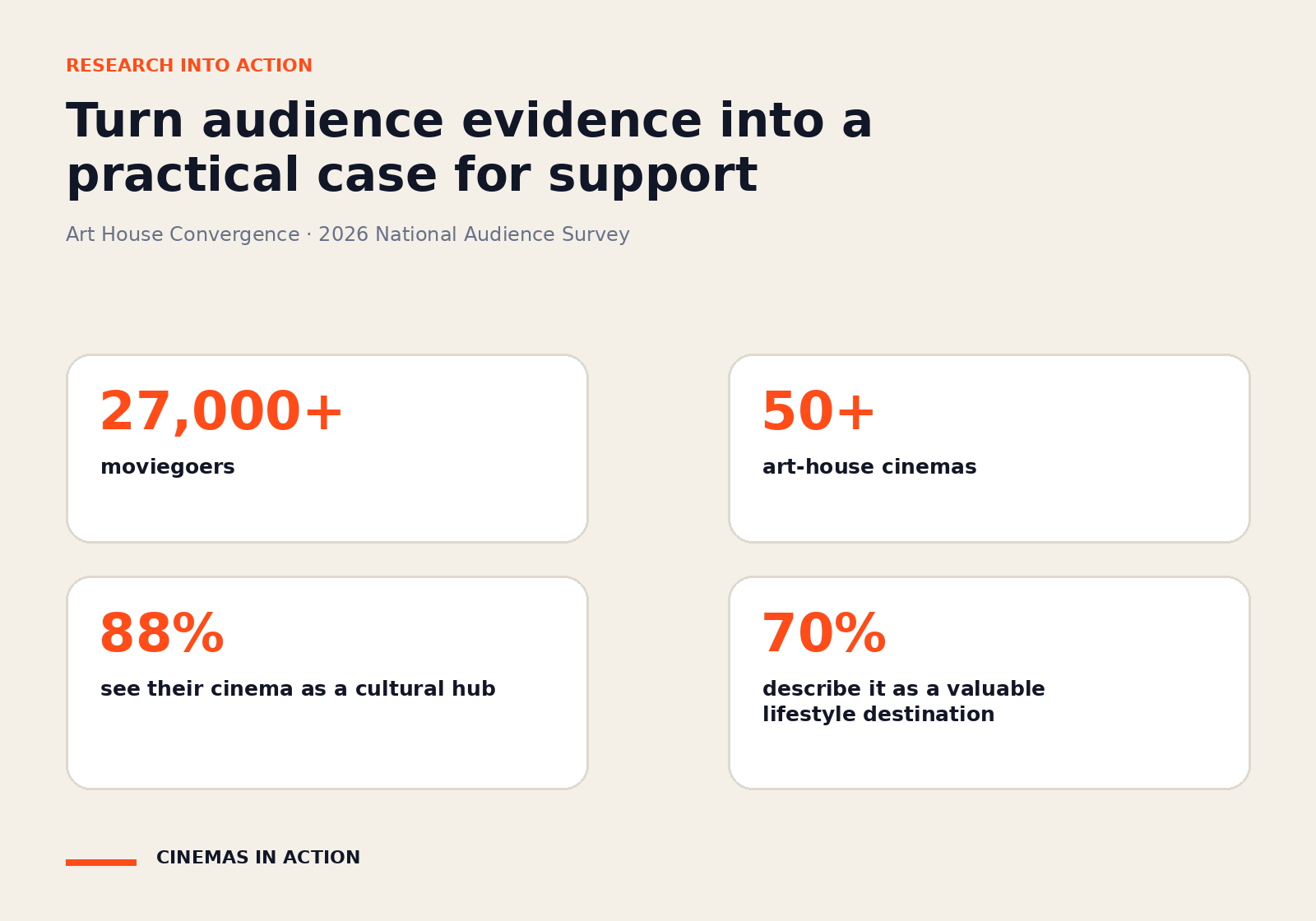
Turn audience research into a practical case for support
Art House Convergence’s 2026 survey provides national evidence about how participating audiences value independent cinemas. The practical opportunity is to combine those benchmarks with local data for sponsorship, funding, membership and stakeholder conversations.
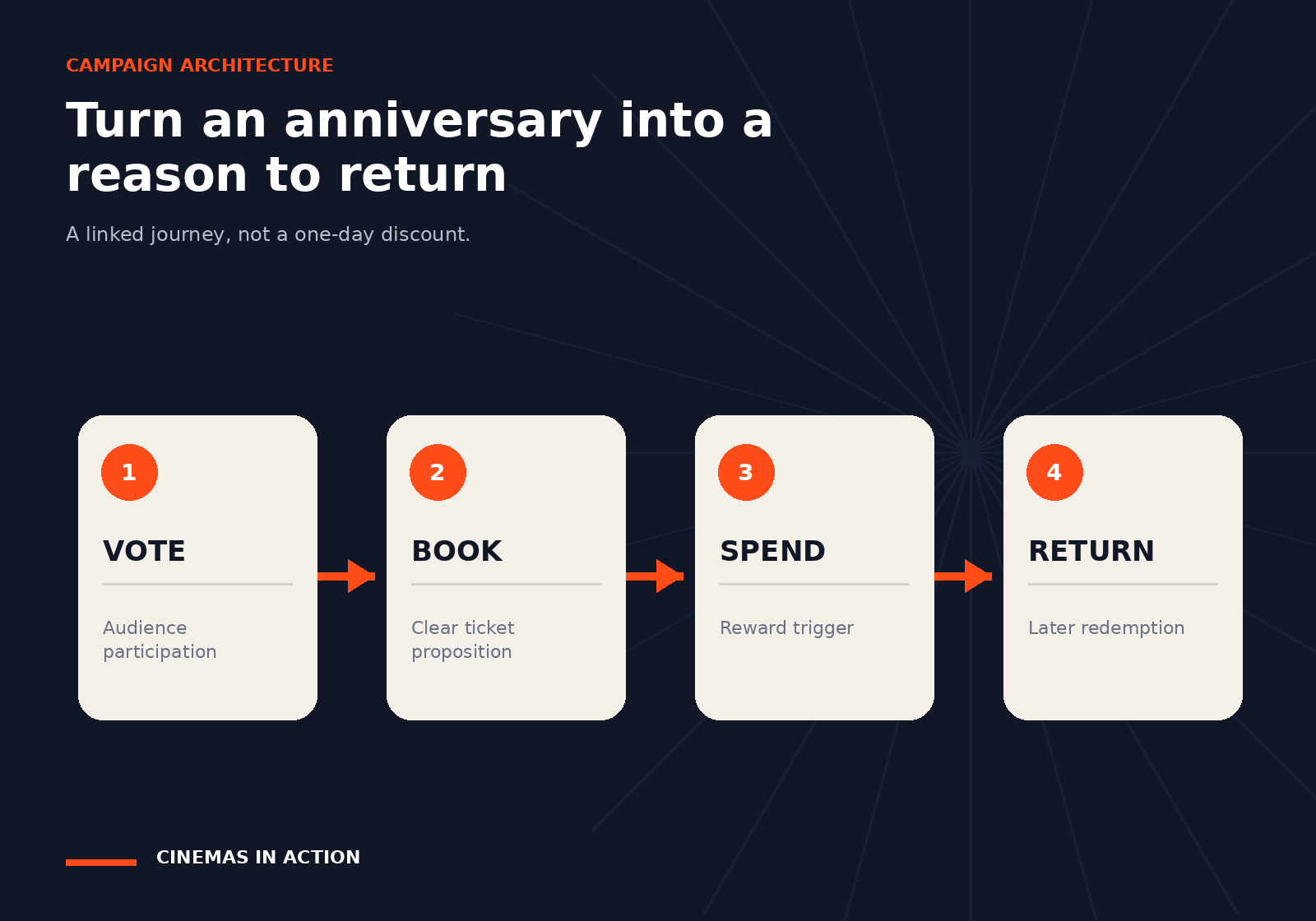
Turn an anniversary into a return-visit campaign
Cineworld’s 30th-anniversary campaign links audience voting, repertory programming, channel-based ticket pricing, a concession-spend trigger and a later reward-redemption window. The mechanics are visible; their incremental commercial effect is not.
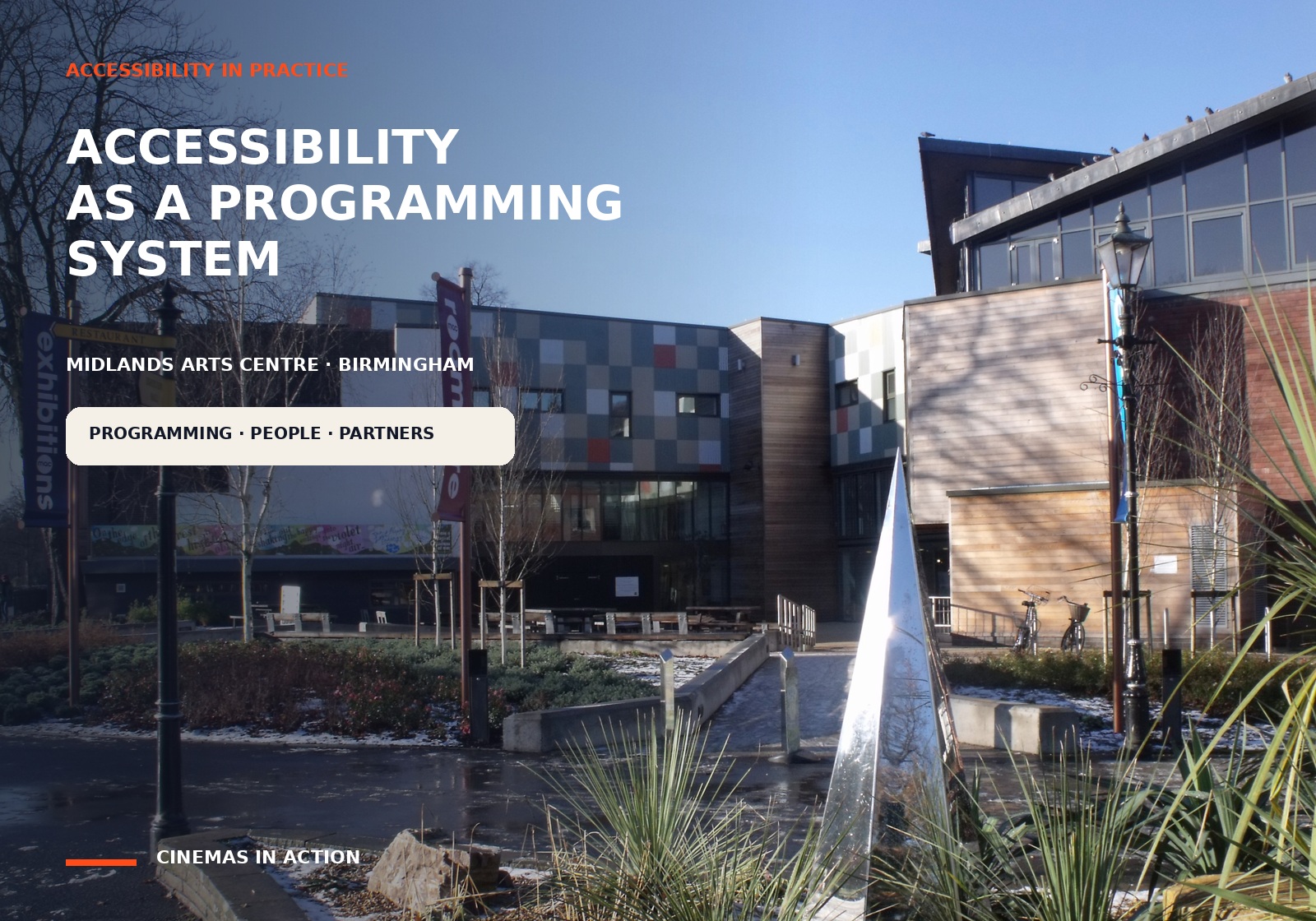
Build accessibility into the cinema programme, not around it
Midlands Arts Centre’s Expanding the Frame project treated accessibility as a programming, audience-development and organisational system. The published case study reports attendance above its year-three estimate, while leaving cost, revenue and long-term retention questions open.
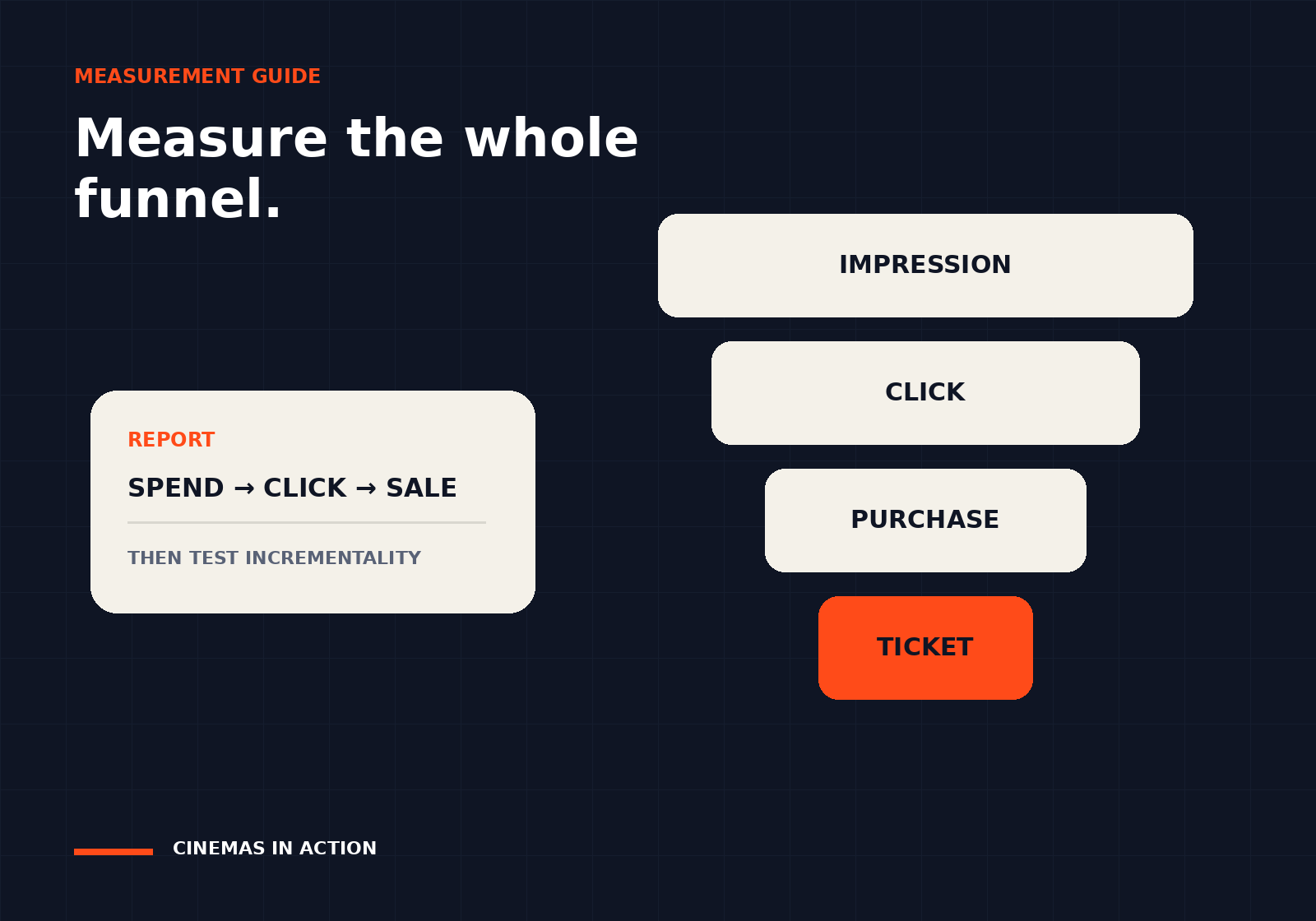
How to measure paid social from impression to cinema ticket
An ICA marketing pilot reports a full campaign funnel from spend to tickets and revenue. The useful lesson is how to structure measurement, while treating attribution and incrementality cautiously.
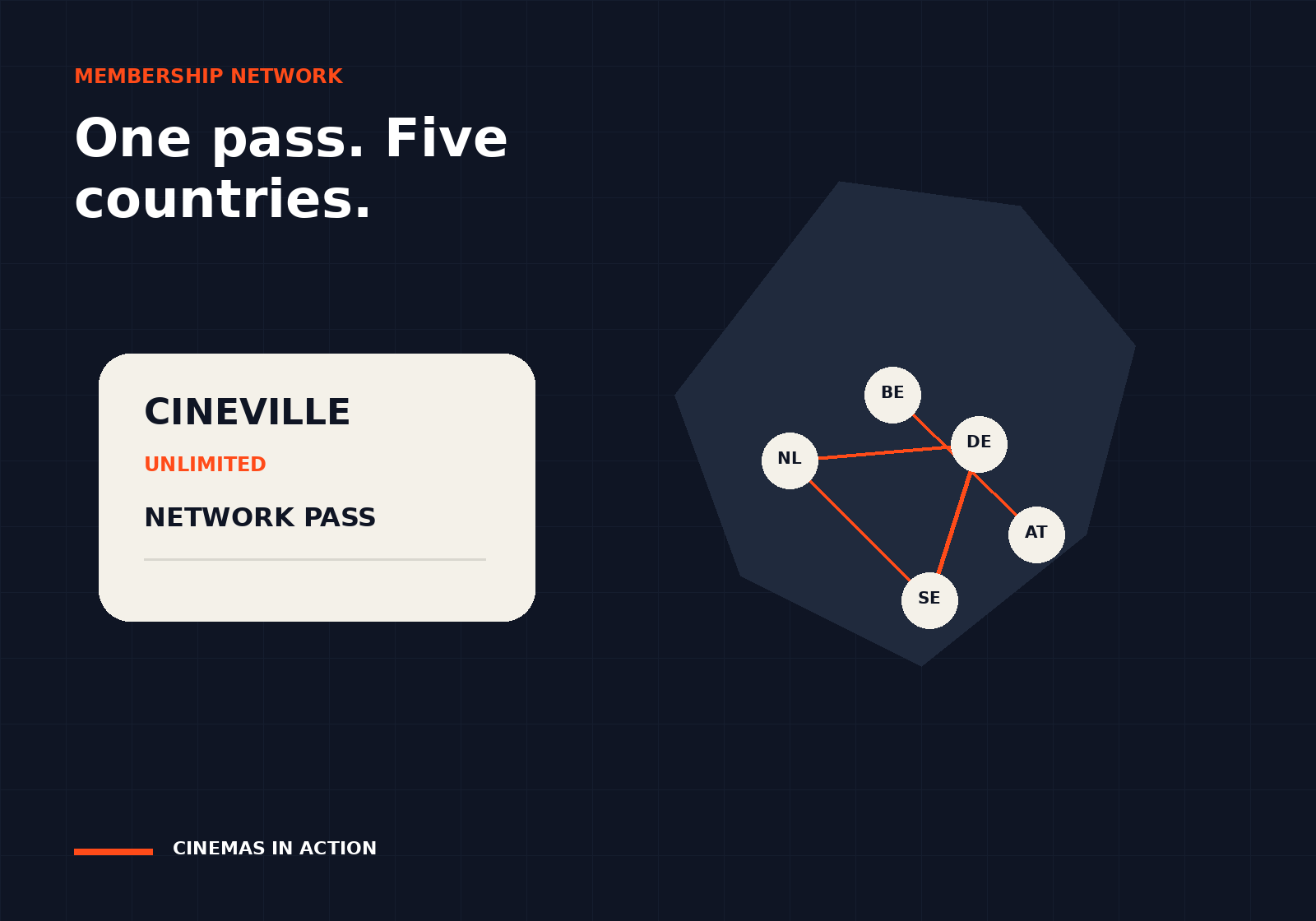
How Cineville turns an independent-cinema pass into a European network
Cineville combines a locally owned independent-cinema subscription with a limited summer roaming benefit, showing how shared infrastructure can add value beyond a single venue.
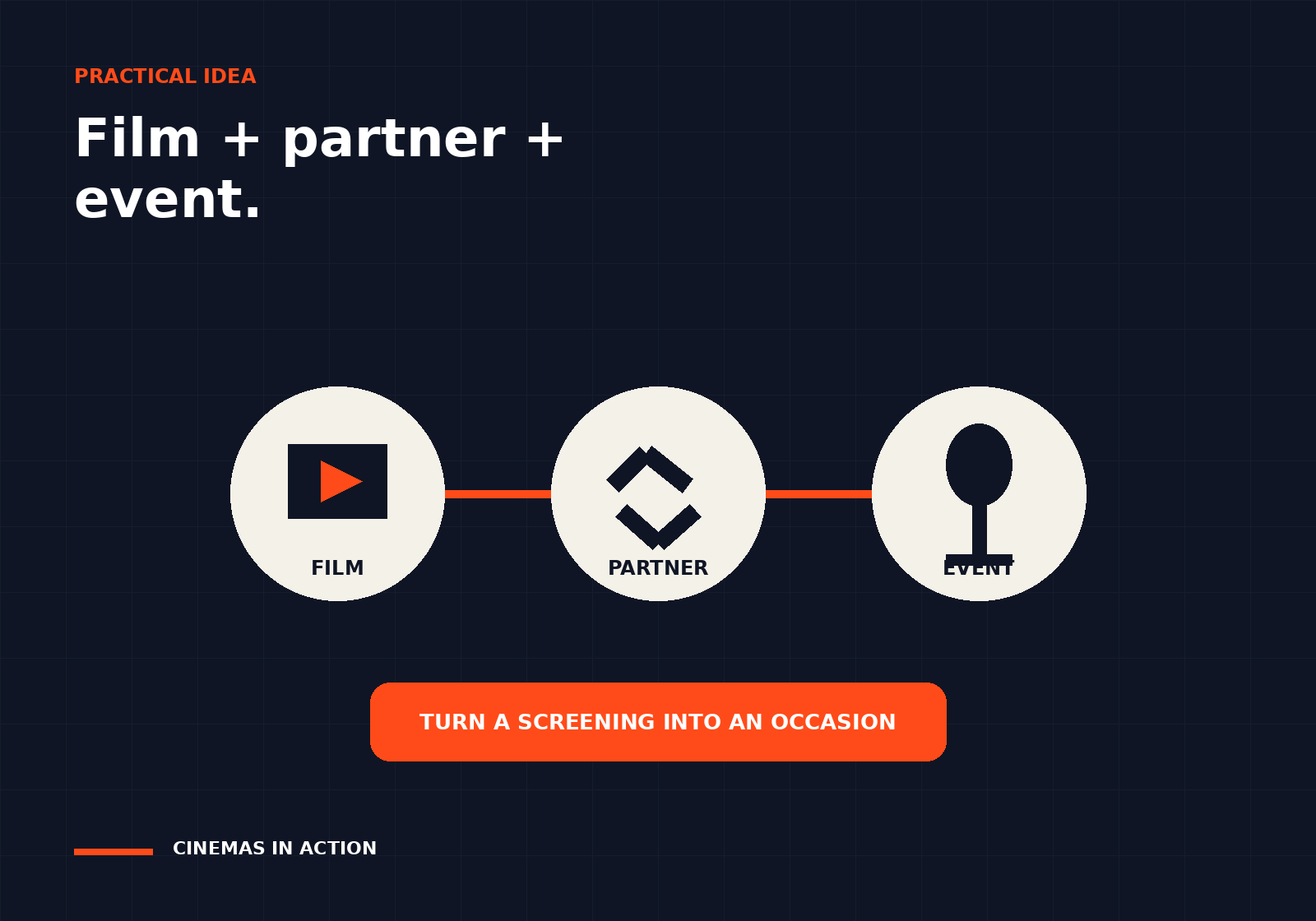
Build a specialist film premiere with a relevant local partner
Cameo Cinema combined a documentary premiere with a themed tasting, director conversation, live podcast and signed poster, creating an occasion that could not be replicated at home.

How to evaluate a dementia-friendly cinema pilot
Auckland’s three-cinema project shows how co-design, partner outreach, operational adjustments and shared evaluation can turn a small accessibility pilot into useful evidence.
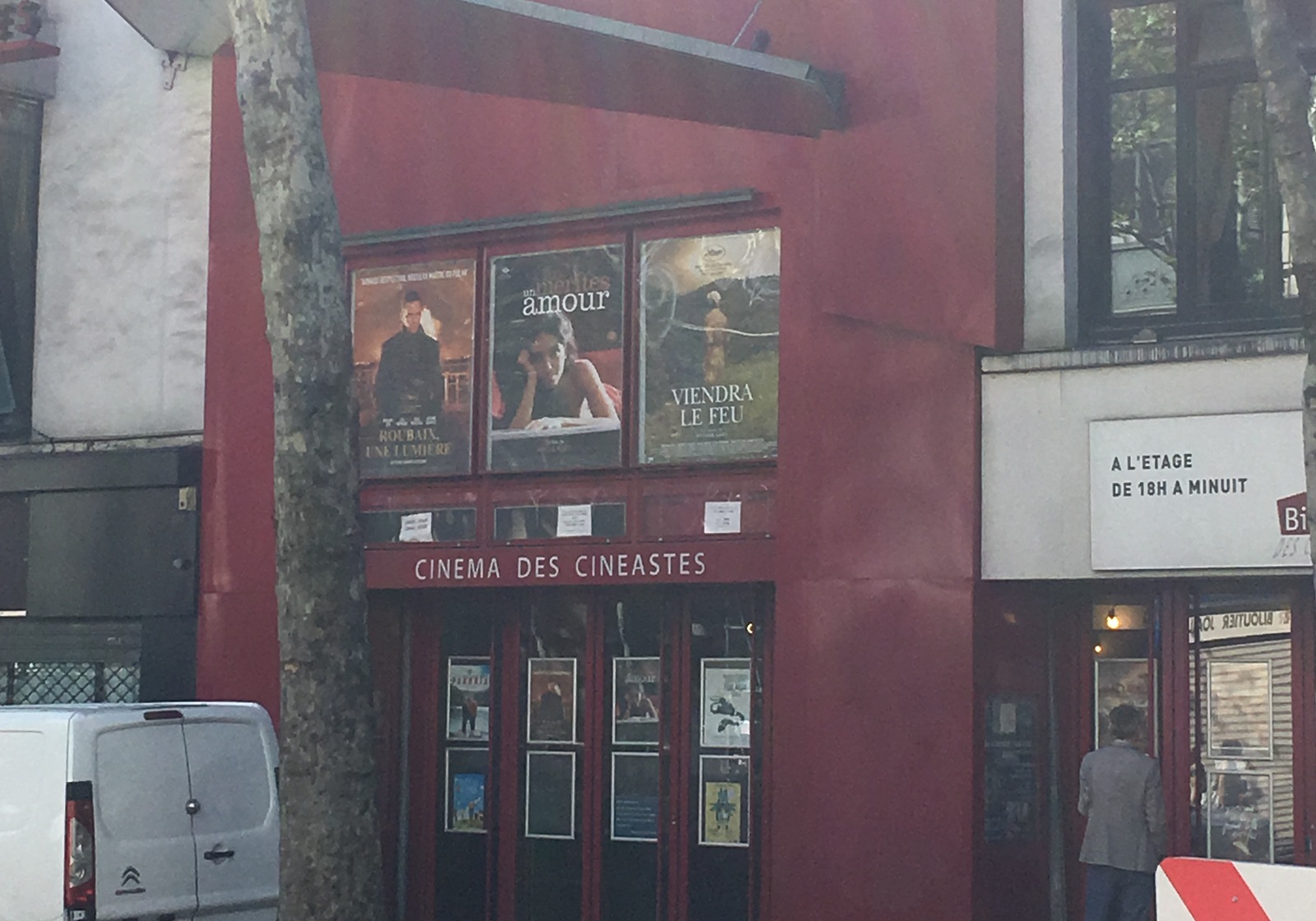
What a Paris independent learned from testing an unlimited youth cinema pass
Cinéma des Cinéastes still offers a €15, 31-day pass for 15–25-year-olds. Its detailed 2016–17 pilot report shows what drove purchase, how people used it and where the economics became difficult, but it does not show how the current offer performs.
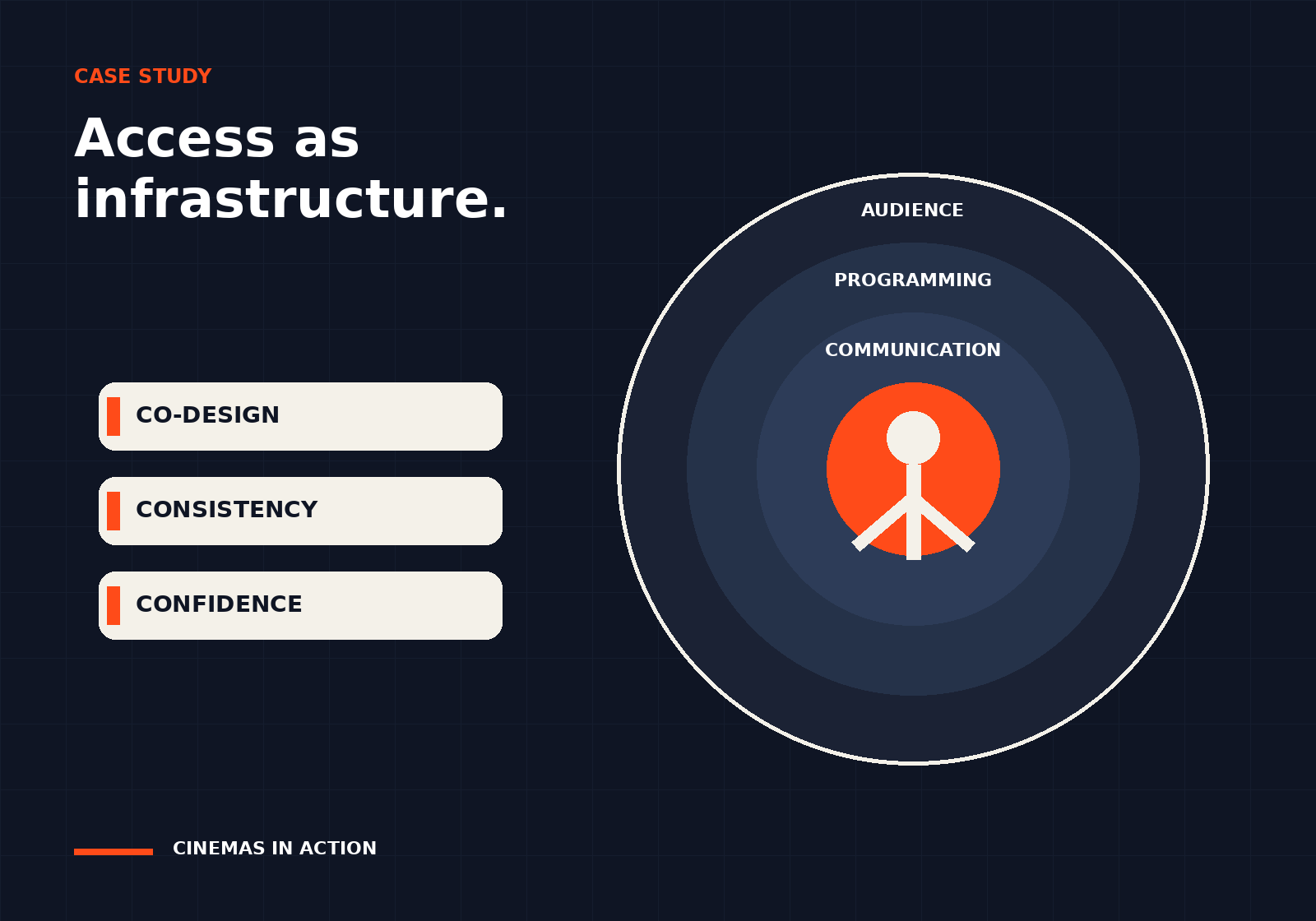
What it takes to embed accessibility into cinema programming
MAC Birmingham’s three-year Expanding the Frame programme treated access as a combination of programming, communication, technology, staff practice and audience dialogue.
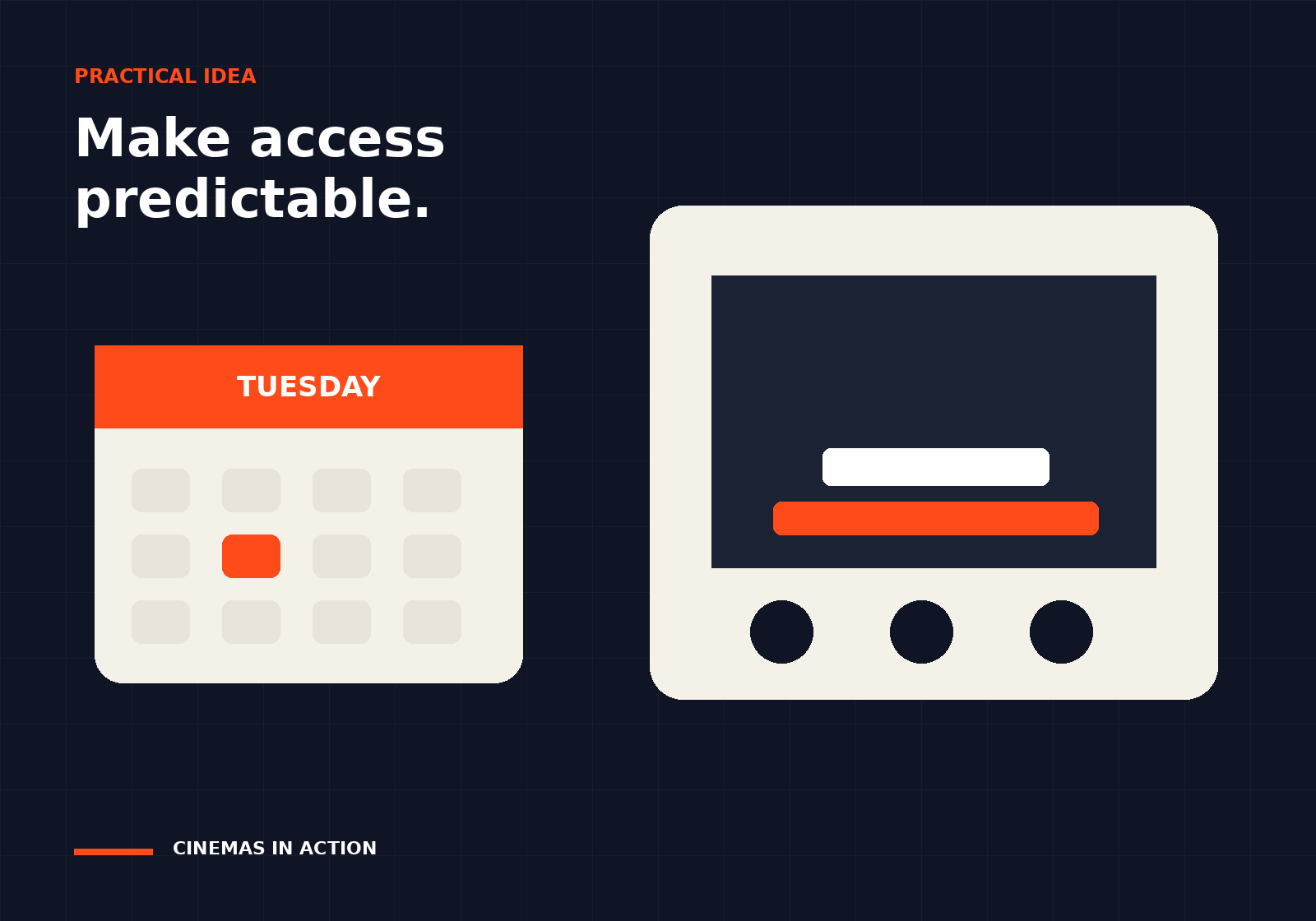
Make open-caption screenings easier to find with a weekly rhythm
Amherst Cinema’s Open Caption Tuesdays shows how one stable page, one repeated day and consistent labels can reduce friction for audiences who need or prefer captions.
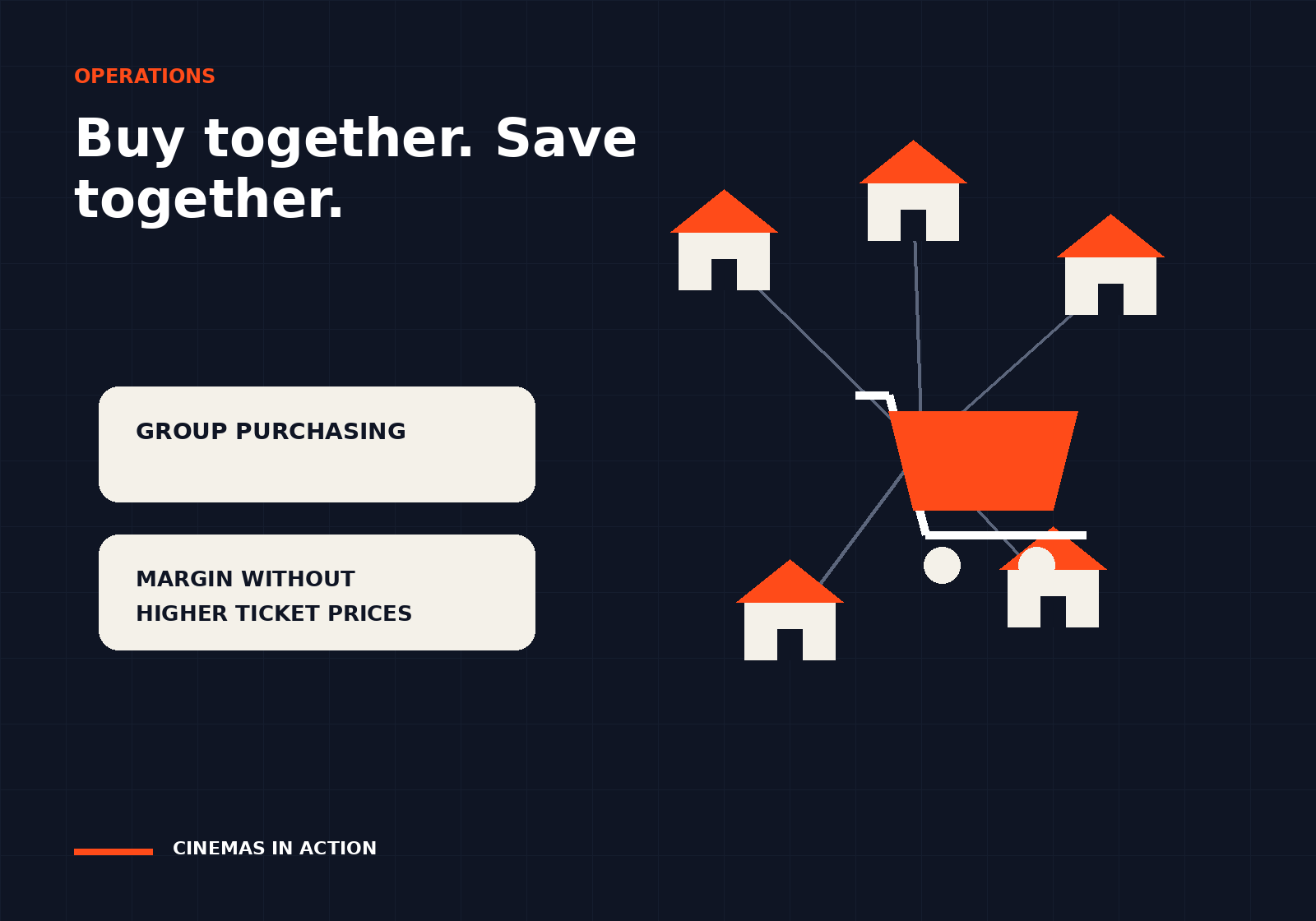
Can independent cinemas improve margin by buying together?
The Independent Cinema Alliance Marketplace reports substantial purchasing volume and savings, illustrating how collective procurement can improve economics without raising audience prices.
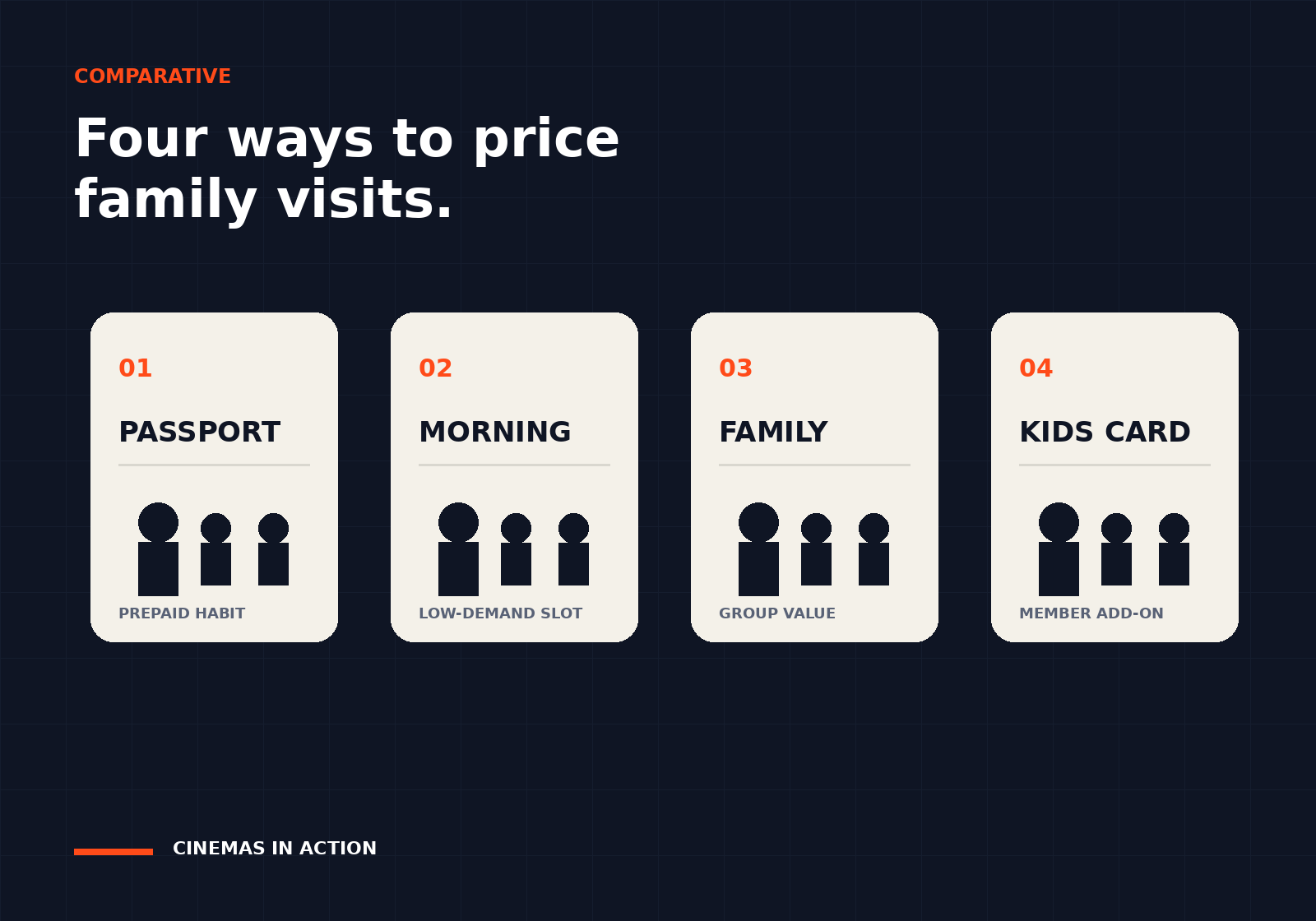
Four ways cinemas structure family value
A comparison of prepaid passports, fixed-price mornings, bounded family bundles and child membership add-ons shows why “family pricing” is not one mechanism.
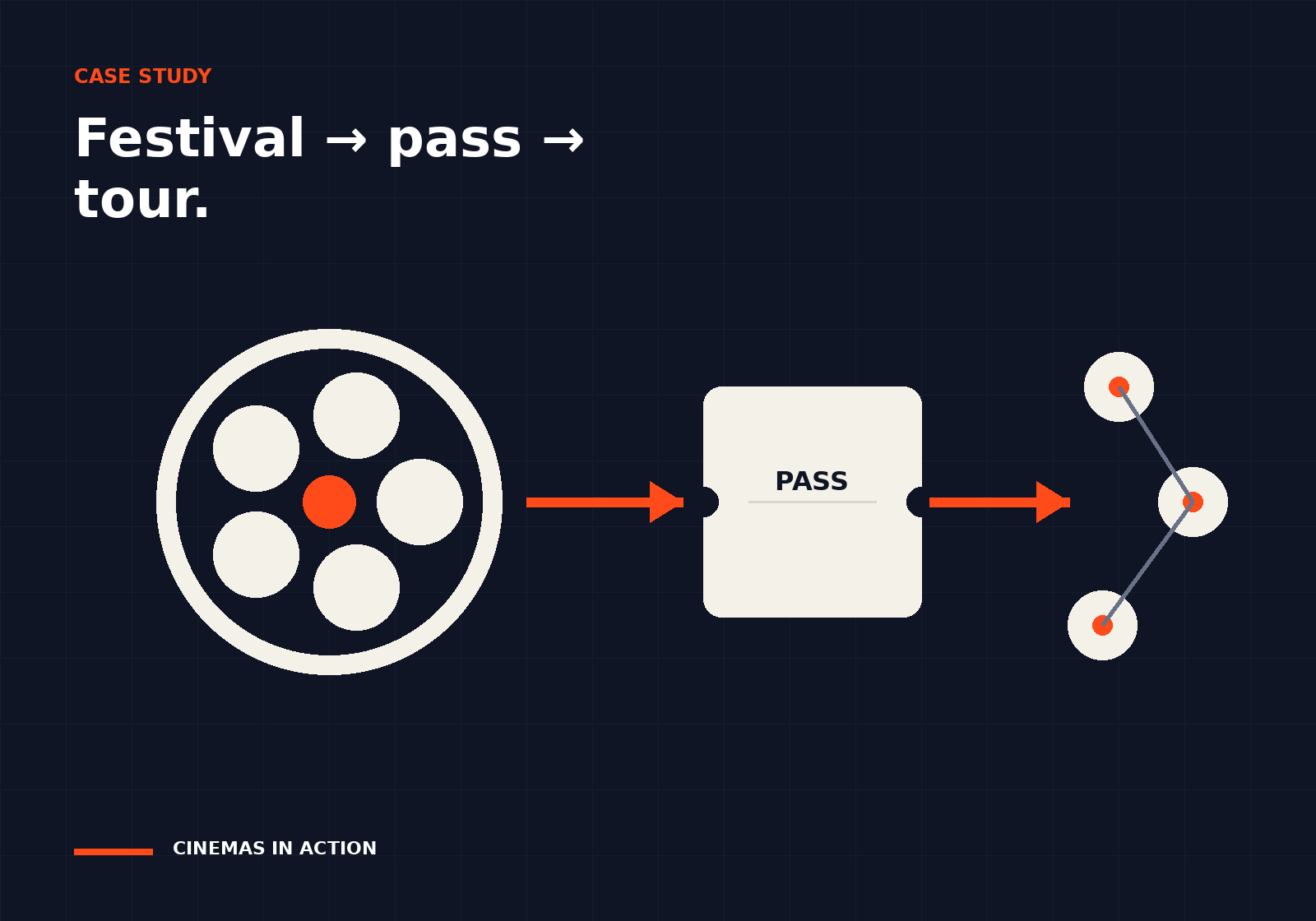
How Cinema Rediscovered connects a festival, a pass and a touring programme
Cinema Rediscovered packages specialist film discovery across a dense festival, youth pricing, commitment tiers and a subsequent UK and Ireland tour.
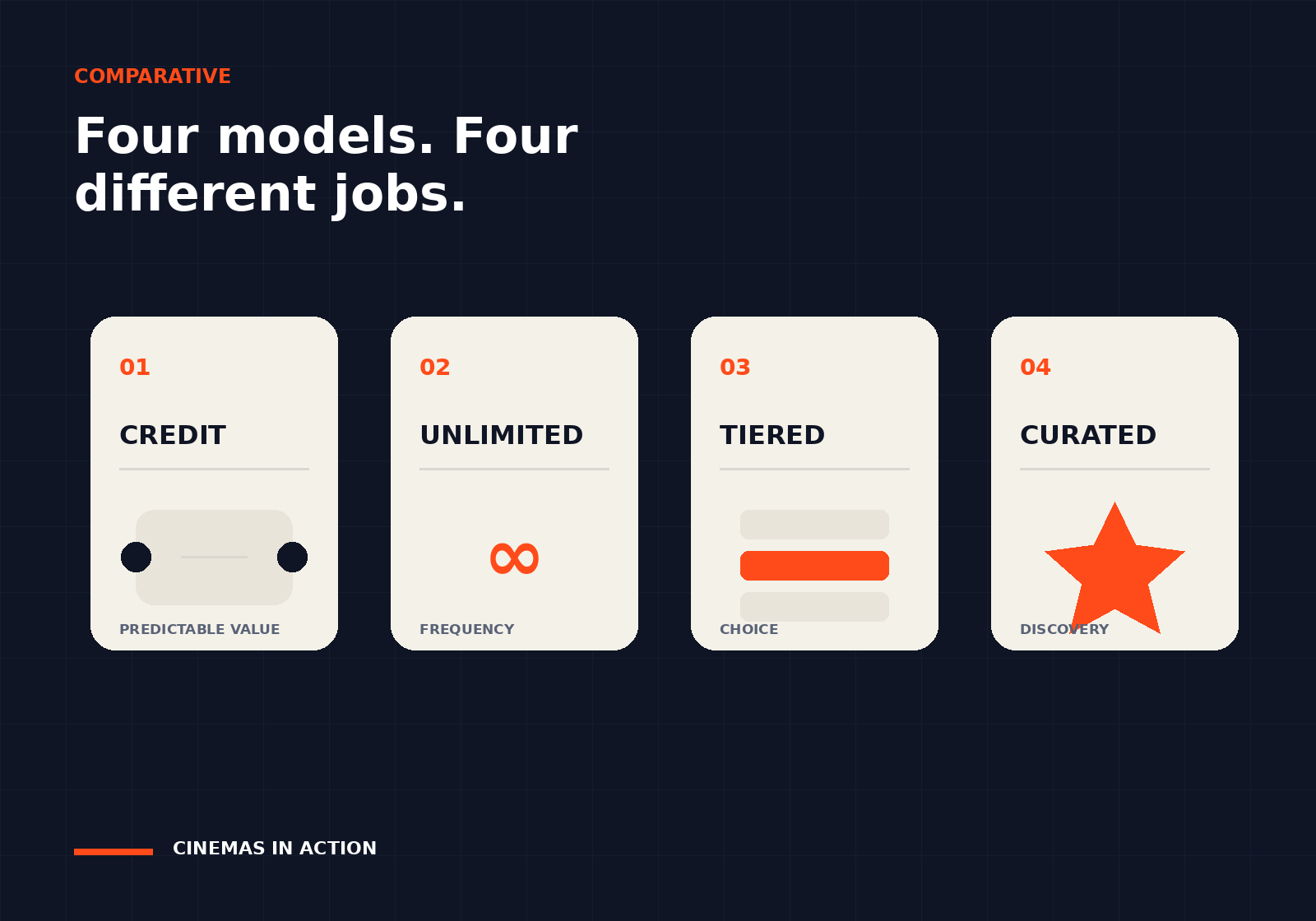
Four cinema membership models, and the behaviour each one is built to create
Monthly credits, tiered unlimited access, segmented passes and curated weekly tickets distribute value and risk in very different ways.
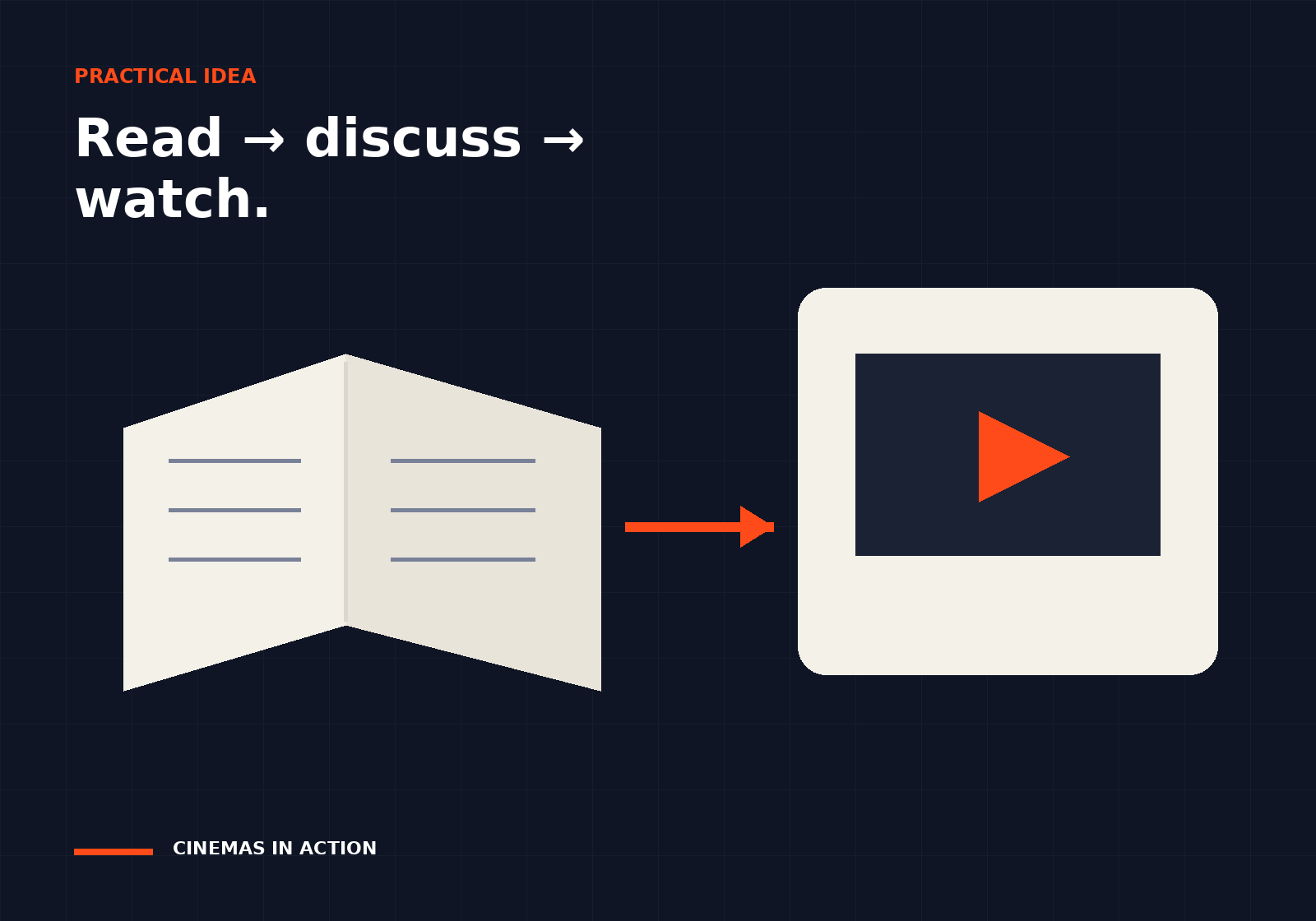
Turn a book into a repeat cinema series
Cinema Nova and Readings used The Odyssey as the spine for a five-part programme of academic talks, discussion and film, creating a repeat-visit cultural partnership.