Create a shared cinema day without losing local identity
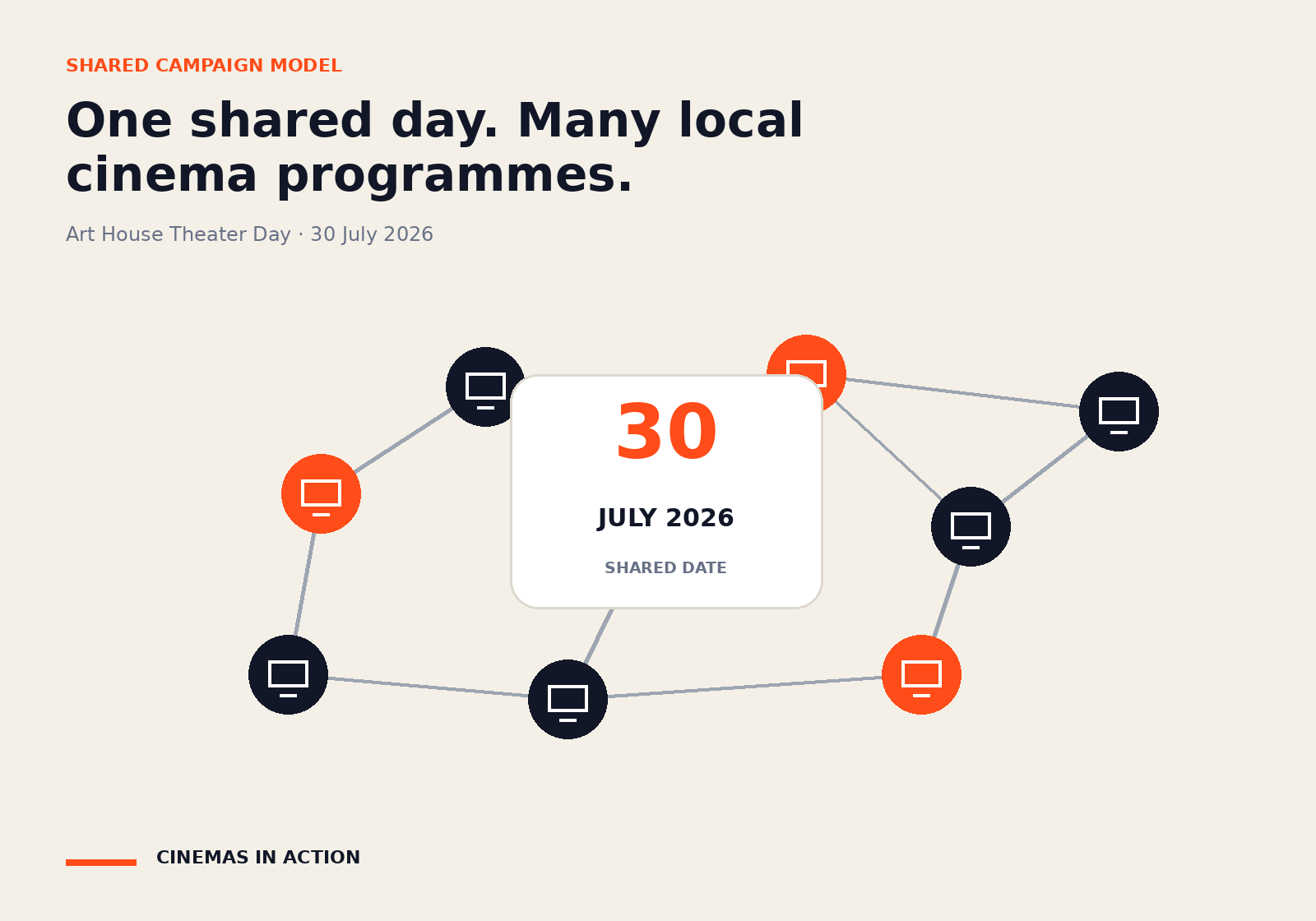
Art House Theater Day gives participating cinemas a common date, film slate, campaign identity, map, ambassador and additional materials while leaving local delivery with each venue. The 2026 event is scheduled for 30 July, so current results are not yet available.
Published 3 August 2026
The idea
Give many cinemas one recognisable campaign framework while preserving local programming, partnerships and audience relationships.
Evidence
Art House Convergence documents the 30 July 2026 date, seventh edition, shared slate, ambassador, additional materials and official map. The event had not taken place at the research cut-off.
Operator takeaway
Central coordination can create scale in press, identity and assets without requiring every cinema to present an identical local event.
Try this
Choose one shared date and proposition, supply a compact asset kit and map, then allow venues to select locally relevant films, guests, partners and offers within clear participation rules.
Measure
Track registered and active venues, admissions, first-time visitors, local partners, email acquisition, earned media, memberships and paid returns within 30 days.
Watch out for
A shared identity can become vague if the local proposition is weak. Film rights, asset deadlines, data definitions and post-event reporting must be agreed early.
What they are doing
Art House Convergence is coordinating the seventh Art House Theater Day for 30 July 2026. The model includes a shared date, collective programming, filmmaker material, an ambassador, a programming fellowship, an official map and campaign resources for participating cinemas.
Why it caught our attention
Small cinemas often lack the scale for national press or a major campaign identity. A shared day can provide that scale while each venue keeps control of its own programme, partners, audience communication and event character.
How it works
The central organisation creates the common narrative, slate, assets, talent material and participation map. Cinemas register, choose from or build around the available programme, promote locally and deliver the audience experience. The model creates a network effect without turning every event into the same event.
What another cinema might adapt
A national or regional network could choose one date around independent cinema, local film, archive projection, older audiences, accessible cinema or community ownership. Supply a simple identity, press copy, social assets, a public map, participation rules and a small measurement template.
Questions to consider
What is genuinely shared: date, films, message, audience or cause? How much local freedom is useful? Who clears rights and talent material? What data can every venue collect consistently? How will late participants, cancellations and incomplete reporting be handled?
What could be measured
Track venues registered, venues actually participating, admissions, occupancy, first-time visitors, local partners, email sign-ups, social and press reach, memberships sold, customer feedback and paid returns within 30 days. Separate network totals from cinema-level outcomes.
What is currently known
The 2026 event is scheduled for 30 July. AHC describes a collective film slate, additional filmmaker material, an ambassador and an official map. Its wider information page records several earlier editions and the continuing development of the programming fellowship.
What has not yet been reported
At the 27 July research cut-off, the event had not taken place. Final venue participation, admissions, new-audience reach, membership impact, local partnership value and repeat visits were therefore unknown. A post-event evidence update would be appropriate.
Sources
Primary sources
- Art House Convergence announces Boots Riley as the 2026 Art House Theater Day ambassador — Art House Convergence (opens in a new tab)
Source dated 17 March 2026 · Reviewed by CIA 27 July 2026
- Art House Theater Day information — Art House Convergence (opens in a new tab)
Reviewed by CIA 27 July 2026
Explore related topics
- Challenge: Audience growth
- Challenge: Partnerships and sponsorship
- Challenge: Programming and discovery
- Audience: Art house audiences
- Audience: First-time visitors
- Audience: Local communities
- Theme: Community
- Theme: Festivals and events
- Theme: Programming
More related ideas
Stay updated
Get new Cinemas in Action briefings by email.
New ideas you could test, with the evidence behind them. Occasional operator briefings and new case studies — no marketing, no third parties.