Make sustainability reporting useful with a short scorecard
Kinepolis combines detailed reporting with a compact set of operational figures, including laser-projection progress and a time-bound 2026 target. Smaller cinemas can adapt the communication structure without copying the scale or claiming outcomes they have not measured.
Published 3 August 2026
The idea
Publish a short, repeatable sustainability scorecard alongside any longer report so operators, funders, customers and partners can see baselines, progress and targets quickly.
Evidence
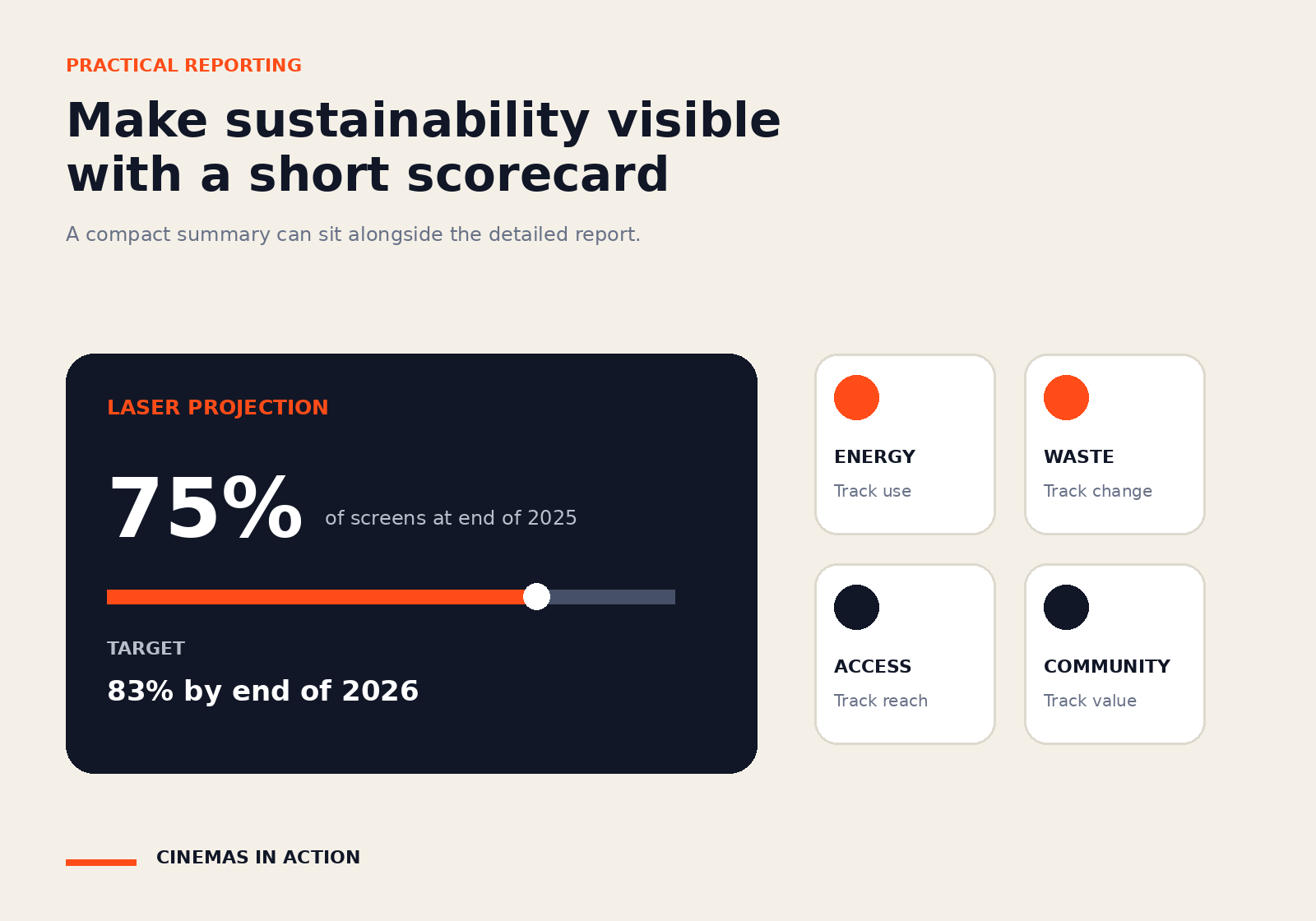
Kinepolis publishes operational figures including 75% laser projection at the end of 2025, an 83% target for the end of 2026 and a stated 40% energy reduction versus xenon projection.
Operator takeaway
The adaptable lesson is the reporting structure: a small number of consistent measures, clear periods and time-bound targets are more useful than broad statements of intent.
Try this
Choose five to ten indicators that can be reproduced annually, define their boundaries, record a baseline and publish progress against target with explanatory notes.
Measure
Use energy, water, waste, travel, local purchasing, equipment, accessible screenings and community participation where data quality is adequate.
Watch out for
A scorecard can become selective. Keep definitions stable, include missed targets and distinguish operational activity from measured environmental or social impact.
What they are doing
Kinepolis publishes detailed sustainability information and also makes selected operational measures easy to find. Its corporate material states that 75% of screens used laser projection at the end of 2025, with a target of 83% by the end of 2026, and describes laser as using 40% less energy than xenon lamp projection.
Why it caught our attention
The useful idea is not the size of the investment. It is the communication structure: a small number of visible measures, a baseline, a reporting date and a future target. That makes progress easier to understand and creates a basis for later accountability.
How it works
A detailed report can hold methodology, definitions and wider disclosure. A shorter scorecard can show the measures that matter most to operational teams and external stakeholders. Each figure needs a clear boundary, period, unit and explanation of whether it is measured, estimated or targeted.
What another cinema might adapt
A smaller cinema could publish one page each year covering electricity, gas, water, waste, travel, local procurement, equipment upgrades, accessible screenings and community participation. Begin with data already available in invoices, waste records, ticketing and programme reports rather than creating an unmanageable reporting system.
Questions to consider
Which measures reflect the cinema’s largest impacts? Are figures comparable year to year? Does the baseline include the whole building? Are targets absolute or intensity-based? Who owns data collection? Will missed targets and data limitations be reported as clearly as progress?
What could be measured
Choose five to ten indicators with stable definitions. Examples include kilowatt-hours, energy per admission, waste by stream, water use, staff or customer travel, local purchasing, laser conversion, accessible-screening volume and community participation. Record the period and data source for each.
What is currently known
Kinepolis publicly reports its laser-projection position and 2026 target and states an energy-use comparison with xenon projectors. The figures demonstrate a concise way to connect equipment investment, operating efficiency and a time-bound commitment.
What has not yet been reported
The selected figures do not on their own show the full environmental impact of a cinema operation. A short scorecard can omit difficult areas, and equipment conversion does not automatically reveal whole-building emissions, embodied carbon, financial payback or audience response.
Sources
Primary sources
- Sustainability — Kinepolis Group — Kinepolis Group (opens in a new tab)
Reviewed by CIA 27 July 2026
Explore related topics
- Challenge: Climate resilience
- Challenge: Measurement and evidence
- Challenge: Operations and capacity
- Audience: Local communities
- Audience: Stakeholders
- Theme: Climate and sustainability
- Theme: Evidence and measurement
- Theme: Operations
More related ideas
Stay updated
Get new Cinemas in Action briefings by email.
New ideas you could test, with the evidence behind them. Occasional operator briefings and new case studies — no marketing, no third parties.