Explore ideas
Find practical ideas by the challenge you're trying to solve.
Filter by what you're trying to achieve, who you're trying to reach, where it happened and how much evidence is available. Every article separates activity from evidence and ends with what you could test and measure.
Get new cinema ideas, practical case studies and evidence updates in your inbox.
Searches titles, summaries, cinema and organisation names, initiatives, topics and countries — not full article text. Accents are ignored and a few common alternatives are included (for example loyalty and membership, F&B and food and beverage).
25 results
Sorted by most recent
Each card carries an evidence label. What this means

Plan the next visit for occasional holiday audiences
The CNC's August 2026 audience barometer reports the highest share of occasional cinema attendees since the study began in 2016, with an average audience age of 33. A strong holiday period may bring in customers whose usual attendance is sparse — a cue to plan their next visit.

Use a film's audience profile to design the next invitation
Movio's Weekend Insights for 2–4 October 2026 reports Verity at 40.3% of US and 31.7% of UK admissions in its data, with a predominantly female audience. The data gives a reason to inspect a title's audience — not proof that it revived inactive customers.

Measure the business case behind a new cinema format
Omniplex Renfrew Street opened a 128-seat 4D E-Motion installation on 17 September 2026. The installation is documented; management comments on turnout and ticket sales are unquantified claims, not a payback case.

Log booking decisions to see where films get lost
NICE's Ontario study logged 238 booking decisions on Canadian films. Where a distributor made contact, 19 of 59 decisions ended in a booking (32%), against 7 of 137 without outreach (5%) — an association, not proof of cause.

Plan a cinema energy retrofit as a measured investment
Cinema Massimo in Turin began a €400,000 PNRR-funded energy retrofit in February 2023 covering rooftop solar, LED lighting, cooling equipment, pumps, pipework and insulation. The works are documented; energy, cost and carbon outcomes are not published.
Read website technology data as links, not adoption
FilmGrail crawled 1,189 cinema websites in 35 countries: 54% link to an identifiable ticketing system, 7% to a mobile app and 4% mark up showtimes for search engines. It detects links, not bookings or performance.

A simple way to remember what your audience thought
Stockbridge Community Cinema publishes a film-by-film archive of attendance and audience ratings, giving a small volunteer venue a consistent record of what its audience liked.

Five audience questions your cinema should be asking
CNC's 2026 study of French cinemagoers reports how often they attend with others, as families, book ahead, are prompted by social media and join extra cinema activities. Use it as a template for local questions, not as local fact.

What a cinema discount event's headline figures leave out
Italy's September 2026 Cinema in Festa reported €4.386m and 878,934 admissions, but a concert film outside the €3.50 offer inflated the total. Excluding it, admissions were flat year on year (+0.08%) and revenue was 14.1% lower.
Measure hospital cinema use as attendances, not unique patients
MediCinema reported 2,638 attendances across 122 screenings in Birmingham during its first six months. These are attendances including patients, families, carers and staff, not unique patients.
Record admissions are only the start of the measurement
ABRAPLEX reported Brazilian cinema admissions and box-office growth using Filme B data. Admissions are visits, not unique people, and do not establish incremental demand, retention or profit.
Test idle screens with a neutral programmer
Regal/Cineworld, IFTA and CNC announced a pilot using a neutral programmer to place films into otherwise-idle screen capacity. It is an observed test design with no published results yet.
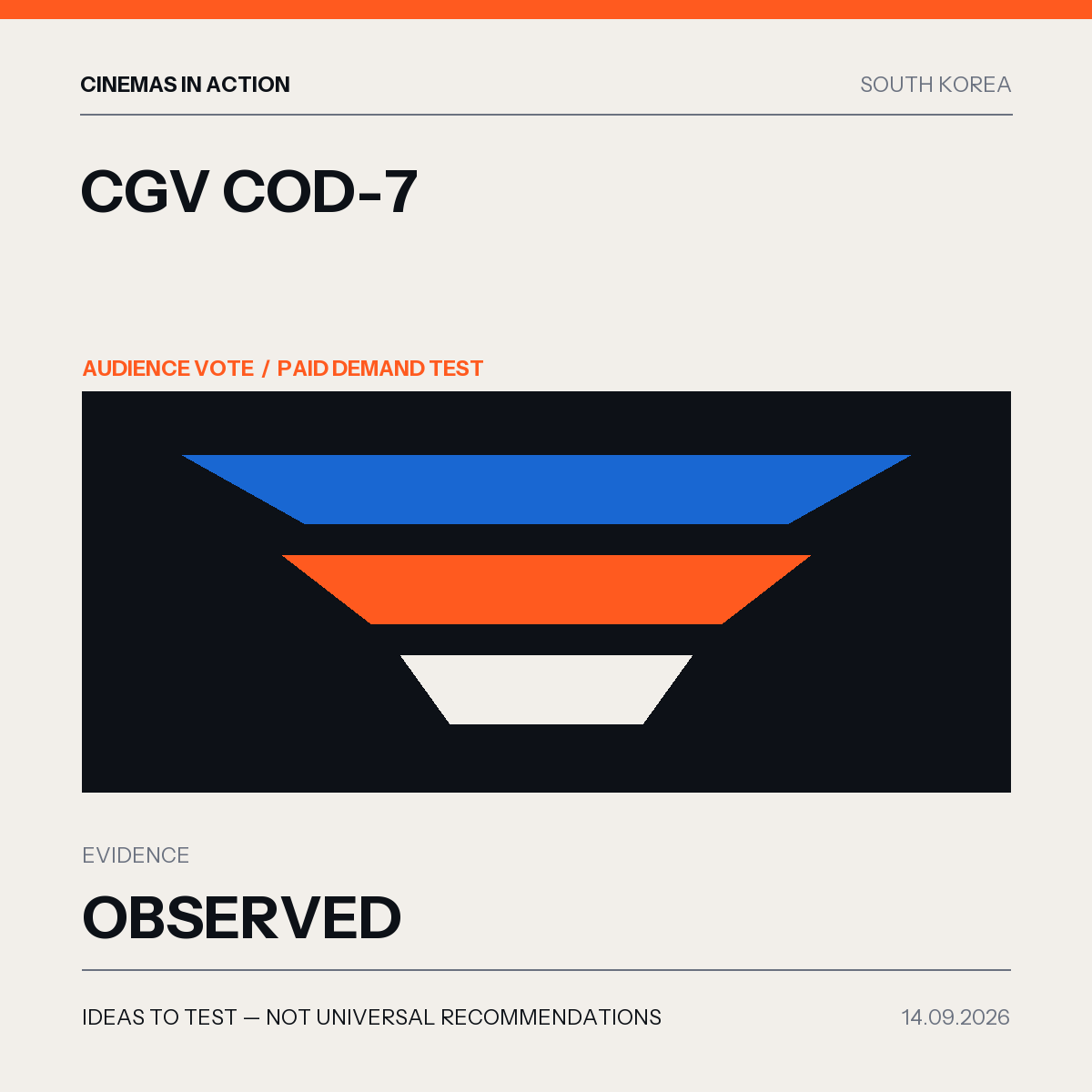
Turn audience votes into paid demand tests
CGV’s COD-7 programme invites audiences to vote for titles, then moves selected films toward booking. The useful step is converting preference into paid demand rather than treating a vote as proof of attendance.
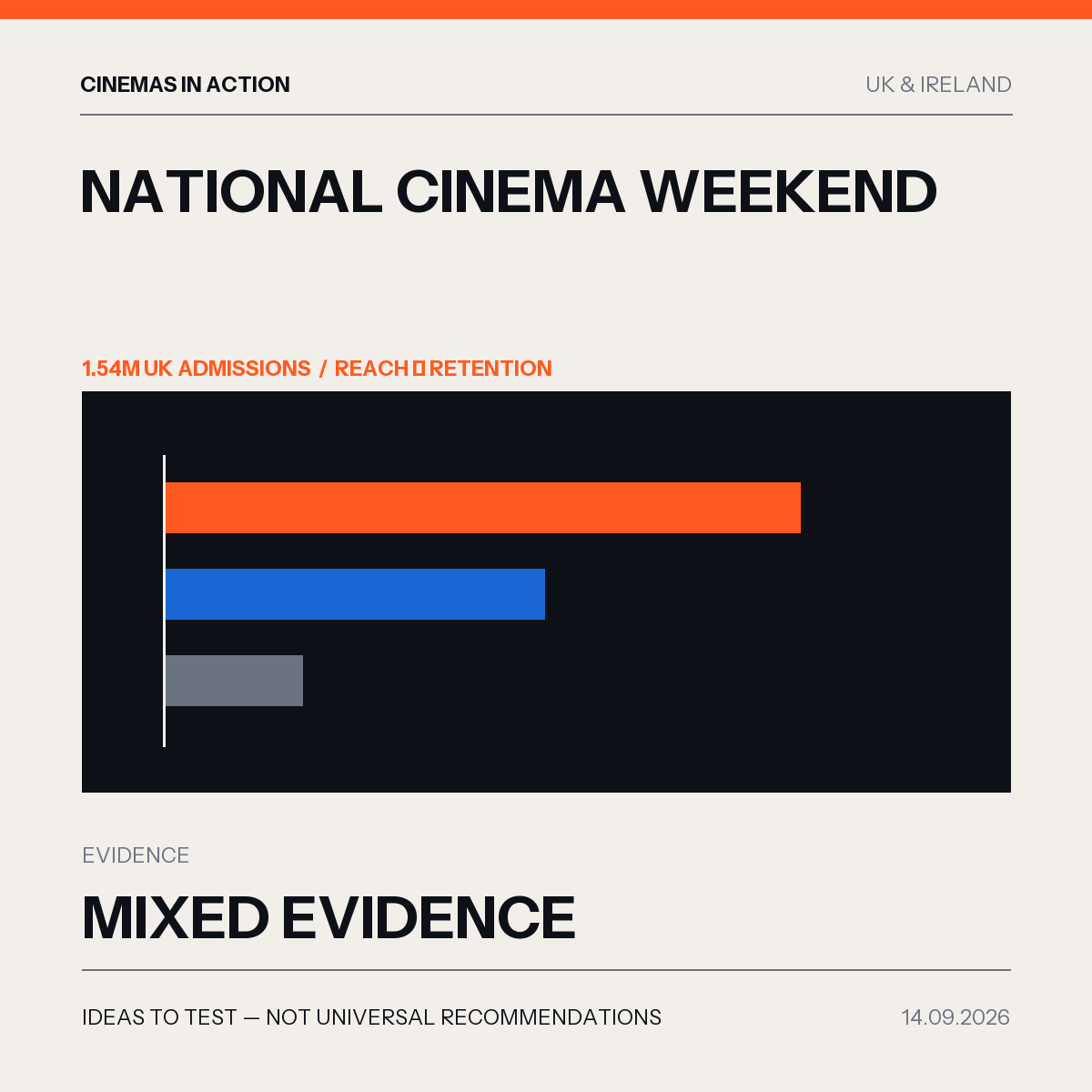
A packed discount weekend is not yet a retention strategy
National Cinema Weekend organisers reported 1.54 million UK admissions, while separate campaign reporting cited more than 280,000 across the island of Ireland. The weekend demonstrates reported reach; it does not yet show incremental visits or verified return behaviour.
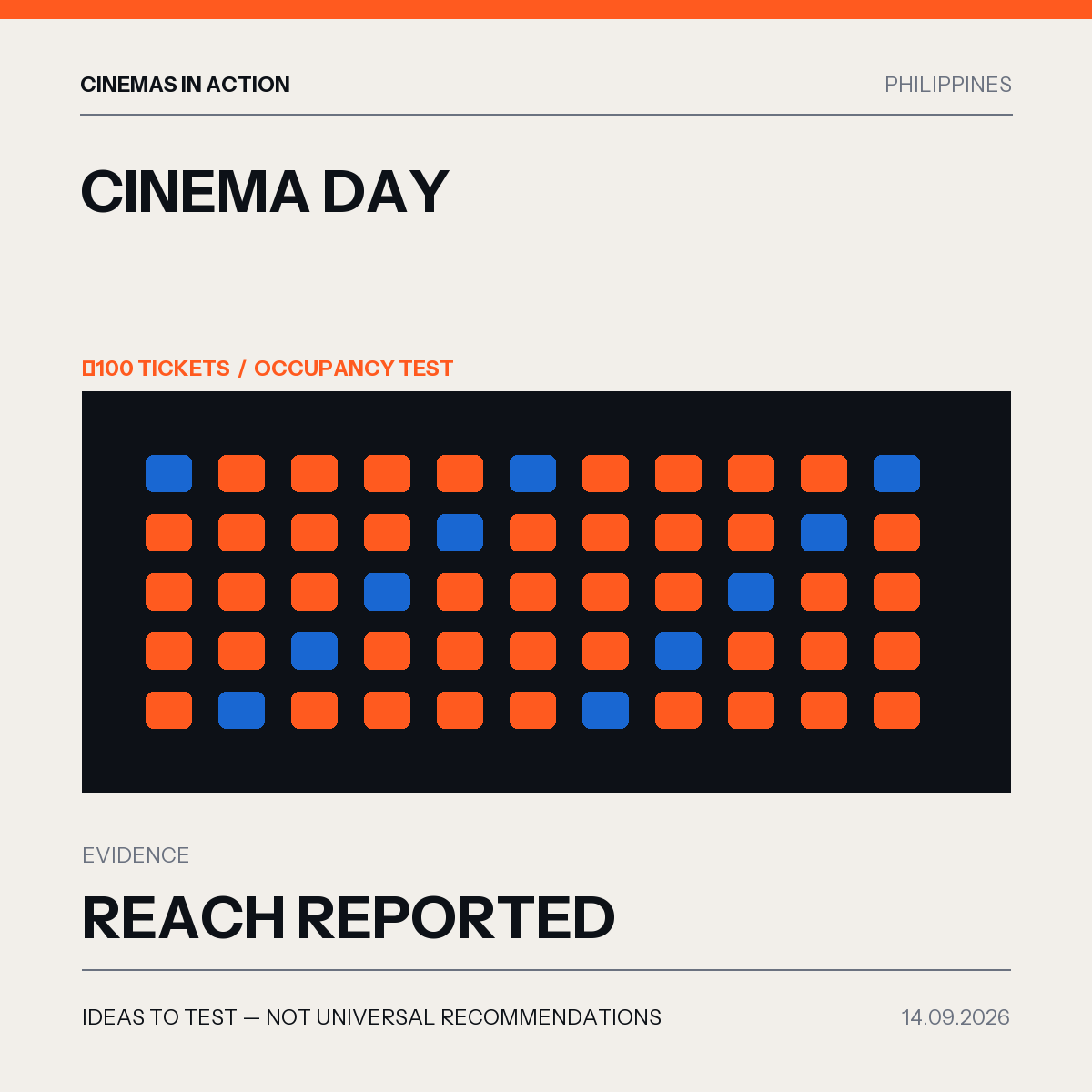
Use a national cinema day as an occupancy experiment
The Philippines’ first National Cinema Day offered regular 2D tickets at ₱100. Takilya estimated 58.7% seat-map occupancy across readable online inventory, against 5.7% the day before: a useful measurement, but not audited paid admissions.
A national cinema price event can still protect premium value
Brazil's Semana do Cinema runs from 10 to 16 September 2026 with a single headline price. Cinépolis and Cinemark both take part, and both publish their own fences around formats, seats and dayparts. The campaign is national; the margin decisions are local.
Fundraising works better when supporters can see what changes
A Houston restoration project and a London art-house refurbishment are running the same architecture from different ends: a phased target, a ladder of giving levels, seat adoption, benefit events and a physical outcome a donor can point at. The design is transferable. The operating case that follows it is not proven by either.
A capped family offer is a test design worth copying
A summer children's price at a single Japanese cinema was set at 500 yen and capped at 10,000 redemptions. The value here is the structure of the test — defined audience, one simple price, a public cap, a short window and measurable redemption — not any proven commercial result.
Members visit more often. But did membership cause it?
Cineplex reports that CineClub members visit four times more often than non-members. That comparison is the wrong shape for a decision about whether membership changes behaviour — here is a better one.
Free tickets are not the metric: measure what audiences do next
ESCAPES has distributed more than 250,000 free accessible tickets across hundreds of UK cinemas. The reported figures show reach, satisfaction and intention — not yet what those audiences did on their next visit.
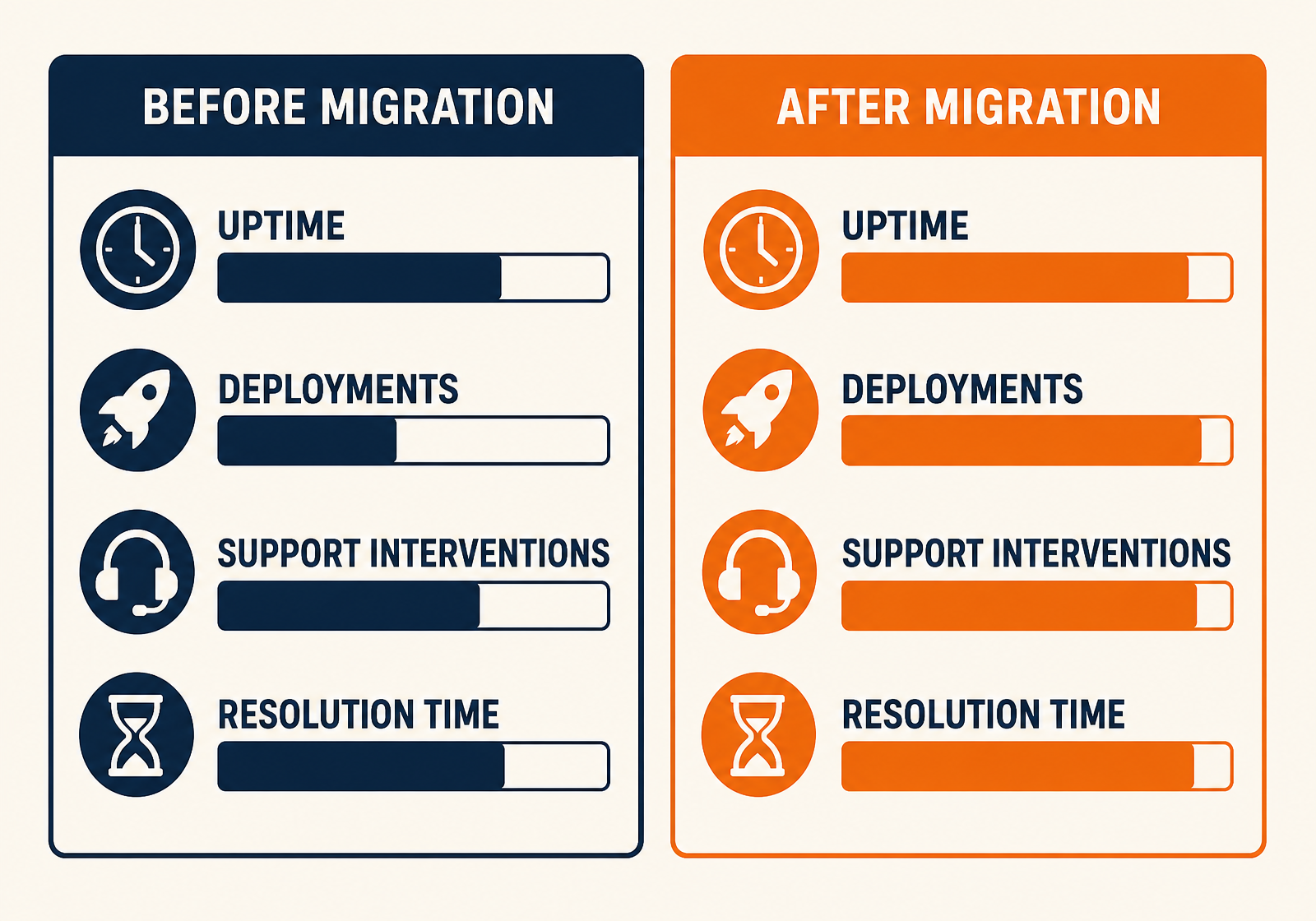
Measure a cinema cloud migration by what changes operationally
HOYTS has entered a six-year agreement to move core operations across more than 60 cinemas and 500-plus screens onto Vista's cloud operating platform. A supplier announcement is a starting point for measurement, not evidence of benefit.
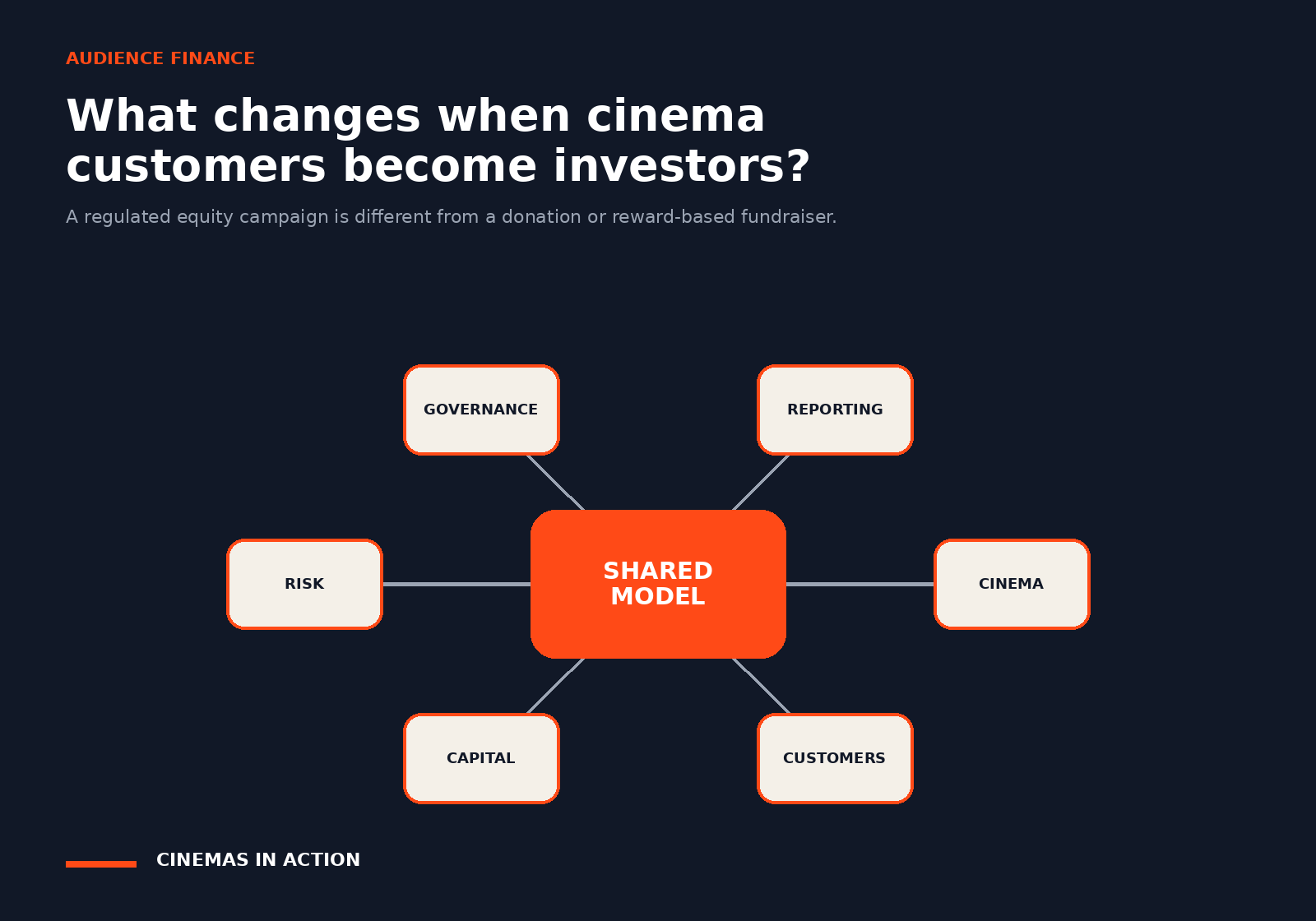
What changes when cinema customers become investors?
mk2 is using regulated equity crowdfunding for expansion and the redevelopment of mk2 Bibliothèque, asking supporters to consider becoming investors rather than donors.
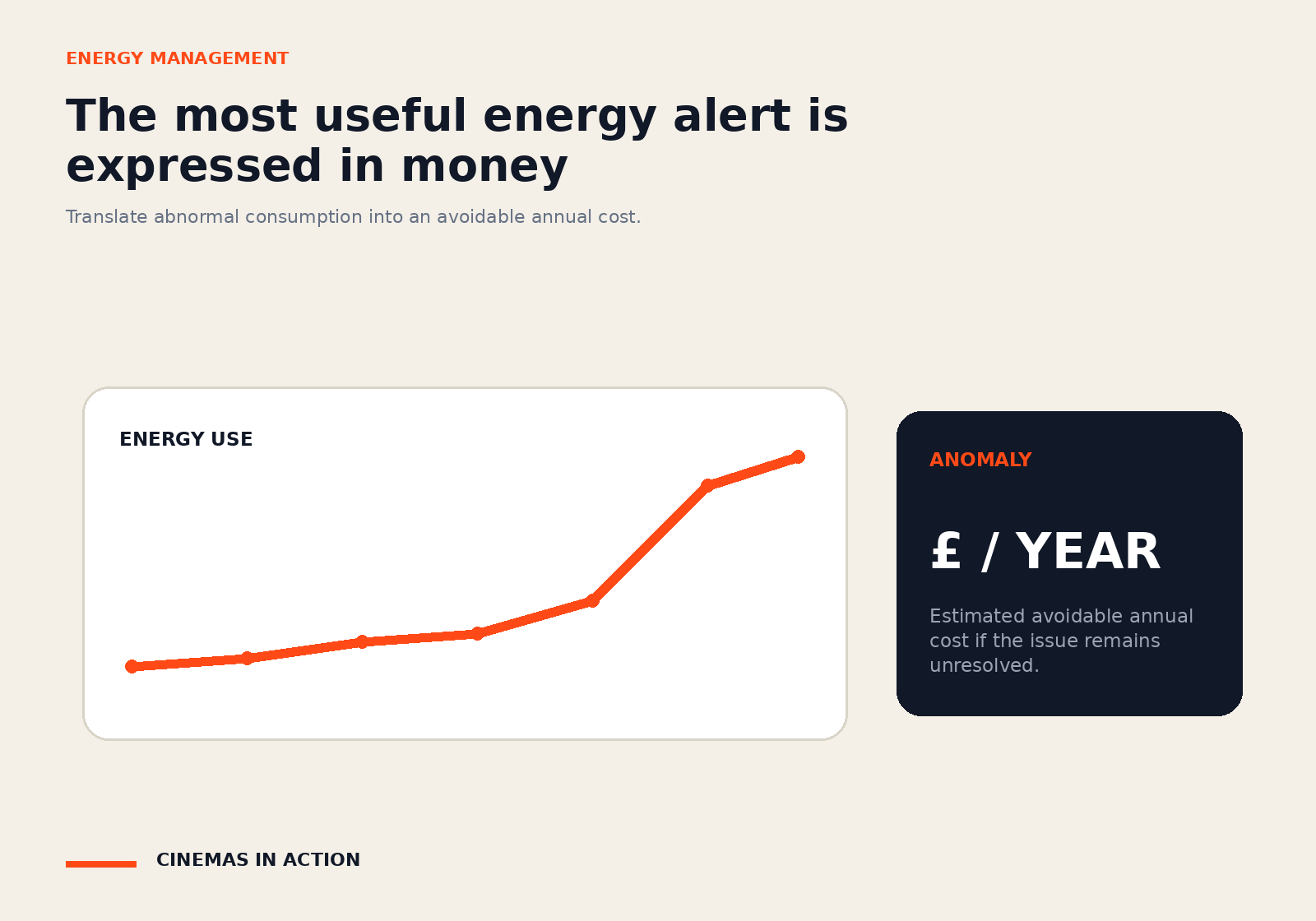
The most useful energy alert is expressed in money
Cinesa alerts cinema managers to abnormal electricity use and estimates the annual cost if the problem is left unresolved, translating technical data into a local operating decision.
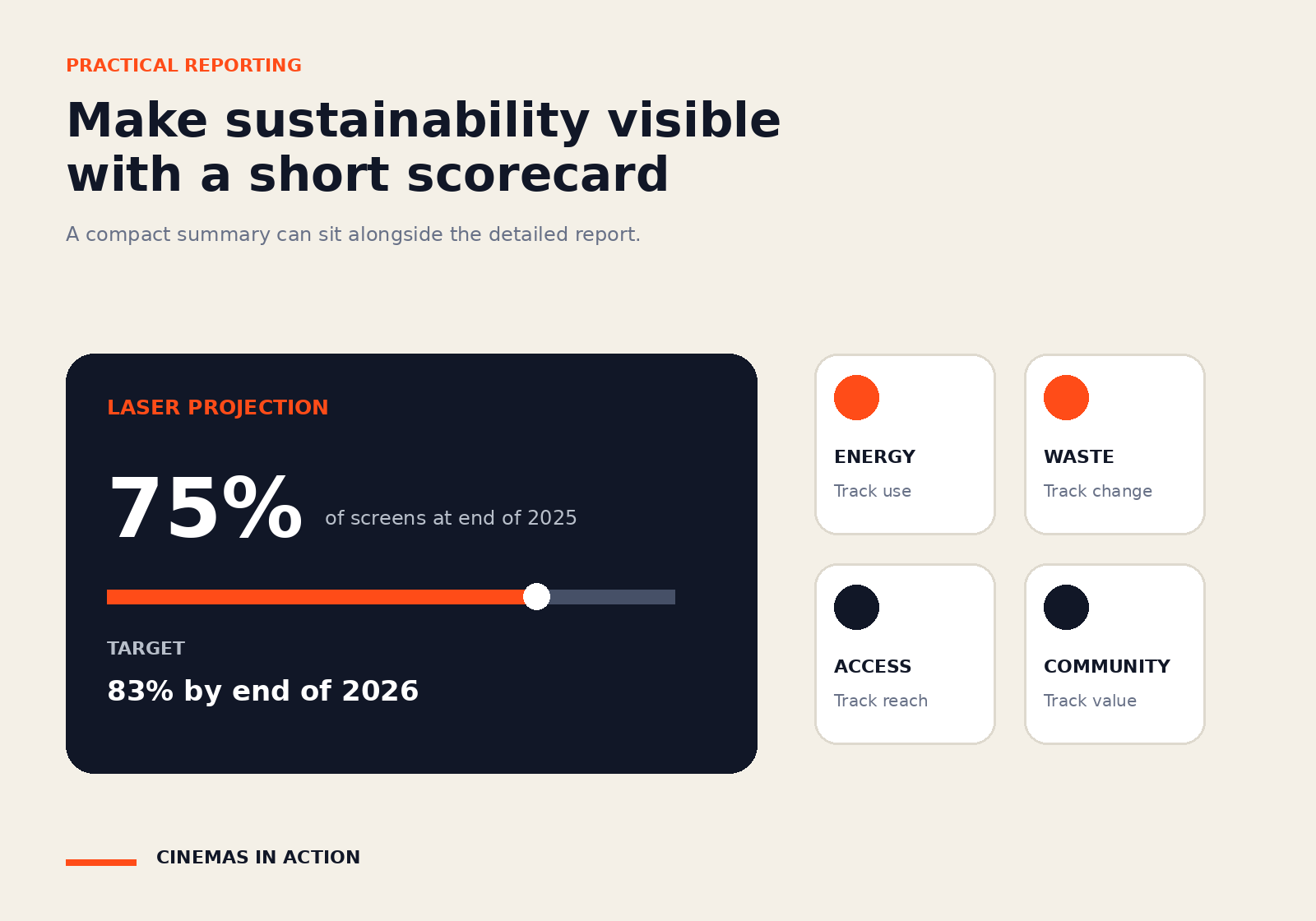
Make sustainability reporting useful with a short scorecard
Kinepolis combines detailed reporting with a compact set of operational figures, including laser-projection progress and a time-bound 2026 target. Smaller cinemas can adapt the communication structure without copying the scale or claiming outcomes they have not measured.
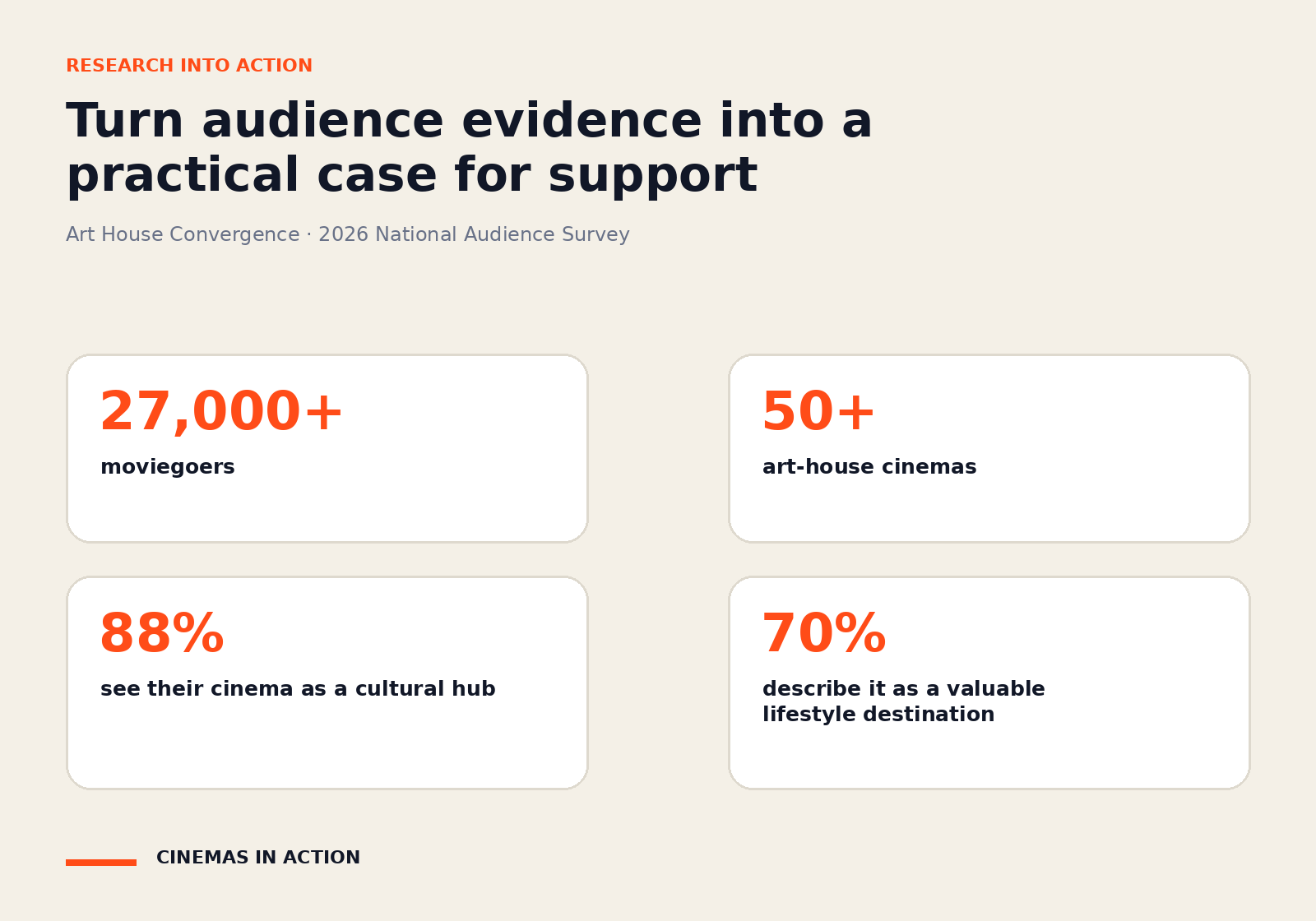
Turn audience research into a practical case for support
Art House Convergence’s 2026 survey provides national evidence about how participating audiences value independent cinemas. The practical opportunity is to combine those benchmarks with local data for sponsorship, funding, membership and stakeholder conversations.