Explore ideas
Find practical ideas by the challenge you're trying to solve.
167 ideas from cinemas in 40 countries
Filter by what you're trying to achieve, who you're trying to reach, where it happened and how much evidence is available. Every article separates activity from evidence and ends with what you could test and measure.
Get new cinema ideas, practical case studies and evidence updates in your inbox.
Searches titles, summaries, cinema and organisation names, initiatives, topics and countries — not full article text. Accents are ignored and a few common alternatives are included (for example loyalty and membership, F&B and food and beverage).
6 of 167 ideas
Sorted by most recent
Each card carries an evidence label. What this means

Sell a gaming session with clear operating rules
Cineworld advertises two-hour big-screen gaming from £200 for up to 20 guests, with customer-supplied equipment and advance testing. The price is a starting point, not profit or a universal tariff.
Package private screenings around a clear minimum
Landmark Cinemas Canada publishes a private-screening offer with a 50-paid-admission minimum, selected timings and optional food, ticket and seating features.
Private hire is perishable inventory too
Rich Mix published a plain three-hour screen-hire tariff by screen size and daypart. The interesting part is not the summer offer — it is treating auditorium hours as perishable inventory with a public price.
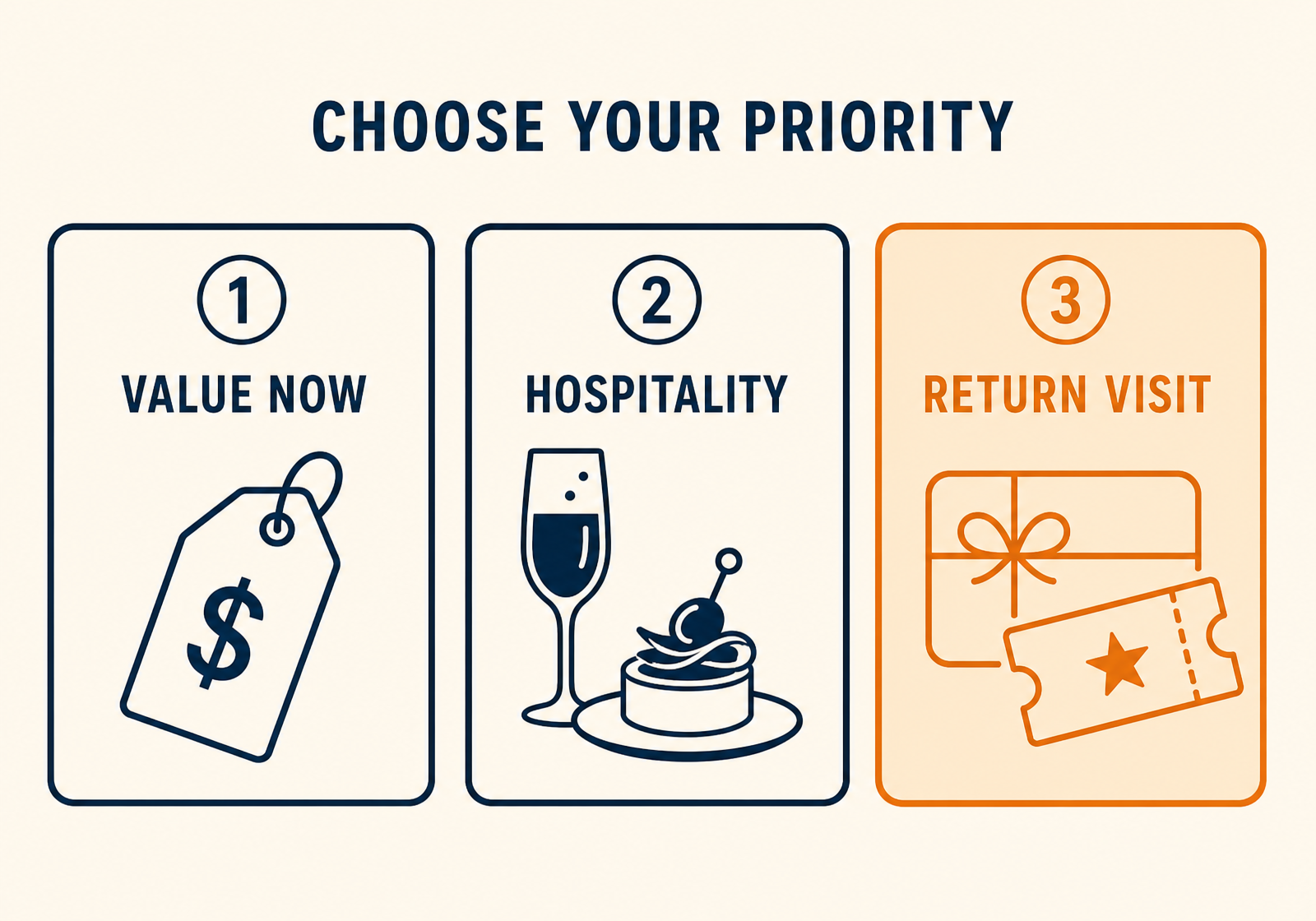
Make a private-hire incentive create a later cinema visit
Event Cinemas' private-event offer allows clients to choose between immediate hospitality or value and a gift card worth five per cent of event spend — turning B2B spend into a later personal visit.
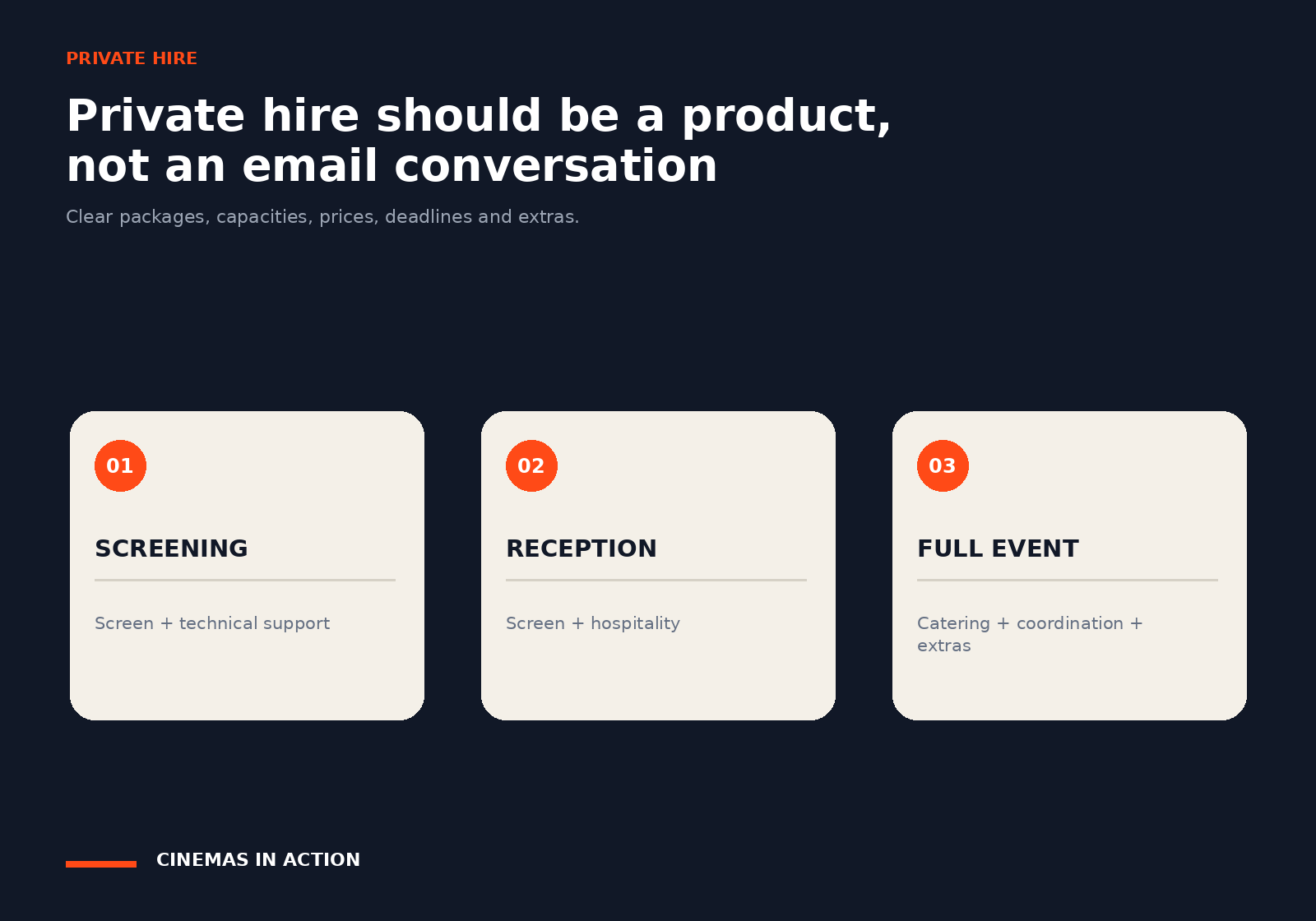
Private hire should be a product, not an email conversation
Genesis Cinema’s public venue-hire guide turns screens, bars, outdoor space, catering and technical support into defined products with visible capacities, indicative prices and operating rules.
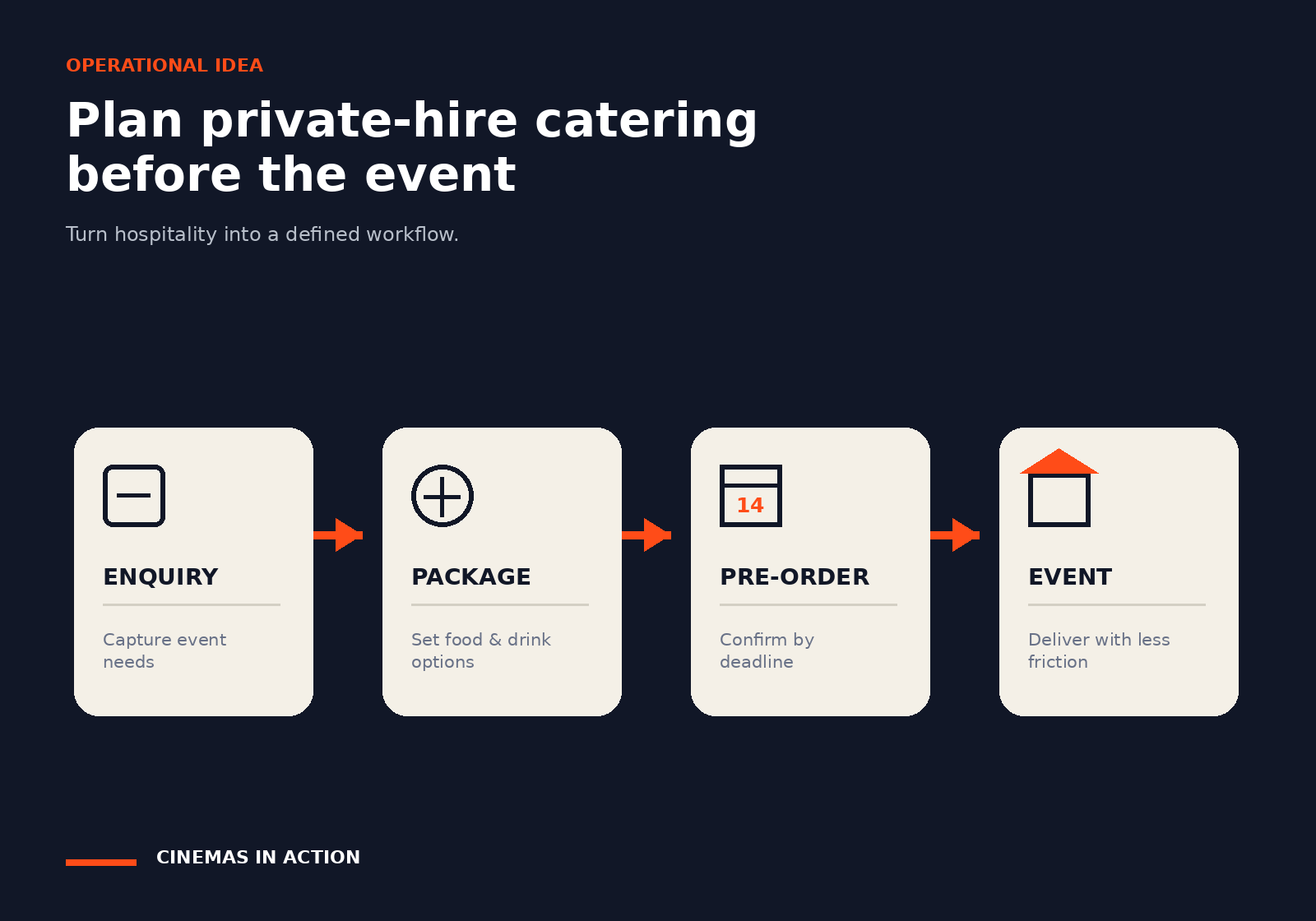
Plan private-hire catering before the event
Everyman requires private-hire food and drink orders through an online link no later than two weeks before the event. The visible mechanism is simple: turn catering into a defined workflow rather than an informal add-on.